

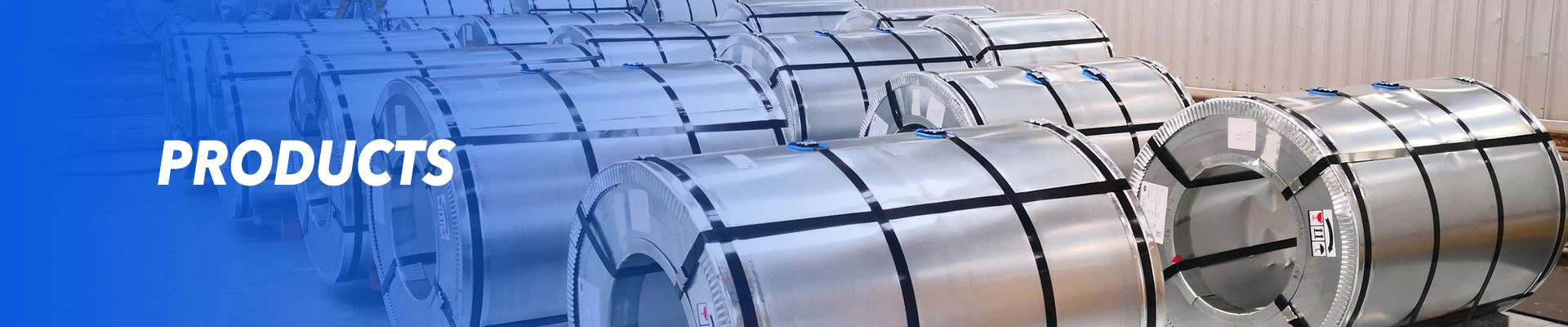


The Type 1 hot dip aluminum coating (approximately 91% aluminum and 9% silicon) is metallurgically bonded to the 409 Aluminized Stainless Steel substrate to provide excellent resistance to pitting from muffler condensate and road salt. It provides red rust protection up to 800oF and oxidation resistance to 1550oF. The aluminum coating improves the appearance and significantly extends the life of the exhaust system over that of bare stainless. The product can be welded and easily fabricated into exhaust components.
Aluminized Stainless Steel
|
Aluminized matal Stainless Steel |
|
| Brand | GNEE STEEL/Posco (ALSUSTA) |
| Standard | ASTM A463 |
| Grades | FSS Type 409 FSS Type 439 |
| Coating Weight | 60 g/m2 to 160 g/m 2 |
| Thickness | 0.5 mm to 2.3 mm |
| Width | 800 mm to 1450 mm |
| Chemical Treatment | Cr-Free |
| Oiling | Oiled or Non-Oiled |
| MOQ | 25 tons |
| Coil Inner Diameter | 610 mm or 508 mm |
| Delivery status | Coil, Strip, Sheet, Tube (For: Automobile Exhaust System) |
|
Order specification |
Model name |
YP(N/mm²) |
EL(%) |
|
|
ASTM A 463 |
FSS Type 409 |
A-STS 409L |
170-345 |
≥20 |
|
FSS Type 439 |
A-STS 439 |
205~415 |
≥22 |
|
409 aluminized stainless steel

Aluminized Steel Properties and Benefits
Aluminum may be a soft metal by itself, but it creates one tough product when melded with aluminized steel. In fact, aluminized steel can withstand temperatures up to 900 degrees Fahrenheit and keep its shiny appearance the entire time.
There are many benefits to aluminized steel, including:
The strength of steel with the corrosion resistance of aluminum
High-temperature resistance
Low thermal expansion
Formability that allows rolling, folding, bending, and even corrugating
All common steel grade types are available in Aluminized: CS-B, DS, DDS, and EDDS. High strength options also.
Packaging of 409 Aluminized Stainless Steel

Aluminized Steel Vs 409 Stainless Steel
Chemical Composition
The first difference between 409 stainless steel and aluminized steel is the chemical composition. Aluminized steel is made by coating carbon steel with an aluminium-silicon alloy. This alloy provides corrosion resistance and better heat resistance than pure aluminium. 409 stainless steel, on the other hand, is made of iron, chromium, manganese, silicon, titanium, aluminum, and nitrogen.
Heat Resistance
One of the most important differences between 409 stainless steel and aluminized steel is heat resistance. Aluminized steel can withstand temperatures up to 1200 degrees Fahrenheit without suffering any damage. 409 stainless steel, on the other hand, begins to suffer surface damage at around 650 degrees Fahrenheit.
Cost
Another difference between 409 stainless steel and aluminized steel is the cost. Aluminized steel is typically more expensive than 409 stainless steel because it is more difficult to produce. Additionally, aluminized steel often has a shorter lifespan than 409 stainless steel due to its lower heat resistance.
Applications
Aluminized steel is often used in exhaust systems because it can withstand high temperatures without being damaged. 409 stainless steel is also used in exhaust systems but is less common because it does not have as high of heat resistance. Additionally, 409 stainless steel is often used in food processing equipment because it does not corrode easily.
Weldability
Aluminized steel can be welded using any standard welding process. However, care must be taken to avoid damaging the aluminum coating.409 stainless steel can also be welded using any standard welding process but is more difficult to weld than aluminized steel because it tends to form cracks when heated.
Hot Tags: 409 aluminized stainless steel, China 409 aluminized stainless steel manufacturers, suppliers, factory, Full Hard GL Galvalume Steel Coil, Galvalume Steel Coils, Aluminium Galvanized Steel Coil, galvalume coil size, Gl coils, Aluzinc Steel


