

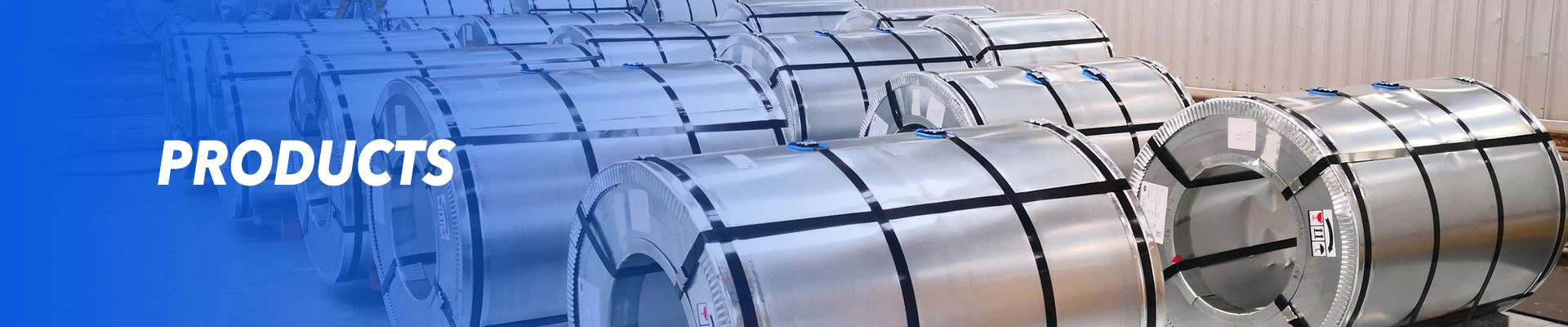
Automotive Steel
GNEE STEEL is located in Anyang, Henan,headquartered in Tianjin. It is a steel spot circulation enterprise integrating steel trade processing and distribution. It mainly sells cold-rolled steel, hot-rolled steel, alloy steel coils, stainless steel, automotive steel, etc. from major domestic steel mills such as Baosteel, Anshan Iron and Steel, Ma Steel, Wuhan Iron and Steel, and Hegang. It has more than 10,000 tons of spot inventory and can be customized according to customer requirements, with timely delivery and quality assurance.
Professional team
Professional sales team, providing customized solutions for your project
7x24 hours delivery
Distributed in 27 cities around the world, with 50 delivery centers, providing 200+ languages, 7x24 hours delivery capabilities, and providing one-stop automotive steel supply services

16+
Export experience
24 hours
Online service
500,000+
Order recieved
10,000+
Projects Completed
-
![Hot Dip Galvanized Automotive Steel]() Hot Dip Galvanized Automotive SteelGalvanized steel sheet is a welded steel sheet with a hot-dip or electroplated zinc layer on the surface. It is generally widely used in construction, home appliances, vehicles and ships,...read more
Hot Dip Galvanized Automotive SteelGalvanized steel sheet is a welded steel sheet with a hot-dip or electroplated zinc layer on the surface. It is generally widely used in construction, home appliances, vehicles and ships,...read more -
![China Automotive Steel For Experimental Molds]() China Automotive Steel For Experimental MoldsAutomotive steel is a general term for various steel materials used in automobile manufacturing. Steel plays a crucial role in automobile manufacturing due to its high strength, relatively low...read more
China Automotive Steel For Experimental MoldsAutomotive steel is a general term for various steel materials used in automobile manufacturing. Steel plays a crucial role in automobile manufacturing due to its high strength, relatively low...read more -
![Hot Rolled Pickled Steel]() Hot Rolled Pickled SteelHot rolled pickled steel coil/strip/sheet Hot rolled pickling steel can remove oxide scale on the steel surface, improve the surface quality of steel, and is convenient for welding, oiling and...read more
Hot Rolled Pickled SteelHot rolled pickled steel coil/strip/sheet Hot rolled pickling steel can remove oxide scale on the steel surface, improve the surface quality of steel, and is convenient for welding, oiling and...read more -
![HC290/490DP Automotive Cold Rolled Steel]() HC290/490DP Automotive Cold Rolled SteelCold-rolled HC290/490DP high-strength automotive steel is mainly ferrite and martensite, which has the characteristics of no yield extension, no room temperature aging, low yield strength ratio,...read more
HC290/490DP Automotive Cold Rolled SteelCold-rolled HC290/490DP high-strength automotive steel is mainly ferrite and martensite, which has the characteristics of no yield extension, no room temperature aging, low yield strength ratio,...read more -
![SAPH400 Hot Rolled Automotive Steel]() SAPH400 Hot Rolled Automotive SteelSAPH400 automotive steel is a high-strength steel mainly used in automotive structures and other metal products.read more
SAPH400 Hot Rolled Automotive SteelSAPH400 automotive steel is a high-strength steel mainly used in automotive structures and other metal products.read more -
![SPFC340H Automotive Structural Steel]() SPFC340H Automotive Structural SteelJIS G3135 is a Japanese Industrial Standard specification for cold rolled high strength steel sheets with improved formability used primarily for automotive structures.read more
SPFC340H Automotive Structural SteelJIS G3135 is a Japanese Industrial Standard specification for cold rolled high strength steel sheets with improved formability used primarily for automotive structures.read more -
![SPFC390 Cold Rolled High Strength Steel]() SPFC390 Cold Rolled High Strength SteelSPFC390 cold-rolled high-strength steel is a steel with excellent formability and is widely used in many fields such as automobiles, home appliances, and structural pipe making.read more
SPFC390 Cold Rolled High Strength SteelSPFC390 cold-rolled high-strength steel is a steel with excellent formability and is widely used in many fields such as automobiles, home appliances, and structural pipe making.read more -
![DC51D+Z Automotive Cold Rolled Steel]() DC51D+Z Automotive Cold Rolled SteelDC51D+Z is a hot-dip galvanized steel coil, also known as hot-dip galvanized coil. It uses DC01 cold-rolled steel coil as the base material and achieves rust prevention through hot-dip galvanizing.read more
DC51D+Z Automotive Cold Rolled SteelDC51D+Z is a hot-dip galvanized steel coil, also known as hot-dip galvanized coil. It uses DC01 cold-rolled steel coil as the base material and achieves rust prevention through hot-dip galvanizing.read more -
![HC780/980CP Automotive Structural Steel]() HC780/980CP Automotive Structural SteelHC780/980CP automotive structural steel is mainly used to manufacture various parts of automobiles, including but not limited to body structure, chassis, suspension system, etc.read more
HC780/980CP Automotive Structural SteelHC780/980CP automotive structural steel is mainly used to manufacture various parts of automobiles, including but not limited to body structure, chassis, suspension system, etc.read more -
![HC290/490DP Cold Rolled Steel Coil]() HC290/490DP Cold Rolled Steel CoilHC290/490DP cold rolled steel coil is a steel material specially used for automobile steel stamping.read more
HC290/490DP Cold Rolled Steel CoilHC290/490DP cold rolled steel coil is a steel material specially used for automobile steel stamping.read more -
![SPCC Cold Rolled Automotive Steel]() SPCC Cold Rolled Automotive SteelSPCC cold rolled commercial steel plate is a steel plate that has gone through a cold rolling process. This process makes it more durable and stronger than regular hot rolled steel plates.read more
SPCC Cold Rolled Automotive SteelSPCC cold rolled commercial steel plate is a steel plate that has gone through a cold rolling process. This process makes it more durable and stronger than regular hot rolled steel plates.read more -
![HC900/1180CP Automotive Steel Coil]() HC900/1180CP Automotive Steel CoilHC900/1180CP Cold rolled steel automotive has high strength, high toughness and excellent processing performance, and is particularly suitable for the automotive manufacturing field.read more
HC900/1180CP Automotive Steel CoilHC900/1180CP Cold rolled steel automotive has high strength, high toughness and excellent processing performance, and is particularly suitable for the automotive manufacturing field.read more


Automotive Steel
One-stop automotive steel product services.

why choose our automotive steel?
Motorists around the world depend on high-performance steel every day for reliable and safe operation. Keep the world moving securely and efficiently by manufacturing automobile components with GNEE STEEL's automotive-grade sheet metal products.
Sourced from GNEE's supply chain including Baosteel/Shougang authorized agency and own processing plants. We offer automotive cold-rolled steel, hot-rolled, galvanized, pre-paint, and stainless steel products in a wide range of gauges and grades, processed to your specifications. Our service capabilities include slitting, shearing, blanking, leveling, degreasing, and brushing, metallurgical support, and custom logistics solutions. No order is too small or large for our team.
Automobile steel classification
1. Automobile girder steel
Automobile girder steel refers to the steel used to manufacture automobile girder. Because automobiles need to work outdoors in most environments, in addition to requiring steel to have sufficient strength and cold bending resistance, automobile girder steel also requires Need to have better stamping performance.


2.Automobile panel steel
Automotive panel steel is generally used as an exterior component of the automobile and needs to be exposed to the outside for a long time, so it needs to have good moldability, corrosion resistance, ductility, and resistance to dents, etc.
3. Automobile shaft steel
It is generally used for car axles, and the axle needs to bear the weight of the entire car body, and the axle also needs to withstand multiple pressures, impact forces, etc. when the car is driving. Therefore, for axle steel, there are certain advantages in strength and toughness. Extremely stringent requirements.

advanced high strength steels for automotive industry
Advanced high-strength steel can minimize the weight of a vehicle without reducing its safety performance, thus meeting the energy-saving and emission-reduction requirements of the automotive industry.
Dual Phase Steel, the structure of DP steel is mainly composed of ferrite and martensite. It has low yield ratio, high work hardening performance, good uniform elongation and bake hardening performance. At the same yield strength level, dual-phase steel has higher strength than low-alloy high-strength steel, has no room temperature aging, and has good formability. At present, the strength level of dual-phase steel covers 450~1310MPa and is mainly used for automobile structural parts and reinforcements.
The structure of Dual Phase Steel with Improved Formability, DH steel is mainly composed of ferrite, martensite and a small amount of bainite or retained austenite. Compared with dual-phase steel with the same tensile strength, it has higher elongation and work hardening index. Therefore, this steel grade is suitable for automotive parts with higher drawing requirements.
Transformation Induced Plasticity Steel, TR steel’s structure is mainly composed of ferrite, bainite and retained austenite, and the content of retained austenite is not less than 5%. During the forming process, retained austenite can transform into martensite, so the steel has a high work hardening rate, uniform elongation and tensile strength. Compared with dual-phase steel with the same tensile strength, it has higher elongation.
Complex Phase Steel, the structure of CP steel is mainly a small amount of martensite, retained austenite or pearlite distributed on a ferrite or bainite matrix, which is strengthened by fine graining or precipitation strengthening of micro-alloying elements. Compared with dual-phase steel with the same tensile strength, it has higher yield strength and good bending properties, and is mainly used for automobile bending and flanging forming parts.
Complex Phase Steels with Improved Formability, CH steel introduces metastable phases of retained austenite, martensite and bainite on the basis of the traditional complex phase steel structure (ferrite + martensite + bainite) , giving it higher strength and higher hole expansion rate. The ferrite in steel can provide better plasticity, relying on the phase transformation-induced plasticity of retained austenite to obtain higher uniform elongation and total elongation. The multi-phase structure composite makes CH steel have high strength and It has high hole expansion performance and good elongation performance.
Quenching and Partitioning Steel, QP steel is a highly formable ultra-high-strength steel produced using the quenching-partitioning process. The microstructure of steel is composed of multiple phases such as martensite + ferrite + retained austenite. The ultra-high strength brought by martensite and the phase transformation-induced plasticity effect of retained austenite are used to obtain ultra-high strength steel compared with traditional steel. High-strength steel has superior formability, medium yield-to-strength ratio and high work-hardening properties, and is suitable for body frame parts and safety parts with relatively complex shapes and high strength requirements.
Martensitic Steel, MS The structure of MS steel is almost entirely martensite. It usually has high tensile strength and high yield ratio. It is mainly used for anti-collision parts and safety parts with high strength requirements.
Hot Stamping Steel, HS steel, is to heat the steel plate above the austenitizing temperature. The heated steel plate is stamped in the mold, forming and quenching are completed at the same time, and the austenite is transformed into a full martensite structure to achieve high-strength parts. Precise stamping and forming solves the problems of ultra-high-strength steel plates that are prone to cracking, severe springback, difficulty in forming complex parts, and severe mold loss during cold stamping. At present, the strength of hot-formed steel covers 1300 ~ 2000MPa, and is mainly used for structural parts and safety parts such as B-pillars and anti-collision beams.
GNEE hot-selling automotive steel products

ASTM A1008 Cold Rolled Steel Coil

Hot-Dipped Galvanized Steel

Electrogalvanized Steel

Aluzinc Steel Coil

Pre-Painted Steel Coil

Stainless Steel Coil

ZAM Steel Coils

DP800 steel

CR340LA Cold Rolled Steel Sheet
Typical high-strength steel plates for automobiles
On the basis of IF steel, different types of strengthening elements (such as solid solution strengthening elements P, Mn, Si) and appropriate rolling process control (through hot rolling at low temperature and large reduction and accelerated cooling immediately after rolling) are added. , to obtain fine-grained ferrite, as well as high-reduction cold rolling and high-temperature annealing to obtain the required texture and high formability), so that the steel has high strength while ensuring good plasticity and stamping performance. IF can meet the performance requirements of complex-shaped car stamping parts.Typical grades include B220IF, B340IF, B410IF, B500IF, etc.
Including IF steel bake-hardened steel plate and low-carbon bake-hardened steel plate. Mainly focused on IF bake hardened boards. The characteristic is that the steel plate has a low yield strength before stamping, and the yield strength of the steel plate is increased through the painting and baking process after stamping. While BH steel has good bake hardening properties, it must also ensure non-aging properties at room temperature within a certain period of time. BH steel can improve the dent resistance of the steel plate without affecting the shape stability of the formed parts, so it is very suitable for the production of automobile exterior panels.Typical grades include CR210BH, CR240BH, CR270BH, CR340BH, etc.
Phosphorus steel plate
The solid solution strengthening effect of phosphorus in steel is used for strengthening. The solid solution strengthening effect of phosphorus is outstanding, equivalent to 10 times that of manganese and 7 times that of silicon. While phosphorus increases strength, the elongation decreases very little, and it also has a high plastic strain ratio r value. Phosphorus-containing steel plates can be used to punch some automotive stamping parts with relatively complex shapes.Typical grades include SPCC-P, SGCC-P, etc.
Isotropic steel is a low carbon microalloy steel. This steel is characterized by very low plane anisotropy, that is, Δr tends to zero (generally between -0.15~+0.15), high strength, high n value and good formability. wait. The strength level can be divided into 220, 250, 260, 280 and 300Mpa according to the yield strength. Isotropic steel is mainly used for automobile exterior panels. It is mainly used on European series models and is rarely used on Japanese cars.Typical grades include DP600IS and DP800IS, etc.
DP steel is a low-cost steel with Si and Mn as the main alloy components. In the continuous annealing process, the ferrite + austenite two-phase zone is first heated to 760-830°C to make the structure a certain proportion of ferrite and austenite. At this time, the steel is quenched to the martensite point, and the austenite transforms into martensite, resulting in the so-called "dual-phase structure". The matrix of DP steel is soft ferrite, with hard martensite distributed on it. The two determine the low yield strength and high tensile strength of the material respectively. DP steel has a higher initial work hardening rate than traditional high-strength steel, so it has a very low yield-to-strength ratio and can achieve great elongation. DP steel has more carbon in solid solution, so it is also a bake-hardened steel. After baking and painting, the yield strength increases by about 100Mpa.
DP steel shows higher strength than ordinary high-strength steel during high-speed deformation in vehicle collisions, so it has greater impact energy absorption capacity, which is beneficial to improving vehicle safety. The main structures are ferrite and martensite, of which the martensite content is 5%-50%. As the martensite content increases, the strength increases linearly, with a strength range of 500-1200MPa.
Dual-phase steel also has the characteristics of low yield-strength ratio, high work hardening index, high bake hardening performance, no yield extension and room temperature aging. Generally used for automotive parts that require high strength, high anti-collision energy absorption and strict molding requirements, such as wheels, bumpers, suspension systems and their reinforcements, etc. With the advancement of steel performance and molding technology, DP steel It has also begun to be used for interior and exterior panel parts of automobiles.Typical grades include DP590, DP780, DP980, DP1180, etc.
TRIP steel is a type of steel that has only been commercially developed in the past 10 years, including hot-rolled, cold-rolled, electroplated and hot-dip galvanized products. The main structures are ferrite, bainite and retained austenite. The content of retained austenite is 5%~15%, and the strength range is 600~800MPa. The essence of the high elongation of TRIP steel is the strain-induced transformation of retained austenite into martensite. At the same time, the volume expansion caused by the phase transformation is accompanied by an increase in the local work hardening index, making it difficult for the deformation to be concentrated in local areas. Compared with DP steel, the initial work hardening index of TRIP steel is smaller than that of DP steel, but the work hardening index of TRIP steel remains high over a long strain range, which is especially suitable for situations requiring high bulging performance.Typical transformation-induced plasticity steel (TRIP) grades include TRIP590, TRIP780, TRIP980 and TRIP1180.
The cooling mode of multiphase steel is similar to that of TRIP steel, but the chemical composition needs to be adjusted to form the precipitation phase of strengthened martensite and bainite, with a strength range of 800~1000MPa. Its structural characteristics are fine ferrite and a high proportion of hard phases (martensite, bainite), which are further strengthened by precipitation strengthening. It contains Nb, Ti and other elements, and has high impact energy absorption capacity and Good hole expansion performance. Suitable for door anti-collision bars, bumpers, B-pillars and other safety parts.Typical grades include CP500, CP600, CP800 and CP1000, etc.
The so-called TWIP means twin-induced plasticity. TWIP steel is a pure austenitic carbon steel mainly composed of Fe and Mn. The use of Mn can expand the austenite phase area. Adding C can not only stabilize austenite, but also utilize C solid solution to strengthen austenite. By controlling the contents of Mn and C, the best mechanical properties can be obtained.
The biggest feature of TWIP steel is its extremely high strength, which can reach 50,000MPa%, which is more than twice that of TRIP steel. TWIP steel can stamp out complex-shaped parts like DDQ-grade stamping plates, but its strength is 2 to 5 times higher. Its tensile strength is equivalent to heat-treated steel, but its plasticity is more than 10 times higher than heat-treated steel. TWIP can ensure very high safety of the car during high-strain processes such as impact.Typical TWIP steel grades include TWIP800, TWIP1000, TWIP1200, etc.
As the strength increases, the formability of the steel plate generally shows a downward trend, the shape freezeability becomes worse, and the forming difficulty increases. At the same time, the material forming force also increases, resulting in increased molding load and serious wear and damage of tools and molds. Therefore, in recent years, new technologies for heat treatment of materials after hot stamping have been developed to meet users' urgent requirements for further improving strength. This technology is applied to steel plates that can be heat-treated and strengthened, such as B-containing steel plates. It is heated to about 900°C for stamping and forming, which greatly reduces the forming resistance and improves the forming ability of the material. After punching the parts, they are immediately quenched using waste heat. The current tensile strength after treatment can reach about 1500MPa. The processed parts need to be shot blasted to remove iron oxide scale and improve the surface quality. In recent years, steel plates with Al-Si pre-coating are commonly used in production, which can avoid oxidation during the heating process before hot stamping. After hot stamping, an Fe-Al-Si alloying layer is formed on the surface, and the parts do not need shot peening. , can be painted directly, and the shape accuracy of the parts is good.Typical hot-formed steel plate grades include QSTE340TM, QSTE420TM, QSTE500TM, etc.
Advantages of automotive steel products
1. High strength
GNEE automotive steel has the characteristics of high strength, which can ensure the safety and stability of the body structure of your automotive products. The strength index of high-strength steel is higher than that of traditional steel. It also has excellent plasticity and toughness, which can effectively resist external impact and vibration and improve the safety performance of automobiles.
2. High toughness
During the driving process of the car, the body of the car is subjected to great vibration and impact, so the steel used in the car needs to have the characteristics of high toughness, that is, the ductility and toughness of the steel. GNEE's high toughness steel can ensure plastic deformation in a collision accident, absorb impact energy and reduce accident damage.
3. Good corrosion resistance
Automotive steel needs to have good corrosion resistance to cope with different environmental and climatic conditions. Especially in humid, acidic and alkaline environments, steel is prone to corrosion and causes damage to the vehicle structure. Therefore, GNEE automotive steel adds preservatives and coats anti-corrosion layers during material preparation to ensure its corrosion resistance.
4. Environmental protection and lightweight
In the current society's increasingly demanding environmental protection requirements, automotive steel also needs to be environmentally friendly and lightweight. GNEE uses lightweight steel, which can not only reduce the weight of the vehicle and reduce fuel consumption, but also reduce the consumption of natural resources and environmental pollution.
5. Meet different uses
Automobile steel needs to be selected and manufactured according to different uses to meet different performance requirements. For example, automobile doors need to have high strength and impact resistance; automobile wheels need to have high toughness and wear resistance; automobile anti-collision beams need to have high toughness and high strength, etc. GNEE offers a wide range of automotive steel products to meet your different needs.
To sum up, GNEE automotive steel has many characteristics such as high strength, high toughness, and good corrosion resistance. These characteristics can improve the safety, stability, and durability of automobiles, while also meeting environmental protection, lightweight, and other requirements. In the future, GNEE automotive steel manufacturing technology will continue to develop and innovate to produce more efficient, environmentally friendly and safe automotive materials.
Automotive steel product customer cases

Korean customers

New Zealand customers

Indian customers

Chile customers

Egyptian customers

Indian customers
Our factory
Factory direct sales, favorable prices and sufficient inventory.


GNEE STEEL automotive steel products have good cold working formability and can meet various processing requirements such as shearing, slitting, stamping, bending and seam welding. As one of the few domestic companies that can stably produce and supply ultra-thin and ultra-wide specifications, our car cabin extreme specifications of 1.2mm*1250mm, 2.0mm*1610mm, and 3.0mm*1800mm are very suitable for lightweight commercial vehicle materials.
About GNEE STEEL
One-stop supplier for automotive steel products.
main products
Wide range of products
We offer specialty steels tailored to the automotive industry for a range of applications including automotive frame steels, wheels, anti-corrosion steels, camshafts, gearboxes, steering gears, engine gears, crankshafts, connecting rods, universal joints, suspension springs , torsion bars, stabilizer bars, wheel hubs, transmission bearings and plate bearings.

our mission
Quality assurance
Since its establishment, GNEE STEEL has been adhering to the mission of "one-stop service". To this end, we offer our customers a wide selection of automotive steel coils and other quality steel products to meet their automotive needs. Our extensive partnerships with over 200 steel mills and a variety of reputable third-party quality control organizations ensure you can trust us to meet your requirements.

Automotive Steel Packaging and Shipping
Fast shipping, worldwide delivery


FAQ
01.What are the characteristics of automotive steel?
02.What are the common automotive steels?
03.What kind of steel for auto body?
04.What kind of steel is mainly used for automobile body outer panels?
05.What are the advantages of high-strength steel plates as automotive steel?
06.What is the development trend of automotive steel?
Related Resources


| Galvanized Steel Coil | Galvanized Steel Plate | Galvanized Pipe | Al Zn Mg Coated Steel |
| Galvalume Steel Coils | Electro Galvanized Steel | Cold Rolled Steel | Automotive Steel |
We're professional automotive steel manufacturers and suppliers in China, specialized in providing high quality customized service. We warmly welcome you to buy cheap automotive steel for sale here and get free sample from our factory. For price consultation, contact us.
S890q S890ql S960ql High Tensile Automotive Sheet, Thickness 10mm JIS G3113 SAPH440 Automotive Steel Sheet, C16r Cold Rolled Steel Sheet For Automotive Steel