

Dry Type Transformer
-
![Dry Type Cast Resin Transformer]() Dry Type Cast Resin TransformerDry type transformers are widely used in various industries and applications because of their safety, reliability, and environmental benefits.read more
Dry Type Cast Resin TransformerDry type transformers are widely used in various industries and applications because of their safety, reliability, and environmental benefits.read more -
![Low Voltage Dry Type Transformers]() Low Voltage Dry Type TransformersDry-type transformers are widely used in various industries and applications that require high safety, reliability, and environmental compatibility.read more
Low Voltage Dry Type TransformersDry-type transformers are widely used in various industries and applications that require high safety, reliability, and environmental compatibility.read more -
![Small Vacuum Cast Resin Dry Type Transformers]() Small Vacuum Cast Resin Dry Type TransformersA dry type transformer is defined as a transformer that does not use any liquid as an insulating or cooling medium for its windings or core. Instead, the windings and core are enclosed in a sealed...read more
Small Vacuum Cast Resin Dry Type TransformersA dry type transformer is defined as a transformer that does not use any liquid as an insulating or cooling medium for its windings or core. Instead, the windings and core are enclosed in a sealed...read more -
![Encapsulated Dry Type Transformer]() Encapsulated Dry Type TransformerEncapsulated dry-type transformers are a type of dry-type transformer that is fully enclosed in a protective casing. This casing provides additional protection and durability to the transformer,...read more
Encapsulated Dry Type TransformerEncapsulated dry-type transformers are a type of dry-type transformer that is fully enclosed in a protective casing. This casing provides additional protection and durability to the transformer,...read more -
![Single Phase Dry Type Transformer]() Single Phase Dry Type TransformerSingle-phase dry-type transformer is a power transformer that does not use any cooling oil or other liquid medium.It has a single-phase input and output, and is mainly used in low-voltage power...read more
Single Phase Dry Type TransformerSingle-phase dry-type transformer is a power transformer that does not use any cooling oil or other liquid medium.It has a single-phase input and output, and is mainly used in low-voltage power...read more -
![150kva Dry Type Transformer]() 150kva Dry Type TransformerGNEE 150 KV Dry-type Transformer uses silicone resin as raw material for vacuum pressure packaging. It can be a low-energy distribution transformer that can work efficiently in harsh environments...read more
150kva Dry Type TransformerGNEE 150 KV Dry-type Transformer uses silicone resin as raw material for vacuum pressure packaging. It can be a low-energy distribution transformer that can work efficiently in harsh environments...read more -
![1500 Kva Dry Type Transformer]() 1500 Kva Dry Type TransformerSquare D/ Sorgel Medium Voltage Dry Type Transformer: 1500 KVA, High Voltage: 13800 Volt- 62.8A- 60 KV BIL, Low Voltage: 480Y/277 Volt- 1804 Amps- 10 KV BIL- 3 Phase, 60hz, NEMA 1 indoor....read more
1500 Kva Dry Type TransformerSquare D/ Sorgel Medium Voltage Dry Type Transformer: 1500 KVA, High Voltage: 13800 Volt- 62.8A- 60 KV BIL, Low Voltage: 480Y/277 Volt- 1804 Amps- 10 KV BIL- 3 Phase, 60hz, NEMA 1 indoor....read more -
![Resin-Insulated Dry Type Transformer]() Resin-Insulated Dry Type TransformerGNEE Resin-Insulated Dry Type Transformer uses high-quality silicon steel as the core, and can be equipped with electrostatic shielding and other functions. It is a high-quality, low-voltage and...read more
Resin-Insulated Dry Type TransformerGNEE Resin-Insulated Dry Type Transformer uses high-quality silicon steel as the core, and can be equipped with electrostatic shielding and other functions. It is a high-quality, low-voltage and...read more -
![750 Kva Dry Type Transformer]() 750 Kva Dry Type TransformerGNEE 750KV Class Three Phase Epoxy-resin Dry-type Transformer is a high-quality, low-loss and high-overload power distribution transformer.read more
750 Kva Dry Type TransformerGNEE 750KV Class Three Phase Epoxy-resin Dry-type Transformer is a high-quality, low-loss and high-overload power distribution transformer.read more -
![10KV Class Three Phase Epoxy-resin Dry-type Transformer]() 10KV Class Three Phase Epoxy-resin Dry-type TransformerGNEE 10 KV Class Three Phase Epoxy-resin Dry-type Transformer uses silicone resin as raw material for vacuum pressure packaging. It can be a low-energy distribution transformer that can work...read more
10KV Class Three Phase Epoxy-resin Dry-type TransformerGNEE 10 KV Class Three Phase Epoxy-resin Dry-type Transformer uses silicone resin as raw material for vacuum pressure packaging. It can be a low-energy distribution transformer that can work...read more -
![Dry Type Distribution Transformers]() Dry Type Distribution TransformersDistribution transformers enable safe voltage levels for power consumption. But they are often located in densely populated areas or close to sensitive ecosystems. Using oil-filled transformers in...read more
Dry Type Distribution TransformersDistribution transformers enable safe voltage levels for power consumption. But they are often located in densely populated areas or close to sensitive ecosystems. Using oil-filled transformers in...read more -
![Dry Type Transformers]() Dry Type TransformersGNEE is a major manufacturer of dry-type transformers which serve the industrial, construction, commercial, mining, OEM and utility markets.read more
Dry Type TransformersGNEE is a major manufacturer of dry-type transformers which serve the industrial, construction, commercial, mining, OEM and utility markets.read more


What is Dry Type Transformer?
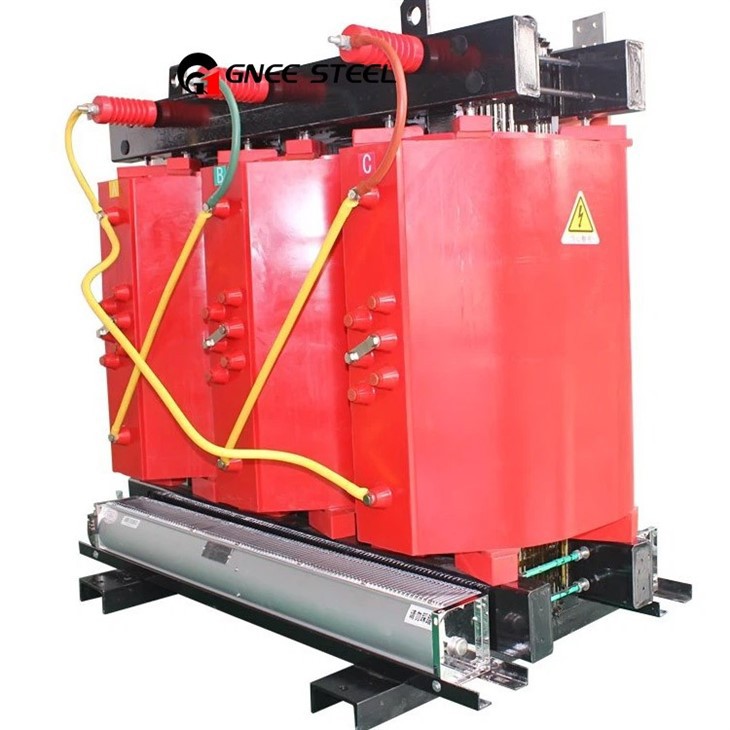
A dry-type transformer is an electrical device designed to lower the incoming voltage of a current to make it easier for electrical devices to withstand high voltage electrical currents. Dry Type electrical transformers do not use liquids to insulate the windings and core, instead, their design uses a sealed container filled with pressurized air. One of the most common types of dry-type electrical transformer is cast resin. These transformers are well suited for high moisture environments due to the core being insulated in a layer of waterproof epoxy resin.

Benefits of Dry Type Transformer
Dry type transformers offer several key benefits that make them particularly suitable for certain applications and environments:
1. Fire safety: The absence of any liquid insulating medium eliminates the risk of fire or explosion due to electrical faults, making them ideal for locations where high standards of fire safety are required.
2. Environmentally friendly: Since they do not utilize oil or other flammable fluids, dry type transformers are less likely to cause environmental contamination in the event of a leak or failure.
3. Maintenance: With fewer fluids and simpler design, dry type transformers generally require less maintenance and upkeep compared to their liquid-filled counterparts.
4. Installation flexibility: Due to their non-flammable nature, dry type transformers can be installed indoors without the need for dedicated fire suppression systems, providing greater flexibility in placement.
5. Longer life expectancy: Properly maintained dry type transformers can have a longer operational life because they are less susceptible to the degradation caused by the breakdown of insulating oils over time.
6. Reduced space requirements: Depending on the model and technology, some dry type transformers can be more compact than equivalent oil-filled transformers, potentially saving space in installations.
7. Lower leakage current: Without the need for a continuous supply of insulating oil, dry type transformers often exhibit lower leakage currents, improving efficiency and reducing heat losses.
8. No oil replacement: There is no need to replace or replenish insulating fluids, which can be a significant ongoing cost for liquid-filled transformers.
9. Electromagnetic interference: Some designs of dry type transformers can provide better shielding against electromagnetic interference (EMI), which is beneficial in sensitive electronic environments.
10. Energy efficiency: Advanced dry type transformers can be designed with higher efficiency ratings to meet modern energy conservation standards.
11. Customization: Dry type transformers can often be customized to meet specific application requirements, including voltage, kVA rating, and physical dimensions.

Types of Dry Type Transformer
Dry type transformers come in several varieties, each designed to meet specific requirements in terms of insulation, cooling, and application. Here's an overview of the main types:
Encapsulated dry type transformers
These are completely sealed units where the windings and all internal components are encapsulated in a solid insulating material, typically epoxy resin. This encapsulation provides excellent protection against dust, vermin, and contaminants, and also serves as a cooling medium.
Non-encapsulated dry type transformers
In contrast to encapsulated types, these transformers have coils that are not surrounded by a solid insulating material. The windings are insulated from one another using pressboard, paper, or other solid dielectrics but remain exposed to the surrounding environment to some extent.
Vacuum pressure impregnated (VPI) transformers
VPI transformers fall under the non-encapsulated category but are unique in their manufacturing process. The windings are coated with insulating materials and then subjected to vacuum pressure impregnation, which forces the insulating material deep into the windings. After curing, the windings are highly resistant to moisture and thermal shock.
Cast coil transformers
These units have coils that are cast in place with a solid insulating compound, usually epoxy resin. The casting process ensures a robust, monolithic construction that offers good mechanical strength and thermal stability.
Gas-immersed transformers (GIT)
Though considered dry type due to the absence of free-flowing liquid, GITs operate with a dielectric gas, such as sulfur hexafluoride (SF6), which is used both as an insulating medium and for arc quenching.
Resin-potted transformers
Similar to VPI transformers, these have their windings potted in resin, which is then cured to form a solid block. The potting process provides excellent protection against external elements and physical shocks.

Application of Dry Type Transformer
Dry type transformers are widely used in various applications due to their safety features and versatility. Their lack of liquid insulation makes them particularly suited for indoor environments and locations where fire hazard mitigation is crucial. Here are some common applications:
1. Commercial buildings: They are commonly found in shopping centers, office buildings, and schools, where the risk of fire due to transformer malfunction needs to be minimized.
2. Industrial facilities: In factories and plants, dry type transformers are used for distribution of power and in machine tool drives, offering reliability and safety in potentially hazardous environments.
3. High rise buildings: Their fire resistance qualities make them ideal for the power distribution in tall buildings, where the risk of fire spreading is a major concern.
4. Hospitals: Due to the critical nature of healthcare facilities, the safety and dependability of dry type transformers are essential for power supply to critical equipment.
5. Telecommunications: They provide reliable power to telecommunication equipment, ensuring uninterrupted service in both urban and rural areas.
6. Utility networks: For secondary distribution networks, especially in urban areas with dense population, dry type transformers are employed to step down transmission voltages to safer levels for residential and commercial use.
7. Mining operations: In underground mines, where the presence of flammable gases is a concern, dry type transformers are used to reduce the risk of explosions.
8. Transportation hubs: Airports, train stations, and bus terminals use dry type transformers for their electrical substations to ensure safe and reliable power distribution.
9. Renewable energy systems: In solar panel arrays and wind farms, where transformers might be exposed to the elements, dry type transformers offer durability and protection against the environment.
10. Data centers: To maintain the integrity of data and avoid downtime, dry type transformers are utilized for their reliability and resistance to environmental factors.
11. Marine applications: On ships and offshore platforms, where the risk of oil spills and fires is heightened, dry type transformers are preferred for their safety and ease of maintenance.

Components of Dry Type Transformer
A dry type transformer consists of several key components that work together to facilitate the conversion of electrical energy from one voltage level to another. Here's an outline of the main components:
Core: The core is typically made of silicon steel laminations stacked in a specific manner to minimize electromagnetic interference and Eddy current losses. It provides a path for the magnetic flux produced by the current flowing through the windings.
Windings: There are two types of windings in a transformer: primary and secondary. The primary winding is connected to the input voltage source, and the secondary winding steps up or steps down the voltage to the desired level. The windings are usually made of copper or aluminum and are insulated with materials like Nomex or polyester film to prevent short-circuits.
Insulation system: This system provides electrical isolation between the windings, the windings and the core, and between different turns of the same winding to prevent current leakage and ensure the integrity of the windings. The insulation may include varnish coatings, solid epoxy resins, or other non-conductive materials.
Terminal boxes: These are enclosures at the top or bottom of the transformer housing the wiring terminals for connecting the transformer to the power source and the load. Terminal boxes often include barriers to protect the internal components from environmental conditions.
Tap winding: Some dry type transformers may include a tap winding, which allows for adjustment of the output voltage within certain limits without changing the primary voltage.
Breather and moisture scavenger elements: While not present in all dry type transformers, some designs incorporate breather elements to filter the air that enters the transformer, protecting the internal components from dust and moisture.
Cooling system: Dry type transformers can be cooled passively through heat radiation or actively using fans. Encapsulated or VPI transformers rely on the solid insulation to dissipate heat, while others may require forced air cooling.
Bracketry and support structure: This includes all the hardware necessary to support and secure the transformer's windings, core, and other components within the case or tank.
Overcurrent protection: Devices like circuit breakers or fuses are often included to protect the transformer from overloading, which could lead to damage or failure.
Mechanical bushings: These are insulators that provide electrical isolation between the high voltage windings and the lower voltage control circuits or ground.
Dry type transformers are constructed using a variety of materials, each chosen for its electrical, mechanical, and thermal properties to ensure optimal performance and reliability. The primary materials used in dry type transformers include:
Steel laminations: The core of the transformer is typically made from silicon steel laminations. These are stacked to form a continuous path for the magnetic flux. The use of silicon steel reduces the hysteresis loss and provides better magnetic properties. Laminations are thin to minimize eddy current losses, which occur when alternating magnetic fields induce currents within the core material.
Winding material: The conductors used for the primary and secondary windings are usually made from copper or aluminum due to their excellent conductivity. Copper is more conductive but also more expensive than aluminum. Aluminum is lighter and cost-effective but has higher resistive losses.
Insulation material: Insulation is paramount in dry type transformers to prevent short circuits and ensure electrical isolation. Materials such as Nomex (a type of aramid paper), Mylar (biaxially oriented polyethylene terephthalate), and various types of polyester films are used for insulation between turns, between layers, and between the windings and the core. Epoxy resin is also commonly used for VPI (vacuum pressure impregnation) or encapsulation processes to provide a solid insulating matrix.
Breather and moisture absorber: In some designs, silica gel is used as a desiccant to absorb moisture that might enter the transformer through air movement. This helps to protect the internal components from humidity and moisture.
Cooling elements: Depending on the cooling method, either passive radiators or active cooling fans may be used. The radiators are usually made of aluminum or copper for efficient heat dissipation. Fans, if used, are typically made from plastics or metal alloys.
Structural materials: The case, tank, or frame that houses the transformer's core and windings is generally made from sheet metal, often galvanized steel or aluminum, to protect the transformer from environmental factors and to provide structural integrity.
Terminal hardware: The terminals used for connecting the transformer to the power grid are usually made from metals such as copper or brass for good electrical conductivity.
Overcurrent protection devices: These can include circuit breakers or fuses made from materials that melt or trip at predetermined current levels, such as tin-plated copper for the fuse element or bimetallic strips for thermal overload protection.
Process of Dry Type Transformer
Dry type transformers are manufactured through a series of processes that involve careful selection of materials and precise engineering to ensure they meet the required specifications for operation. The process generally includes the following steps:
Design and engineering
Engineers design the transformer based on the desired specifications, such as voltage levels, power ratings, and cooling requirements. They select appropriate materials for the core, windings, and insulation systems.
Core fabrication
Silicon steel sheets are cut into the desired shape and stacked to form the core. The stacking pattern minimizes the magnetic reluctance and, therefore, the losses. Laminations are punched out and stacked, often with adhesive applied between layers to enhance mechanical strength.
Winding application
Conductive wires or tapes are wound around the core to create the primary and secondary windings. Automated machines are often used for precision winding to ensure proper insulation and spacing between the turns.
Insulation
Each layer of winding and between the windings and the core is coated or wrapped with insulating materials such as Nomex, polyester film, or epoxy resins. This insulation prevents short circuits and reduces electrical losses.
Vacuum pressure impregnation (VPI)
If the transformer is to be encapsulated, the windings and core are immersed in an epoxy resin, and the entire assembly is placed in a vacuum chamber. The vacuum process removes any trapped air, and then the part is cured under pressure to ensure a uniform, void-free insulation matrix.
Cooling system integration
Cooling elements such as fins or fans are attached or integrated into the transformer's housing to dissipate heat effectively.
Assembly
The core with the windings and insulation is assembled into the final housing or case, which may be made from metal or other durable materials that provide physical protection and allow for mounting and cooling.
Testing
Transformers undergo rigorous testing to verify their electrical characteristics and performance. Tests include insulation resistance, polarity checks, short circuit tests, and temperature rise tests.
Final inspection and quality control
Before shipment, each transformer undergoes a final inspection to confirm it meets all specified criteria and quality standards.
How to Maintain Dry Type Transformer
Maintaining a dry type transformer involves regular inspections and preventive measures to ensure longevity and reliable operation. Here are key aspects to consider:



Visual inspections:
1.Check for signs of overheating, such as discoloration, charring, or smoke.
2.Look for physical damage to the housing or enclosure.
3.Verify that connections and terminals are secure and free of corrosion.
Thermal monitoring:
1.Monitor temperature rise within the transformer to ensure it does not exceed the manufacturer's recommended limits.
2.Use thermal imaging cameras to detect hotspots that could indicate internal issues.
Insulation Testing:
1.Perform insulation resistance tests periodically to check the integrity of the insulation system.
2.High-resistance readings suggest good insulation health, while low readings may indicate degradation.
Dielectric Testing:
Conduct dielectric strength tests or partial discharge measurements to assess the insulation's ability to withstand electrical stresses.
Mechanical integrity:
1.Ensure that the cooling system (if applicable) is functioning correctly and that airflow is not restricted.
2.Check for any structural deformation or damage to the support brackets or mounting hardware.
Environmental conditions:
1.Keep the surrounding environment clean and free of debris that could cause overheating or short circuits.
2.Protect the transformer from direct sunlight, rain, and extreme temperatures.
Regular maintenance schedules:
1.Follow the maintenance schedule outlined by the transformer manufacturer.
2.Replace any damaged or deteriorated insulation materials promptly.
Load management:
1.Avoid operating the transformer at full load continuously to reduce wear and tear.
2.Monitor loads and voltages to ensure they remain within the rated limits.
Record keeping:
1.Maintain detailed records of maintenance activities, test results, and any observed issues.
2.This information is valuable for tracking the transformer's condition and scheduling future maintenance.
The design of a dry-type transformer depends on several factors that affect its performance, efficiency, and durability. Some of the important factors to consider when designing a dry-type transformer are:
Choice of insulation type: The insulation type determines the temperature rating, dielectric strength, mechanical strength, and thermal shock resistance of the transformer. Generally, F and H-class insulation materials are used for dry-type transformers because they can withstand high temperatures (up to 155°C and 180°C, respectively) and have good electrical and mechanical properties. Common insulation materials include varnish, epoxy resin, polyester resin, etc.
Selection of winding material: The winding material determines the conductivity, resistance, loss, and mechanical strength of the transformer. Generally, copper and aluminum are used as winding materials for dry-type transformers because they have high conductivity and low cost. Copper has better conductivity and mechanical strength than aluminum, but it is more expensive and heavier. For the same current rating, copper requires less cross-section area than aluminum.
Selection of core material with low hysteresis loss: The core material determines the magnetic flux density, permeability, hysteresis loss, and eddy current loss of the transformer. The core material should have high permeability and low hysteresis loss to reduce the no-load loss and improve the efficiency of the transformer. Common core materials include silicon steel, cold rolled grain oriented steel (CRGO), amorphous metal, etc.
Regulation: The regulation of a transformer is the ratio of the voltage drop at full load to the no-load voltage. The regulation indicates the ability of the transformer to maintain a constant output voltage under varying load conditions. The regulation depends on the impedance and resistance of the transformer. A low impedance and resistance result in low regulation and better voltage regulation. The leakage reactance of a dry-type transformer should be kept within 2% during design to achieve low regulation.
Life expectancy: The life expectancy of a transformer is the expected time that the transformer can operate without failure or degradation. The life expectancy depends on the breakdown of the winding insulation due to temperature rise, moisture, dust, corrosion, or other factors. The insulation class and quality of the dry-type transformer should be chosen to withstand high temperatures and harsh environments without degrading. The temperature rise of the transformer should not exceed the limit specified by the insulation class.
Losses: The losses of a transformer are the difference between the input power and the output power. The losses consist of no-load losses and load losses. The no-load losses are independent of the load and include core loss and eddy current loss. The load losses are proportional to the load and include copper loss and stray loss. The losses affect the efficiency, heating, and cooling of the transformer. The core material, winding material, insulation material, and design parameters should be selected to minimize the losses and maximize the efficiency of the dry-type transformer.
Overloading: The overloading of a transformer is the condition when the transformer operates beyond its rated capacity or temperature limit. The overloading causes overheating, insulation breakdown, short circuits, or fire in the transformer. The overloading can be caused by excessive load demand, harmonics, faults, or ambient temperature. The dry-type transformer should be designed with sufficient margin to handle overloads without damaging its components or performance. The dry-type transformer should also be equipped with a fan-cooling system or an air-conditioning system to dissipate the heat generated by overloads.
K-factor: The K-factor is a measure of the ability of a transformer to withstand the heat generated by non-sinusoidal currents in its windings. Non-sinusoidal currents are caused by various electronic devices that produce harmonics in the voltage and current waveforms. Harmonics increase the losses, heating, and distortion of the transformer. A high K-factor indicates that the transformer can handle higher levels of harmonics without overheating or degrading. The dry-type transformer should be designed with a high K-factor to provide long-lasting life and reliable performance in applications that involve non-sinusoidal currents.
What Is the Difference Between Liquid and Dry Type Transformers?
The main differences between liquid and dry-type transformers are in their cooling methods and construction. Here are some of the key differences:
Cooling method: Liquid transformers use a liquid, usually oil, as the coolant. The oil circulates through the transformer, carrying away the heat generated during operation. Dry-type transformers, on the other hand, rely on air cooling. They have heat dissipation mechanisms such as fans or air vents to remove the heat.
Construction: Liquid transformers have a more complex construction as they require an oil tank, pumps, and piping for the oil circulation system. Dry-type transformers are generally more compact and have a simpler design.
Fire safety: Liquid transformers pose a higher fire hazard due to the presence of oil. In the event of an accident or malfunction, the oil can catch fire and spread. Dry-type transformers are considered safer in this regard as they do not have a flammable liquid.
Maintenance: Liquid transformers require regular oil sampling and testing to monitor the condition of the oil. They also need to be checked for leaks. Dry-type transformers have relatively lower maintenance requirements.
Location: Liquid transformers may have restrictions on their placement due to the need for proper oil containment and fire safety measures. Dry-type transformers can be installed in more diverse locations.
Environmental friendliness: Dry-type transformers are more environmentally friendly as they do not have the potential for oil leaks that could cause pollution.
Cost: Generally, dry-type transformers are initially more expensive than liquid transformers. However, the maintenance costs for liquid transformers over their lifetime can be higher.
Vulnerability to moisture: Dry-type transformers are less susceptible to moisture and humidity, making them suitable for certain applications or environments where moisture is a concern.
Weight and size: Dry-type transformers are typically lighter and smaller compared to liquid transformers of similar power ratings.
Noise: Dry-type transformers tend to be quieter during operation compared to liquid transformers.

Dry-Type Transformers Vs. Oil-Filled Transformers: Key Differences
Dry-type transformers and oil-filled transformers have several key differences that impact their performance, maintenance, and application. Here are some of the main distinctions:
1.Cooling method: Dry-type transformers use air as the cooling medium, while oil-filled transformers rely on oil for heat dissipation.
2.Fire safety: Dry-type transformers are considered safer in terms of fire risk as they do not have a flammable oil component. Oil-filled transformers pose a greater fire hazard if the oil catches fire.
3.Maintenance: Dry-type transformers generally require less maintenance compared to oil-filled transformers. There is no need for oil sampling or checks for oil leaks in dry-type transformers.
4.Location: Dry-type transformers can be installed in areas where oil spills could cause problems, such as in cleanrooms or environments with strict fire safety regulations.
5.Environmental friendliness: Dry-type transformers are more environmentally friendly as they do not present the risk of oil leaks and potential pollution.
6.Noise: Dry-type transformers tend to operate more quietly than oil-filled transformers.
7.Cost: Initially, dry-type transformers may be more expensive than oil-filled transformers. However, over the lifetime of the transformer, the maintenance costs for oil-filled transformers can be higher.
8.Vulnerability to moisture: Dry-type transformers are less susceptible to moisture and humidity, making them suitable for applications in humid or damp conditions.
9.Weight and size: Dry-type transformers are typically lighter and smaller in size compared to oil-filled transformers of similar power ratings.
10.Application specificity: Some applications may have specific requirements that favor one type of transformer over the other. For example, in hazardous areas, dry-type transformers may be preferred.

Our Factory
Amidst the vast land of China and the majestic Taihang Mountains lies Anyang, Henan Province, located on the eastern foothills of the Taihang mountain range. It is one of the eight ancient capitals of China and home to an outstanding steel supply chain enterprise – GNEE GROUP.


Our Certificate

FAQ
Q: What is a dry type transformer used for?
Q: What is difference between dry type and oil type transformer?
Q: What is the difference between liquid and dry type transformers?
Q: Why are dry type transformers more popular?
Q: Why is it called a dry type transformer?
Q: What is the voltage of a dry type transformer?
Q: What is the life expectancy of a dry type transformer?
What is the life expectancy of Dry Type Transformers? ANSWER: Generally speaking, it is a minimum of 25 years. This is similar to Oil Type Transformers. Transformers' life expectancy is naturally dependent on operational conditions.
Q: How much can you load a dry type transformer?
If your code allows a maximum of 80% loading a single phase transformer will need to be 25 KVA. If you use a three phase transformer you lose 1/3 of the capacity and the transformer needs to be 30 KVA for 100% loading or 37.5 KVA for 80% loading.
Q: Can you use a dry-type transformer outside?
Q: What are the requirements for a dry-type transformer?
Q: Do dry transformers require air circulation?
Q: How hot can a dry-type transformer get?
Q: What is an example of a dry-type transformer?
Q: What is the preventive maintenance for a dry type transformer?
Q: Can dry type transformer catch fire?
Q: Can dry-type transformers be installed without an enclosure?
Q: Is it OK to oversize a transformer?
Q: Do transformers need to be bolted down?
Q: What are the problems with dry type transformers?
Q: What should dry type transformers installed outdoors have?
We're professional dry type transformer manufacturers and suppliers in China, specialized in providing high quality customized service. We warmly welcome you to buy cheap dry type transformer for sale here and get free sample from our factory. For price consultation, contact us.
Single Phase Dry Type Transformer, 150kva Dry Type Transformer, Encapsulated Dry Type Transformer