


1.What are the core challenges?
During stamping, the metal substrate (steel or aluminum) undergoes plastic deformation. The organic coating on the surface must be able to synchronously and closely follow the substrate deformation without cracking or detaching. This requires the coating to possess excellent flexibility, ductility, and adhesion.
2.What is the definition of "shallow stamping"?
Large bending radius: The inner radius (R-angle) of all bends should be no less than 2-3 times the sheet thickness. The smaller the R-angle, the greater the stress the coating bears.
Low drawing depth: Shallow drawing depth, with minimal material stretching deformation (e.g., drawing depth less than 10%-15% of the part's diameter or width).
Gentle undulations: Such as slight ribs, bumps, louvered flanges, etc., rather than deeply drawn cup-shaped parts.
Simple forming: Such as simple flanges, shallowly drawn electrical enclosure panels, decorative covers, lampshades, instrument panels, etc.
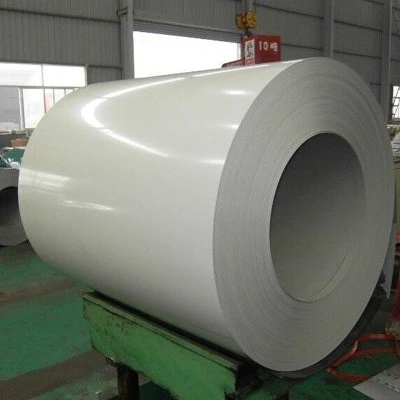
2.How to choose the right materials?
Coating system is key:
Preferably, use highly flexible coatings: such as plastisol (PVC) coatings. These coatings can be 100-200μm thick or thicker, acting like a soft "skin," offering excellent impact resistance and formability, making them ideal for shallow-drawn parts.
High-quality flexible coatings: Choose deep-drawing grade polyester (SP), high-weather-resistant polyester (HDP), or polyurethane (PU), and clearly inform the supplier that it will be used for "shallow-drawing" when ordering. They will adjust the coating formulation and curing process to enhance flexibility.
Avoid hard and brittle coatings: such as ordinary polyester (PE) or over-baked coatings, which have poor flexibility and are prone to cracking.
Substrate selection:
High-quality galvanized substrates (such as DX51D+Z, DX52D+Z, DX53D+Z): The "D" in the grade indicates stamping. Grades such as DX53D/DX54D (corresponding to European standards) or CQ, DQ, DDQ (corresponding to American standards) have substrates with excellent deep-drawing properties.
Primer adhesion: The chemical conversion layer (passivation layer) of the substrate and the primer must have excellent adhesion, which is the foundation for the coating system to not fall off.
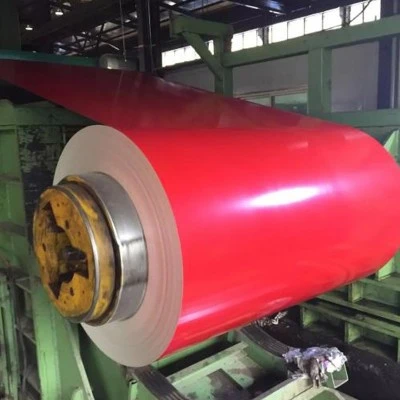
3.How to optimize molds and processes?
Mold Design:
High Polishing, Zero Defects: All mold surfaces in contact with the coating (especially the rounded corners of the punch and die) must be highly polished, free of any scratches or burrs, to minimize friction and abrasion.
Appropriate Corner Radius: The working corner radius of the mold should be as large as possible, and must never be less than the minimum bending radius allowed by the material.
Appropriate Clearance: Mold clearance must be precisely controlled; too small a clearance will lead to shearing and excessive compression of the coating.
Stamping Process:
Use Special Lubricant: Volatile, non-polluting stamping oil or lubricant must be used. Lubrication reduces friction and lowers the risk of coating scratches or peeling. It must be easy to clean after stamping.
Control Stamping Speed: Use a relatively low and steady stamping speed to avoid excessive instantaneous stress caused by high-speed impact.
Maintain Cleanliness: Ensure that the mold and sheet metal surfaces are free of hard particles to prevent crushing.

4.What are the necessary preprocessing and postprocessing steps?
Material Condition: Before stamping, the material should be in good condition, free from creases and scratches, and the process should be carried out at a suitable temperature (room temperature).
Edge Protection: After stamping, the cut edges of the parts will expose the metal substrate, which is a weak point for corrosion protection. For outdoor or high-requirement parts, the cut edges must be sealed (e.g., by applying anti-rust paint, spraying sealant, or installing decorative strips).
5.What tests are required?
Cupping Test: The forming limit of the material is tested using an Erichsen cupping tester. Observe whether the coating cracks when it protrudes to the specified height.
Bending Test: The material is bent 180 degrees to the minimum bending radius of the actual product. The outer side of the coating is checked for cracking.
Adhesion Test: A cross-cut adhesion test is performed on the stamped parts to ensure that the coating does not peel off due to deformation.