


1.What is the definition of galvanized sheet?
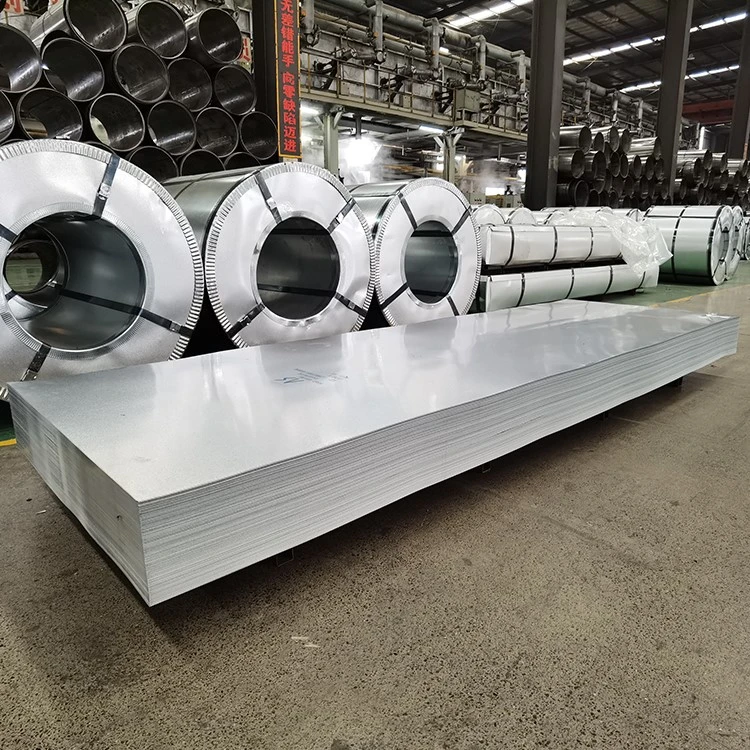
Galvanized sheet refers to a steel sheet with a layer of zinc on the surface. By coating the zinc layer on the surface of the steel sheet, it can effectively prevent the steel sheet from rusting and corroding, and extend its service life.
2.What is the working principle of galvanized sheet?
On the one hand, zinc reacts with oxygen to form a dense oxide film, which can isolate air and moisture, prevent the steel plate from contacting with external oxygen, moisture, etc., and prevent oxidation; on the other hand, when the zinc layer is scratched somewhere, the surrounding zinc will melt first and become a substitute for iron, protecting the exposed steel from corrosion by sacrificing the anode. This is the cathodic protection effect.
3.What are the classifications of galvanized sheets?
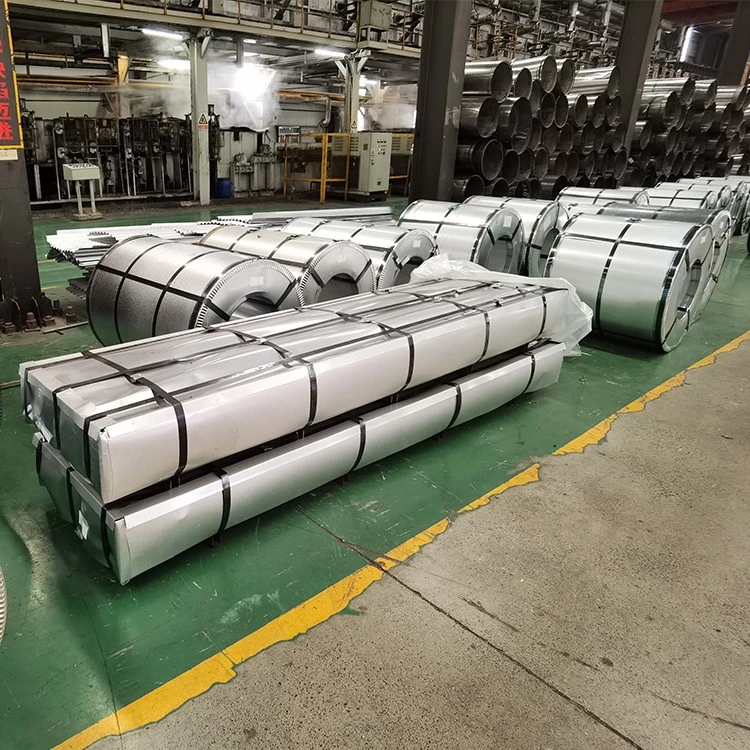
Classification by production process: Hot-dip galvanized steel sheets can be divided into hot-dip galvanized steel sheets and electrogalvanized steel sheets. Hot-dip galvanized steel sheets are made by immersing the steel in molten zinc, forming a protective alloy layer on the surface. Electrogalvanized steel sheets use electrolysis to deposit a uniform, dense, and well-bonded metal or alloy layer on the workpiece surface.
Classification by substrate: Hot-rolled galvanized steel sheets can be divided into hot-rolled galvanized steel sheets and cold-rolled galvanized steel sheets. The substrate for hot-rolled galvanized steel sheets is hot-rolled steel sheets that have been pickled, while the substrate for cold-rolled galvanized steel sheets is cold-rolled or hardened steel sheets.
Classification by surface condition: Galvanized steel sheets can have different surface conditions, such as ordinary spangles, small spangles, large spangles, and no spangles. In addition, German standards also specify surface grades.
Classification by zinc coating weight: The zinc coating weight is a commonly used and effective method to indicate the thickness of the zinc layer on galvanized steel sheets. The unit is g/m². Common zinc coating weights include 120g/m², 180g/m², 220g/m², and 250g/m².
4.What is the production process of galvanized sheet?
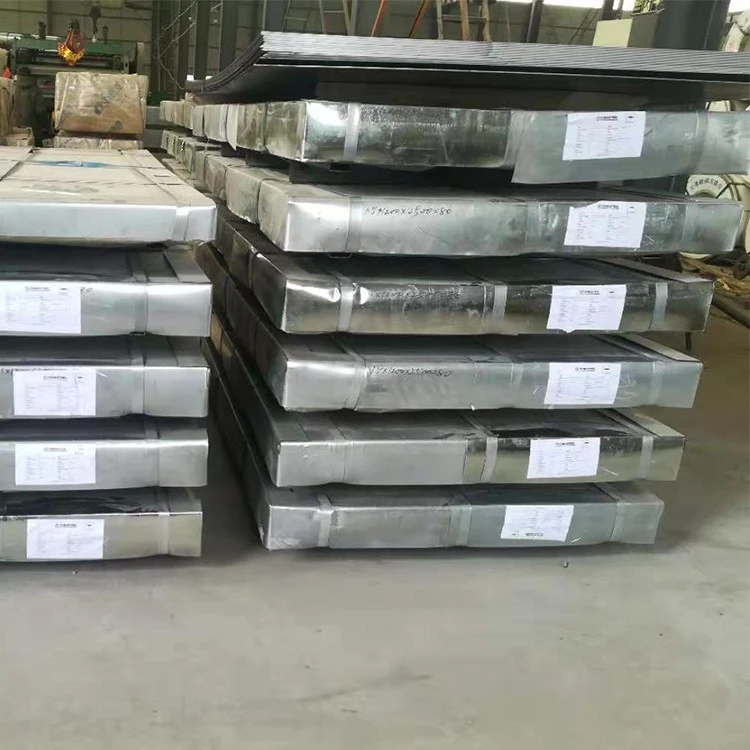
Hot-dip galvanizing process: includes uncoiling and welding, degreasing and cleaning, annealing, air knife zinc layer control, alloying, leveling and straightening, post-processing, edge trimming, and oiling.
Electrogalvanizing process: The specimen is typically pre-treated with degreasing and pickling. Then, it is placed in a zinc salt solution and connected to the negative terminal of the electrolysis equipment. A zinc plate is placed opposite the specimen and connected to the positive terminal of the electrolysis equipment. Using the directional flow of current from the positive to the negative terminal, Zn²⁺ in the electrolyte nucleates and grows under the action of the potential, depositing on the specimen to form a zinc coating.
5.What are the performance characteristics of galvanized sheet?
Strong Corrosion Resistance: Thanks to the protective zinc layer, galvanized sheet exhibits excellent corrosion resistance, effectively resisting erosion from the atmosphere, water, and other environmental factors, extending its service life.
Good Processability: Galvanized sheet exhibits excellent plasticity and machinability, allowing it to be bent, stamped, welded, and processed in a variety of ways to meet the requirements of various applications.
Excellent Surface Quality: After various treatment processes, the galvanized sheet's surface is smooth and flat, exhibiting excellent appearance quality, making it suitable for applications requiring high surface quality.
Economical and Practical: The production process for galvanized sheet is relatively simple, resulting in low costs. Furthermore, its strong corrosion resistance and long service life reduce maintenance costs during use, making it highly cost-effective.