


DC01 and DC03 are both grades of cold-rolled low-carbon steel defined under the European EN 10130 standard for sheet products used in cold forming-but they're optimized for slightly different forming performance and mechanical behavior.
Formability
DC01: General cold-forming quality suitable for simpler bending, stamping, and light forming tasks.
DC03: Better deep-drawing and complex forming capability thanks to improved ductility. It's often chosen when parts require greater stretch without cracking.
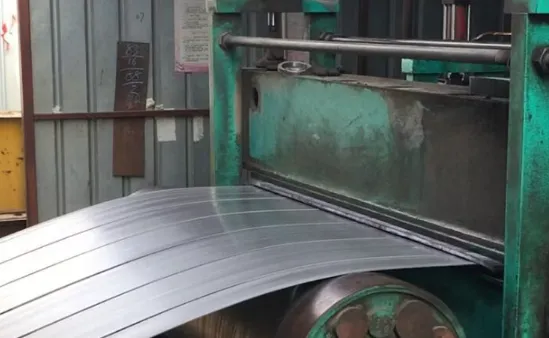
Chemical Composition and Alloying Strategy
The EN family DC0x are intentionally very low in alloy content to maximize formability and to control surface quality. Typical compositional emphasis is on minimizing carbon, silicon, phosphorus and sulfur (impurities) rather than adding strengthening alloying elements.
Table: Typical compositional emphasis (indicative; consult the precise standard edition or supplier certificate for exact limits)
| Element | DC01 (typical emphasis) | DC03 (typical emphasis) |
|---|---|---|
| C (carbon) | Low; controlled to enable cold rolling and moderate formability (DC01 higher limit than DC03) | Lower than DC01 to improve deep‑drawing and reduce work‑hardening sensitivity |
| Mn (manganese) | Small addition to control strength and rolling (controlled level) | Similar to DC01 (used for strength/bake hardening control) |
| Si (silicon) | Low (deoxidation level; tends to be limited to control surface and forming) | Kept equally low or lower to improve drawability |
| P (phosphorus) | Kept low (impurity) | Kept low (similar to DC01) |
| S (sulfur) | Kept low (impurity) | Kept low (similar to DC01) |
| Cr, Ni, Mo, V, Nb, Ti, B | Not intentionally added in significant amounts; present at residual/traces if any | Not intentionally added (residual only) |
| N (nitrogen) | Controlled to avoid embrittlement; typically low | Controlled; low to support formability |
Mechanical Properties
Yield Strength: DC03 typically has a lower maximum yield strength than DC01, meaning it deforms more easily under load (easier deep drawing).
Tensile Strength: DC03 can also have a slightly lower tensile range, but both grades stay within similar ranges since they're low-carbon steels.
Elongation (Ductility): DC03 usually shows higher elongation (percentage stretch before fracture), which improves its formability.
| Feature | DC01 | DC03 |
|---|---|---|
| Standard | EN 10130 | EN 10130 |
| Yield Strength | Higher | Lower (better stretch) |
| Tensile Strength | Moderate | Slightly lower |
| Elongation | Good | Better (more ductile) |
| Formability | Standard | Improved (deep drawing) |
| Typical Use | Simple bends, general sheet parts | Deep-drawn parts, complex shapes |
Typical Applications
DC01: General sheet metal components like covers, brackets, enclosures, and simpler automotive panels.
DC03: Automotive inner panels, appliance deep-drawn housings, and other parts requiring more complex shapes and smoother surface quality.
Cost and Availability
Relative cost
DC01 is often slightly less expensive in commodity markets because it is a standard general‑purpose cold‑rolled grade.
DC03 may carry a small premium due to tighter process control and annealing cycles tuned for enhanced formability.

Availability by product form
Both grades are widely available in coils and cut‑to‑length sheets in Europe and many other regions because they are EN standard grades.
Availability in specific thicknesses, surface finishes, and coated variants (electrogalvanized, pre‑painted) will vary by mill and region; lead times for DC03 in special tempers or coated forms may be slightly longer.
📌 Summary
In practical terms:
Choose DC01 when you need a reliable, general-purpose cold-rolled steel with decent strength and moderate formability.
Choose DC03 when your parts require deeper drawing, higher ductility, and a smoother surface finish for more complex forming and better final appearance.
Both are still mild, low-carbon sheet steels, but DC03 is essentially a "softer" version of DC01 tuned for deeper and more complex forming operations.
GNEE Steel also supplies a variety of Cold rolled steel plates, such as DC01,DC03,DC04,DC05,DC06,DC07,SPCC, SPCD,SPCE,SPCF,ST12,ST13,ST14,ST15etc. If you want to know more about other types of steel plates, you can call the consultation hotline at +8615824687445 or send an email to sale@gneegi.com. You are welcome to consult us, and we are very willing to answer your questions.

What is the difference between DC01 and DC04 steel?
DC04 and DC01 are both cold-rolled, unalloyed quality steels that are used for various industrial applications. While DC01 serves as the standard grade for general cold forming processes, DC04 is characterized by improved deep-drawing properties and higher ductility.
Is DC01 the same as CR4?
Cold Reduced steel
Here at GNEE Steel, we stock and process DC01 mild steel (often referred to as CR4), in varying thicknesses from 0.9mm up to 3mm. Each sheet is de-coiled and flattened to strict tolerances in our works, ensuring consistent quality and flatness, every time.
What does DC01 mean?
DC01 represents the basic grade of the DC steel family and is also known under the former designations St12 or FeP01. This grade can be used for simple forming operations such as bending, coining, beading and drawing.
What is the difference between DC01 and DC03?
DC01 – This grade can be used for simple forming work, e.g. bending, embossing, beading and drawing. DC03 – This grade is suitable for forming requirements such as deep drawing and difficult profiling.
What is DC01 steel equivalent to?
Material 1.0330, DC01 steel equivalent to ASTM, ISO, European (German DIN, British BSI, France NF), Japanese JIS and Chinese GB standard (for reference). Note: DIN 1623 has been replaced by DIN EN 10130, and the designation ST12 has been replaced by DC01.
What is the thickness of DC01 material?
Galvanized Steel Sheet - Grade Dc01, Thickness 0.2-3.50mm, Width 914-1250mm | Cold Rolled, Durable Zinc Coating, Long Lasting Toughness.
Is cold-rolled steel better than hot rolled steel?
Cold rolling produces steel with closer dimensional tolerances and a wider range of surface finishes than hot rolling. It is also up to 20% stronger than hot rolled through the use of strength hardening.