


1.Why is rust prevention necessary?
Contact Point Corrosion:
Even if the steel coil has an overall rust-proof coating, the localized areas in contact with the pallet are subjected to immense pressure (typically exceeding 10 tons), easily damaging the surface rust-proof oil film or coating.
If the pallet is damp or contains corrosive substances, pressure corrosion or crevice corrosion will first occur at these contact points.
Pattern-Related Issues:
Wooden Pallets: Wood absorbs and releases moisture and acidic substances (such as organic acids produced by the decomposition of lignin), making it highly susceptible to corrosion from prolonged direct contact with metal surfaces.
Steel Pallets: If the surface is damaged and rusted, contact with the steel coil will lead to electrochemical corrosion (dissimilar metal contact or potential difference corrosion), accelerating the rusting process.
Storage Environment Factors:
Humidity: The risk of rust increases significantly when air humidity exceeds 60%. Coastal areas, rainy seasons, and warehouses with large diurnal temperature variations that easily produce condensation pose an extremely high risk.
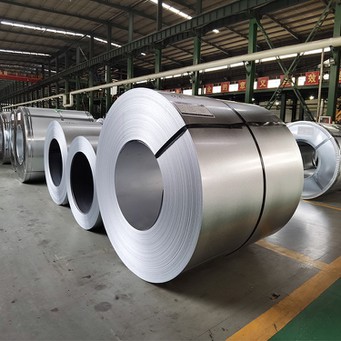
2.How to inspect and handle pallets?
Use dry, clean, and uncontaminated pallets. The moisture content of wooden pallets should be kept below 18%.
Pallets that are moldy, damp, or severely contaminated must never be used.
For steel pallets, ensure that the surface coating is intact and free of rust.

3.How to implement isolation and buffering?
Use rust-preventive gaskets between the steel coil and the pallet. This is the most effective and commonly used method. Common materials include:
Rust-preventive paper/corrugated cardboard: Contains vapor-phase rust inhibitors (VCI), which evaporate and adhere to the metal surface to form a protective film. Suitable for medium to long-term storage.
Plastic or rubber gaskets: Such as HDPE gaskets, providing physical isolation to prevent friction from hard objects and direct contact with moisture.
Composite rust-preventive cushioning pads: Combining physical cushioning and VCI rust prevention, offering the best results.

4.What upgrade measures are needed for high-requirement, long-term storage, or harsh environments?
Improve the storage environment:
Control warehouse temperature and humidity; ideally, relative humidity should be ≤50%.
Maintain good ventilation to prevent condensation.
Strengthen overall packaging:
For high-quality steel coils stored long-term, in addition to gaskets, consider wrapping the entire coil with rust-proof stretch film, and placing VCI rust-proof bags or desiccants inside.
Use rust-proof caps specifically designed for steel coils to protect the ends.
Regular inspection:
Establish a patrol inspection system, especially at contact points and the bottom of lower-layer steel coils.
5.How should we protect our products during short-term indoor storage?
Using a dry, clean tray is sufficient; the risk is low, but it is recommended to add rust-proof paper as a lining.