


Q: Does the toughness of galvanized coils affect the zinc coating?
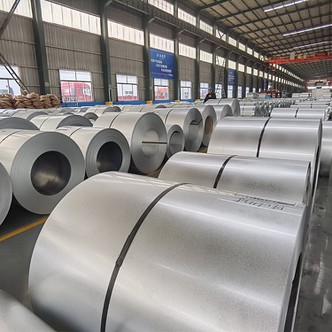
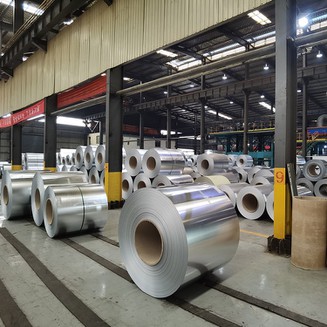
A: Yes, it does. The toughness of galvanized coils-that is, the material's ability to absorb plastic deformation energy before fracture-is not solely determined by the steel substrate. The presence of the zinc coating alters the overall toughness of the galvanized coil in several ways. Studies have shown that compared to the same substrate, hot-dip galvanized steel sheets exhibit decreased tensile strength and plastic deformation capacity. The decrease in plasticity primarily stems from microcracks formed on the substrate surface during hot-dip galvanizing, while the decrease in strength is due to the lower strength of the surface zinc coating compared to the steel substrate. Furthermore, different coating types (pure zinc coating, zinc-iron alloy coating) have significantly different effects on toughness. Therefore, when assessing the toughness of galvanized coils, the zinc coating must be considered as an independent factor and cannot be simply equated with the toughness index of the substrate.
2. What is the effect of intermetallic compounds in zinc-iron alloy coatings on toughness?
A: Zinc-iron alloy coatings consist of multiple thin layers of iron-zinc intermetallic compounds, including the Γ phase, Γ1 phase, δ phase, and ζ phase. These compounds are mostly hard and brittle, and are the main reason for the decrease in toughness of galvanized coils. Among them, the innermost Γ phase, closest to the substrate, is a brittle phase and has the greatest impact on coating adhesion; the thicker the Γ phase, the easier it is to pulverize and peel off. The adjacent Γ1 phase, although it can inhibit the lateral propagation of cracks, is itself somewhat brittle. The grid-like δ phase in the middle has good plasticity and is one of the few toughness-contributing layers in the coating. The outer ζ phase is prone to cracking during deformation and propagates along the phase boundaries. The large differences in plasticity among the phases in the alloy coating cause internal stresses within the coating and at the coating/steel substrate interface due to different degrees of deformation during stamping, leading to premature cracking of the coating and significantly reducing the toughness of the galvanized coil during bending, deep drawing, and other processing.
3. How do microcracks formed during the galvanizing process affect toughness?
A: The hot-dip galvanizing process itself introduces microcracks into the zinc layer and the substrate surface. These cracks become stress concentration points, directly and negatively impacting toughness. Research reveals a multi-stage path for crack initiation and propagation: First, due to residual stress, microcracks form in the high-temperature σ-FeZn10 layer; when subjected to external tensile stress, the cracks propagate upwards along grain boundaries in this layer; subsequently, the cracks transfer to the ζ-FeZn13 layer and continue to propagate along the FeZn13-Zn phase interface; finally, they propagate again along grain boundaries in the surface η-Zn layer until the coating completely fractures. This multi-stage crack propagation mode from the internal brittle phase to the outside means that even before the overall stress reaches the substrate yield strength, coating cracks have already formed and propagated. For galvanized coils that require repeated bending or deep drawing, these microcracks will accelerate propagation during large deformations and even extend into the substrate, severely weakening the material's toughness reserves during service.

4. Does the zinc coating cause hydrogen embrittlement in galvanized coils?
A: Yes. Hydrogen embrittlement is another important mechanism by which the toughness of galvanized coils is affected by the zinc coating, especially in marine atmospheres or humid environments. If the zinc coating is damaged during service, it provides cathodic protection to the steel substrate. However, an excessively negative protection potential can lead to hydrogen evolution on the steel surface. Hydrogen atoms penetrate into the matrix lattice, causing a sharp decrease in material toughness. Studies show that hydrogen permeation in seawater significantly reduces the elongation after fracture and energy density of hot-dip galvanized steel, changing its fracture mode from ductile fracture to quasi-cleavage brittle fracture. As service time increases, the hydrogen content in the material continuously increases, and the hydrogen embrittlement sensitivity also increases. This is why high-strength spring washers, fasteners, etc., usually require special hydrogen removal heat treatment after galvanizing (typically held at 190~230℃ for 6~8 hours) to reduce the risk of brittle fracture.
5. What are the main factors affecting the toughness of galvanized coils? How can they be avoided?
A: The factors affecting the toughness of galvanized coils can be mainly categorized as follows: First, coating thickness and type-the thicker the zinc layer, the greater the risk of crack initiation and propagation; alloyed coatings, due to the presence of hard and brittle intermetallic compounds, generally have lower toughness than pure zinc coatings. Second, substrate composition-the content and ratio of elements such as silicon and manganese in the substrate affect the selective oxidation behavior during annealing. When a brittle ζ phase forms at the interface, the interface is prone to cracking during tensile testing, and the cracks propagate into the substrate, leading to a decrease in toughness. Third, production process-hot-dip galvanizing temperature, immersion time, and alloying processes all affect the thickness and distribution of each phase in the coating, thereby altering the toughness performance. To avoid toughness degradation, the following measures are recommended: select appropriate coating types according to processing requirements (prioritize pure zinc coatings over alloyed coatings for deep-drawing parts); strictly control zinc layer thickness to avoid exceeding design specifications; optimize substrate composition to suppress the formation of unfavorable interfacial brittle phases; and for high-strength galvanized parts, add a hydrogen removal heat treatment process to prevent hydrogen-induced embrittlement.