


Hot Dip VS. Electro Galvanized steel
Galvanizing is the process of applying a zinc coating to steel to provide a rust protection layer. Iron will readily react with oxygen to form iron oxide (rust), and the zinc layer forms a protective barrier around the iron to protect it and improve the longevity of the steel.
The two most common methods of galvanizing steel are Hot Dip and Electrostatic Galvanizing.

What Is Electro Galvanized Steel?
Electro galvanized (EG) steel is flat rolled steel coated with zinc through an electrolytic process. Unlike hot-dip galvanizing, which immerses steel into molten zinc, electro galvanizing applies the zinc coating in a bath using precisely controlled electric currents.
The result is a thin, uniform coating that improves corrosion resistance without altering the steel's surface finish. Because the layer is thinner and smoother than hot-dip coatings, EG steel offers distinct advantages in industries that require corrosion resistance with a good clean surface finish for exposed and painted applications alike.
Key Properties of Electro Galvanized Steel
Electro galvanized steel offers a balance of strength, appearance, and corrosion resistance.
1.Smooth Surface Finish
EG steel has a uniform, blemish-free coating. This makes it the top choice when the end product will be painted, powder coated, or left exposed in consumer applications.
2.Excellent Paintability
The fine zinc coating bonds well with paints and coatings, reducing the risk of peeling or bubbling and providing a spangle free surface.
3.Corrosion Resistance
EG excels at precise coating thickness allowing for variable thicknesses to be applied given the necessary environment, protecting the steel beneath while maintaining surface quality.
4.Formability and Weldability
EG steel retains the ductility of the base metal, making it suitable for stamping, bending, and spot welding.
5.Precise Coating Control
Coating thickness can be fine-tuned to meet customer requirements, and can achieve coating weights much lower than hot dipped galvanized material, ensuring cost efficiency.

Electro Galvanized Steel
What Is Hot-dip galvanizing?
Hot-dip galvanizing is an industrial process that protects steel and iron from rusting by immersing the metal in a bath of molten zinc. The zinc bonds metallurgically to the base metal, creating a highly durable, corrosion-resistant shield that can last for decades with minimal maintenance.
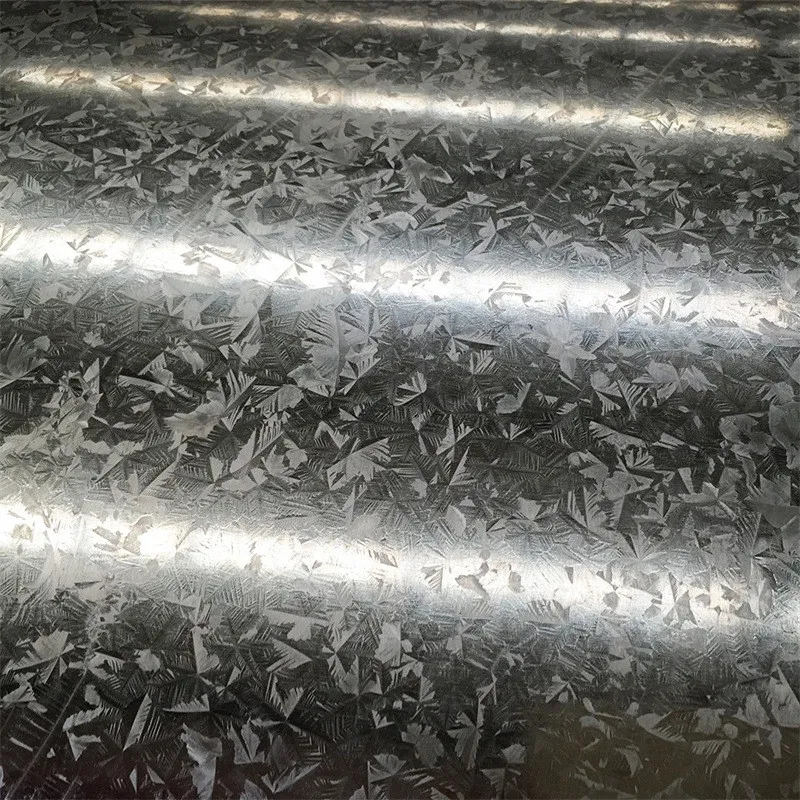
Hot-dip galvanizing
Hot-Dip vs. Electro-Galvanized Steel: Key Differences
1. The Thickness of the Coatings
The first difference is the thickness of the coatings. Electro-galvanized steel has a very thin coating. Hot dip galvanizing creates a range of coating thicknesses that can be more durable.
2. The Finished Appearance
Their coatings also have different finished appearances. The finished coating of electro-galvanized steel is smooth but unremarkable. Hot-dip galvanized materials are known for their silvery finish that makes a big aesthetic impact.
3. Required Maintenance
The third main difference between hot dip vs electro-galvanizing is how much maintenance the coating requires before it can be used. Hot-dip galvanized materials are ready to go as soon as their coating dries. With electro-galvanized materials, treating and then painting them is the current recommendation to help protect the thin zinc coating.
| Feature | Hot-Dip Galvanized | Electro-Galvanized |
| Coating Thickness | Thick, durable zinc layer | Thin zinc coating |
| Appearance | Silvery, rugged finish with visual impact | Smooth, clean, but less visually distinct |
| Maintenance Needs | Ready to use once dry - no extra treatment required | Often needs painting for added protection |
Get Parameter Comparison Table
Electro Galvanized vs. Other Galvanized Options
|
Property |
Electro Galvanized |
Hot-Dip Galvanized |
Galvalume |
Aluminized |
|
Coating |
Zinc (electroplated) |
Zinc (immersed) |
Zinc-Aluminum alloy |
Aluminum-Silicon alloy |
|
Finish |
Smooth, uniform |
Rougher, spangled |
Dull to reflective |
Bright, reflective |
|
Corrosion Resistance |
Moderate |
High (thicker coating) |
Very high (especially roofing) |
Excellent + heat resistance |
|
Paintability |
Excellent |
Fair to good |
Fair |
Good |
|
Best For |
Automotive, appliances |
Outdoor structures |
Roofing, siding |
High-heat environments |
EG steel doesn't offer the longest service life outdoors, but it outperforms alternatives in terms of aesthetics, paintability, and dimensional precision.
Common Applications of EG Steel
Electro galvanized steel finds use in industries where appearance and precision matter:
1.Automotive
Outer body panels, door reinforcements, underbody components, and brackets benefit from its corrosion resistance and paintability.
2.Appliances
Refrigerators, washers, dryers, and small kitchen appliances require a smooth finish that can be powder coated or painted for a consumer-ready look.
3.Construction
Interior wall panels, ceiling systems, and framing applications leverage EG's flatness and uniformity.
4.Electronics
Computer cases, servers, and other electronics housings depend on EG for a sleek appearance and protective coating.
Hot dip galvanized product application
Hot-dip galvanized products are widely used in the fields of automobiles, construction, electricity, transportation, etc.
1. Automobile field
In the automobile field, hot-dip galvanized products are widely used in the manufacture of parts exposed to the external environment for a long time due to their excellent corrosion resistance and tensile strength, which can improve the corrosion resistance of automobile parts and extend the service life of the car.
2. Construction field
In the construction field, many metal fasteners are exposed to the outdoor environment for a long time. In order to prevent these fasteners from corrosion, merchants will use hot-dip galvanized fasteners to protect the building structure from corrosion. For example, steel bars, steel plates, scaffolding, bridge structures, fences, etc. in the construction field are all made of hot-dip galvanizing process.
3. Electric power field
In the electric power field, hot-dip galvanizing process is used in power transmission towers, substation facilities, wire casings, high-voltage transmission lines, line hardware, microwave towers, communication towers and other power equipment by utilizing the anti-corrosion ability of hot-dip galvanizing.
4. Transportation industry
In the transportation industry, hot-dip galvanized products are widely used. Highway guardrails, highway sign poles, street lamp poles, highway and high-speed rail sound wave barriers and other products are all made of hot-dip galvanizing process.
Frequently Asked Questions about Electro Galvanized Steel (EG)
1. What is Electro Galvanized Steel and how is it produced?
Electro Galvanized Steel is a type of carbon steel with a pure zinc coating applied through an electrolytic process. Unlike hot-dip galvanizing, which involves molten zinc baths, electro-galvanizing uses an electrical current in a zinc solution to bond a uniform, thin layer of zinc to the steel surface, resulting in a smooth and aesthetically superior finish.
2. What are the primary benefits of using Electro Galvanized Steel?
The key advantages include exceptional surface smoothness, uniform coating thickness, excellent formability, and superior paint adhesion. It is the ideal material for precision manufacturing where aesthetic appeal and tight dimensional tolerances are required.
3. How does Electro Galvanized Steel compare to Hot-Dip Galvanized Steel?
The main difference lies in the coating thickness and appearance. Electro-galvanized coatings are typically thinner (5–30 microns), providing a mirror-smooth surface perfect for indoor appliances and automotive parts. Hot-dip galvanized coatings are thicker and more rugged, offering better protection for heavy-duty outdoor or marine environments.
4. Is Electro Galvanized Steel suitable for outdoor use?
While it provides reliable corrosion resistance, electro galvanized steel is primarily recommended for indoor applications or components that will be further coated (painted or powder-coated). For prolonged direct exposure to harsh outdoor elements, hot-dip galvanized or pre-painted galvanized steel (PPGI) is often preferred.
5. Why is Electro Galvanized Steel popular in the automotive industry?
Its uniform coating and excellent weldability make it a top choice for automotive body panels. The smooth surface allows for a high-quality "Class A" paint finish, ensuring that vehicles are both rust-resistant and visually stunning.
6. Can Electro Galvanized Steel be painted or powder-coated?
Yes, absolutely. In fact, it is one of the best substrates for painting. The electrolytic zinc layer provides a clean, consistent base that ensures superior adhesion for topcoats, preventing peeling and enhancing the overall lifespan of the product.
7. What are the common applications of Electro Galvanized Steel?
Typical applications include home appliances (refrigerators, washing machines), electronics enclosures, automotive components, office furniture, precision fasteners, and decorative interior architectural elements.
8. Does Electro Galvanized Steel maintain its formability during manufacturing?
Yes. One of its standout features is that the zinc coating is highly ductile and does not flake or crack during deep drawing, stamping, or complex bending. It retains the mechanical properties of the base cold-rolled steel.