


Q1: How effective is the sound insulation of single-layer galvanized color-coated steel coils?
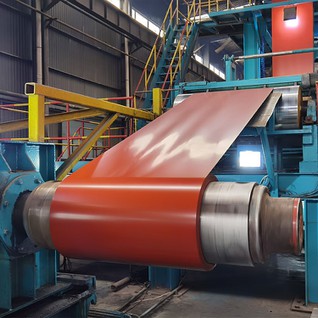
If you're asking about single-layer galvanized color-coated steel sheets (also known as profiled sheets), the answer is that their sound insulation is very limited.
Core Principle: The Law of Mass: The sound insulation of single-layer metal sheets mainly follows the "Law of Mass," meaning that the heavier the sheet, the better the sound insulation. However, color-coated steel sheets are relatively lightweight, which is a natural disadvantage.
Actual Data: Actual test data shows that a 0.5mm thick single-layer color-coated steel sheet typically only provides around 25dB of sound insulation. This value can reduce some slight conversations, but it's far from ideal for blocking out mid-to-high frequency noises such as loud equipment noise and car horns on the road.
Q2: Why do color steel sandwich panels have such good sound insulation?
This is thanks to their unique "sandwich" structure, which provides triple protection: insulation, resistance, and dissipation.
Outer layer "insulation": The metal plates on both sides reflect most sound waves, preventing them from penetrating directly.
Center "resistance": The porous material in the middle, such as rock wool or glass wool, is filled with countless tiny pores. Sound waves entering are constantly reflected and rubbed inside, gradually absorbed and dissipated.
Structural "dissipation": The metal plates and the sandwich layer form a "constrained damping structure." When sound waves cause vibration in one side of the steel plate, the damping layer in the middle undergoes shear deformation, converting the vibration energy into heat energy and dissipating it.
Q3: What are the differences in sound insulation effects between sandwich panels with different core materials?
The core material is key to the sound insulation effect. Below is a performance comparison of several mainstream core materials:
Core Material | Sound Insulation Effect (Airborne Sound Insulation) | Core Advantages | Recommended Application Scenarios
Rock Wool | Excellent (approx. 30-40dB) | Class A non-combustible, balanced fire resistance, thermal insulation, and sound absorption | Suitable for industrial plants, equipment rooms, and conference rooms where high fire resistance and sound insulation are required.
Polyurethane | Good (approx. 20-30dB, up to 38dB with 100mm thickness) | Excellent thermal insulation performance, good overall sealing | Suitable for cold storage and constant temperature workshops where high thermal insulation is required, and sound insulation is a secondary consideration.
Glass Wool | Good (similar to rock wool) | Excellent sound absorption performance, lightweight | Suitable for scenarios requiring strong sound absorption.
Q4: Are there ways to further improve the sound insulation of color-coated steel sheets?
Yes, it can be improved through the following combination strategies:
Combined Use: Use perforated sheets + sound-absorbing cotton simultaneously. After the color-coated steel sheets are perforated, sound waves can more easily enter the backing sound-absorbing cotton and be fully absorbed, achieving a noise reduction coefficient (NRC) of 0.7-0.9.
Adding an Air Layer: During installation, leave a 5-10cm air gap between the sheet and the wall to enhance the absorption of low-frequency noise.
Adding a Damping Layer: Composite a layer of damping sound insulation felt (e.g., 1-3mm thick) between the metal sheets can effectively suppress low-frequency resonance and significantly improve sound insulation.
Proper Installation: Ensure all seams are tightly sealed to prevent sound leakage; also, ensure proper installation of fasteners to reduce vibration transmission caused by looseness.
Q5: Is the sound insulation effect of galvanized color-coated steel sheets sufficient in practical applications?
This depends entirely on the application scenario. To give you a more intuitive understanding, you can refer to the "Decibel Reference Chart" below to understand the sound insulation effect of different values:
Scenario | Recommended Solution | Estimated Sound Insulation Effect
Ordinary Factory | Rock Wool Sandwich Panels | Sufficient. Significantly reduces equipment operating noise, creating a relatively quiet working environment.
Highway Sound Barrier | Perforated Color-Coated Steel Sheet + Sound-Absorbing Cotton | Professional noise reduction. Effectively absorbs vehicle noise, with an average sound insulation of approximately 30dB.
Office Building Partition | Sound-Insulating Rock Wool Sandwich Panels | Basically sufficient. Meets the sound insulation needs of general office areas, but attention still needs to be paid to construction details.