


1.How to accept thickness deviation? What is the deviation range?
The core of thickness deviation acceptance is multi-point measurement and comparison of the measured values with the range specified in the contract or standard.
Allowable deviation range: The thickness deviation of cold-rolled steel sheets is related to the width and thickness grade. For example, for a cold-rolled coil with a width of 1200mm, if its specified minimum yield strength is <260MPa, and the nominal thickness is 1.00mm, the allowable thickness deviation is ±0.07mm. For high-strength steel or precision components, the requirements are more stringent, and the deviation is usually required to be controlled within ±0.01 to ±0.05mm.
Measuring tools: Mainly use a plate thickness micrometer or vernier caliper. If the steel coil has been flattened into a steel sheet, measurements can be taken at its four corners and center point.
Measurement location: Measurements should be taken at least 25mm away from the edge of the steel strip to avoid the influence of edge effects.
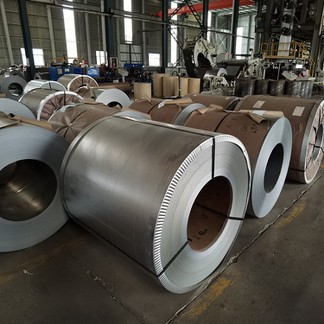
2.How are width and length deviations accepted? What is the tolerance range?
The key to width and length acceptance is measuring the actual dimensions and verifying them against the order requirements.
Width tolerance: This depends on the width and precision grade. For example, for cut-edge steel strips of ordinary precision, with a width range of 1200mm~1500mm, the tolerance is typically 0mm to +5mm (i.e., not allowed to be narrow, but slightly wider is acceptable). Some high-end manufacturing (such as appliance panels) has higher requirements, with deviations even required to be controlled within 0mm to +0.5mm.
Length tolerance: This mainly applies to cut-out sheets. For example, for a fixed-length sheet with a nominal length of 2000mm, the tolerance is typically 0mm to +6mm. For continuous steel strips (coils), length is usually not inspected separately, but it is required that after removing defects at the beginning and end, the total contract weight or length be guaranteed. Some precision applications (such as tinplate) have stricter requirements, requiring the cumulative difference between the actual measured length and the marked length to not exceed 0.1%.
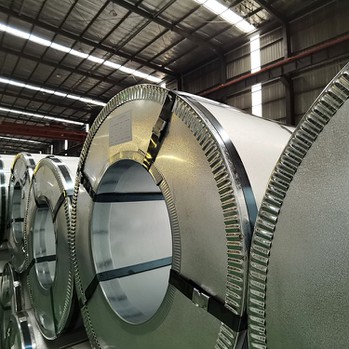
3.How to inspect flatness (plate shape)? What is the allowable deviation?
Flatness refers to the degree of warping on the surface of a steel plate. The key to its inspection lies in the correct measurement method.
Measurement Method: Place the flat plate freely on a platform and use a feeler gauge to measure the maximum gap between the lower surface of the steel plate and the platform. During measurement, the convex side of the steel plate should face upwards, and it should be placed naturally under its own weight; no external force should be used to flatten it.
Allowable Deviation: Flatness = Gap Value ÷ Measurement Length.
For example, if the maximum gap is measured to be 6mm over a 1000mm chord length, then the flatness of the plate is 6mm/m.
General Applications: Flatness is usually required to be ≤ 6mm/m.
Higher Precision: For ordinary cold-rolled plates, the flatness requirement over a 1000mm measurement length is usually ≤ 12mm; while in some applications with higher flatness requirements, ≤ 3mm/m is required. The upper limit for flatness of high-strength steel is allowed to be slightly increased.
High precision requirements: Industries such as electronics and automotive panels have more stringent requirements, requiring flatness ≤ 1mm/m.
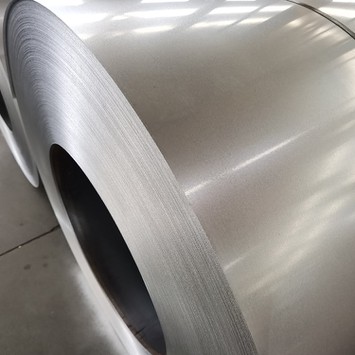
4.How to inspect for camber and skewness?
These two defects directly affect the effective utilization of materials.
Camber: Refers to the lateral bending of the steel strip in the horizontal plane. During measurement, place the steel strip on a platform and measure its maximum distance along the chord length of the concave side.
Allowable deviation: Over any length of 2000mm, the camber should not exceed 5mm.
For short plates: If the steel plate length is less than 2000mm, the camber should not exceed 0.25% of the actual length.
Skewness (cutting deviation): Refers to the degree to which the cut edge of the steel plate is not perpendicular to the long side. It is usually measured using the diagonal method, i.e., measuring the lengths of the two diagonals of the steel plate; half of the difference should not exceed 0.7% of the steel plate width.
5.What to do if deviations exceed standards during acceptance?
If dimensional deviations exceed standards during acceptance, the following procedure should be followed:
Measurement Verification: First, perform multiple measurements to confirm and rule out errors in measurement methods or tools.
Contract Review: Confirm whether the contract contains stricter stipulations regarding deviations. If the contract standard is stricter than the national standard, the contract shall prevail.
Record and Evidence Collection: Take photos and record the measurement results, fill out an acceptance report, and record the details of the deviations.
Handling Based on Circumstances:
Rejection and Return: If the deviation is severely excessive and affects normal use (e.g., excessive negative thickness deviation leading to insufficient strength, or excessive camber preventing production), the goods can be rejected directly.
Acceptance with Concessions: If the deviation is slightly excessive but can still be used by adjusting the process, negotiate with the supplier for a price reduction or claim compensation.
Selective Use: If only some materials exceed the standards, negotiate to select the excess parts; accept the acceptable parts and return the unacceptable parts.