


1. How to establish a reliable steel coil identification and tracking system to eliminate information errors at the source?
A: Reliable identification and tracking are the foundation for preventing material mixing. The key lies in achieving clear, unique, and durable identification management throughout the entire process from source to final delivery.
Innovative Laser Engraving Technology: Traditional handwritten or inkjet markings leave unusable material in the marked area, resulting in waste and easy wear. Sinosteel innovatively adopts fiber optic laser intelligent engraving technology. Using AI positioning, the coil number is engraved onto the packing straps binding the coil, rather than the coil itself. This technology not only achieves 100% material yield and reduces the carbon footprint by 1,336 tons of CO2 equivalent annually, but also fundamentally ensures the durability and accuracy of the markings.
Digital Barcode/QR Code Application: A unique barcode or QR code label is generated for each steel coil, ensuring it completely corresponds to the order and production instructions.

2. How to achieve precise control using information and automation systems?
A: Relying on information systems to transform every step of the production process into monitorable and comparable data is an effective means of preventing human error.
Steel coil "fingerprint" identification: This method uses the unique longitudinal thickness curve formed on steel coils during the rolling process, similar to a human fingerprint, for identification. By storing the "thickness fingerprint" of each steel coil in a database, the coil's identity can be quickly verified in subsequent processes. For example, BILSTEIN uses this technology to accurately identify tens of thousands of steel coils in just a few seconds, completely eliminating the risk of confusion.
Real-time comparison and error prevention system: On the production line, the barcode information of the steel coil to be processed is compared in real time with the production instructions issued by the production system through methods such as scanning. The system automatically verifies the "three fixed" principles (fixed person, fixed machine, fixed material). Only when the information completely matches will the equipment be allowed to start production, avoiding human error in process execution.

3. How to physically isolate the risk of material mixing through warehousing and logistics management?
A: Warehousing and logistics are high-risk areas for material mixing, requiring a three-pronged approach: physical isolation, standardized processes, and precise location.
**Strict Physical Zoning Management:** Clearly define physical zones in the warehouse, such as inspection areas, qualified product areas, rework areas, and scrap areas. Implement zoned, categorized, and fixed-location management for different types and specifications of steel coils. Avoid storing materials from different batches that are similar in appearance and easily confused in adjacent areas.
**Strict Process Management:** Upon receipt, scan the steel coil barcode using a handheld terminal. The system automatically verifies the information and assigns storage locations, preventing human error. Upon issuance, strictly adhere to the "first-in, first-out" principle, and double-verify the information by scanning the barcode and checking the issuance slip to ensure consistency between the records, the goods, and the location. For special materials such as scrap steel coils and conveyor belts, affix dedicated and easily identifiable labels.
**Digital Storage Location Management:** Achieve precise storage location using a Warehouse Management System (WMS). At the same time, regular inventory checks and warehouse location verifications ensure that physical information matches the information in the ERP system, eliminating information discrepancies.
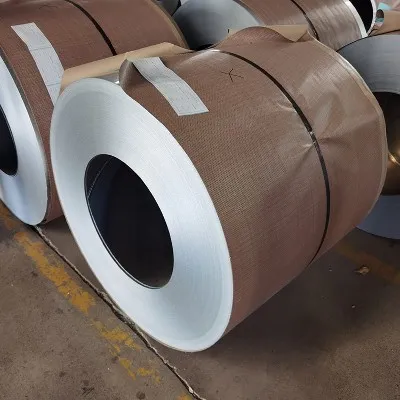
4. How to utilize advanced automation and process technologies to reduce human intervention?
A: Introducing automated equipment and technologies into key stages of steel coil processing is an effective way to reduce material mixing caused by human error.
Automated logistics and transfer systems: Using fully automated steel coil transfer systems in packaging lines and transportation lines replaces manual hoisting and recording, reducing the possibility of information loss or human error at the source.
Intelligent material loading error prevention mechanisms: Before loading, the automated system automatically verifies the steel coil information and provides early warnings through audible and visual alerts, ensuring that only correct materials proceed to the next process. For example, by comparing the production plan with the steel coil information, the system can effectively identify and prevent unplanned materials from being incorrectly loaded.
Reducing manual information transmission: Minimizing the need for manual transcription, verification, or verbal communication, maximizing the use of data exchange between systems, and ensuring accurate and timely information transmission.
5. How to establish a long-term error-prevention mechanism through systems, processes, and culture?
A: Technology is a tool, while systems and talent are fundamental to its effective operation. It requires building an error-prevention system with full employee participation and continuous improvement.
Optimize operation and inspection processes: Taking the finished product packaging line as an example, by analyzing existing process bottlenecks, re-engineering the packaging operation process, and optimizing related equipment hardware, the problem of mixed steel coil numbers caused by process chaos can be effectively eliminated.
Establish a strict pre-production and process confirmation system: Implement a three-level inspection system at the team, workshop, and factory levels to ensure that all process parameters and material information are accurately confirmed before and during production.
Cultivate error-prevention awareness among all employees: Mixing or incorrect materials is the most direct reflection of the level of production site management. Enterprises should regularly train and educate employees on error-prevention and mixed material management, standardized operating procedures, etc., to improve their operational skills and quality awareness. At the same time, a sound performance appraisal and reward/punishment system should be established to assign error-prevention responsibility to individuals, forming a quality culture where everyone values and proactively prevents errors.