


1.Why is steel relatively resistant to alkalis?
In an alkaline environment, steel (primarily composed of iron) forms a dense, insoluble passivation film of magnetite (Fe₃O₄) or ferrous hydroxide (Fe(OH)₂). This film effectively prevents further corrosion of the underlying base metal by the alkaline solution, thus providing good short-term corrosion resistance. This is completely different from the situation in an acidic environment where iron dissolves rapidly to form soluble salts.

2.What are the key influencing factors?
Types and Concentrations of Alkali:
Concentrated alkali (e.g., 50% NaOH): Good corrosion resistance, stable passivation film. Carbon steel containers often used to hold concentrated alkali are even called "alkali tanks."
Medium-concentration alkali: Corrosion resistance is still acceptable.
Dilute alkali (especially <30% NaOH) or molten alkali: More corrosive. Dissolved oxygen in dilute alkali solutions more easily damages the passivation film, leading to accelerated uniform corrosion. Molten alkali causes severe high-temperature corrosion and alkali embrittlement of steel.
Temperature:
Temperature is one of the most significant influencing factors. As the temperature rises (usually above 80°C), the stability of the passivation film decreases, and the corrosion rate increases exponentially. High-temperature alkali solutions are extremely corrosive to carbon steel.
Stress State:
Alkali embrittlement (caustic embrittlement): This is an extremely dangerous phenomenon. When cold-rolled steel (or any carbon steel or low-alloy steel) is subjected to a combination of moderately concentrated alkaline solution, high temperature (typically >50°C), and tensile stress (from cold working, welding residual stress, or working load), stress corrosion cracking along grain boundaries can occur. Even if the overall corrosion is not significant, the equipment may suddenly break without warning, causing a serious accident. Historically, many boiler explosions have originated from this.

3.What are the inherent characteristics of cold-rolled coils?
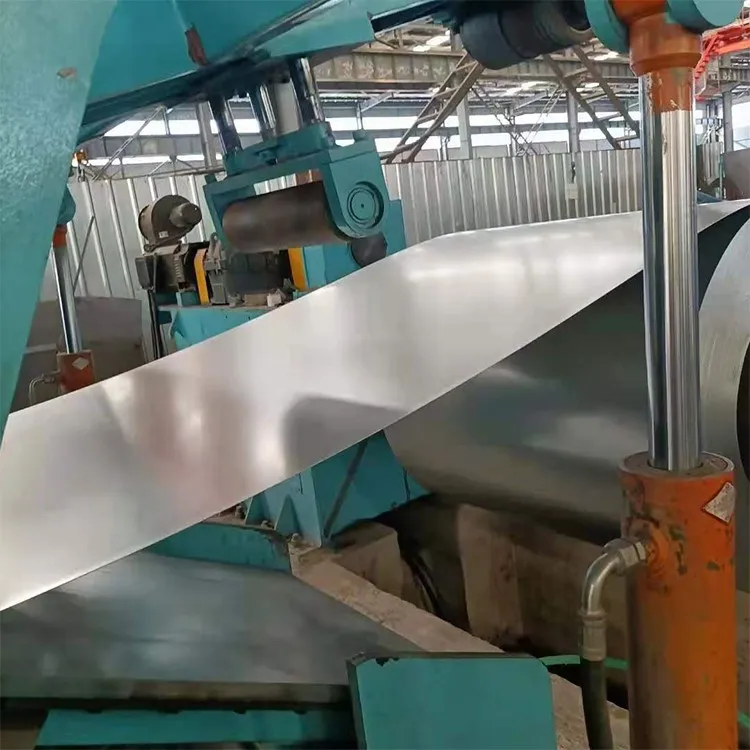
Surface Condition: Cold-rolled coils have a smooth, clean surface, free of the oxide scale found on hot-rolled coils. This facilitates the uniform formation of a passivation film, a significant advantage.
Work Hardening: The cold rolling process hardens the material but also introduces substantial residual internal stress. This increases the risk of stress corrosion cracking (alkali embrittlement) in alkaline solutions, especially after welding. Special care is required during use.
4.What are some environments where protective measures are not recommended or are necessary?
High-temperature alkaline environment: Ordinary carbon steel should be avoided.
Environment with tensile stress (such as pressure vessels, pipelines, fasteners): Extreme caution is needed regarding the risk of alkali embrittlement.
Long-term immersion or critical equipment: It is recommended to use more corrosion-resistant materials or take protective measures.
5.What are some common protection and alternative solutions?
Coating/Linening: Applying an epoxy resin, phenolic resin, or rubber lining to the inner wall of cold-rolled steel isolates the metal from alkaline solutions. This is one of the most economical and effective methods.
Using More Corrosion-Resistant Metals:
Stainless Steel: 304/316 stainless steel generally exhibits better corrosion resistance to alkaline solutions of wide concentrations and temperatures than carbon steel, but stress corrosion cracking can still occur in concentrated hot alkaline solutions.
Nickel-Based Alloys: Such as Nickel 200 and Monel alloys (nickel-copper alloys), these are top-tier materials for resistance to strong alkaline corrosion (including molten alkali), but are extremely expensive.
Non-Metallic Materials: For certain applications, PP (polypropylene), PTFE (polytetrafluoroethylene), and FRP (fiberglass reinforced plastic) can be used, as they offer excellent corrosion resistance to alkaline solutions.