


1. Is it feasible to use cold-rolled coils for decorative panels? What are their main applications?
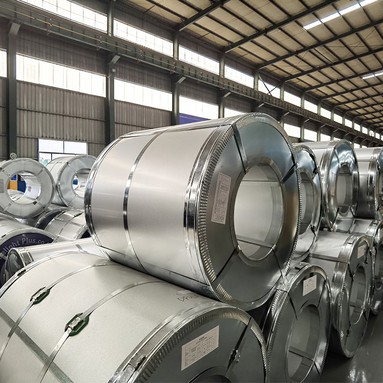
Absolutely. Cold-rolled coils, through further surface treatment, are an important substrate for manufacturing modern decorative panels. They possess excellent properties such as precise thickness, smooth surface, high strength, and ease of coating and forming, making them an ideal base material for producing various high-end decorative panels.
After further processing, cold-rolled coils have a wide range of applications:
Architectural Decoration: Can be used to manufacture decorative panels for building curtain walls, interior partitions, elevator door frames, ceilings, and walls.
Home Decoration: An ideal material for producing high-end security doors, furniture finishes, and cabinet panels.
Appearance of Home Appliances: Widely used in the aesthetically pleasing components of home appliances such as refrigerator doors, washing machine cabinets, and microwave oven shells.

2. Why are cold-rolled coils suitable for decorative panels? What are their unique advantages?
The advantages of cold-rolled coils in the decorative panel field mainly lie in providing a perfect base for subsequent finishing processes. Their core advantages include:
Excellent surface quality: Cold-rolled coils have a smooth, clean surface with high flatness. This provides a perfect base for subsequent processes such as spraying, printing, and lamination, ensuring the beauty and uniformity of the coating and patterns.
Excellent processing performance: Cold-rolled coils are ideal for stamping, bending, deep drawing, welding, and other processing. This means they can be molded into various complex shapes to meet diverse design needs.
Superior substrate strength: Panels made from cold-rolled coils combine the high strength and rigidity of steel, resulting in durable decorative panels with good bending resistance and the ability to maintain their shape stability over a long period.

3. How are various decorative effects achieved on the surface of cold-rolled coils?
Cold-rolled coils achieve a glamorous transformation from industrial products to works of art primarily through the following two deep-processing techniques:
**Color Coating Process:** This is the most mainstream method. On the production line, after pretreatment such as degreasing and phosphating, the cold-rolled coil substrate is coated with one or more layers of liquid organic coating (such as polyester, fluorocarbon, etc.) using a roller coating method. It is then cured by high-temperature baking to form a colored coating.
**Lamination Process:** A plastic film with exquisite patterns (such as wood grain, marble grain, fabric grain, etc.) is bonded to the surface of the cold-rolled coil through hot pressing. This process can realistically mimic the texture of natural materials.
Through these processes, cold-rolled coils can present endless possibilities, such as 3D textures, wood grain, fabric grain, marble grain, pearlescent grain, metallic effect textures, high-gloss mirror finishes, and many other artistic effects.
4. What are the limitations of cold-rolled coils in terms of corrosion resistance when used as decorative panels?
The substrate of ordinary cold-rolled coils is inherently not corrosion-resistant, which is its biggest limitation in decorative applications. If the surface coating is damaged by scratches or wear, the exposed cold-rolled substrate will quickly rust, forming red rust, severely affecting aesthetics and service life.
To overcome this weakness, in practical applications, higher-performance substrates or more comprehensive coating solutions are often used:
Indoor Environment: In dry, impact-free indoor environments (such as furniture and interior partitions), choosing high-quality coated cold-rolled substrate color-coated steel sheets is feasible.
Outdoor or Humid Environments: Direct use is not recommended. For outdoor or weather-resistant applications, galvanized or aluminized zinc-coated steel sheets with color-coated substrates should be selected. The inherent metallic coating of these substrates provides strong sacrificial anode protection, effectively preventing rust even if the coating is damaged.
5. What are some mature decorative panel products on the market? What suggestions are there for material selection?
High-end building exterior walls and curtain walls: Fluorocarbon coated color-coated steel sheets and printed steel sheets. Excellent weather resistance, rich colors, customizable patterns, adaptable to various climates. Application reference: GB/T 34200-2025 "Cold-rolled stainless steel sheets and strips for building roofs and curtain walls" standard.
High-end home appliance panels: High-gloss colored printed steel sheets, embossed steel sheets, and laminated steel sheets. Exquisite appearance, can be used as a product selling point; surface quality requirements are as stringent as those for car panels. Used in high-end refrigerator door panels, built-in ice bars, washing machine cabinets, etc.
High-end interior decoration and furniture: Laminated printed color-coated steel sheets (such as wood grain panels), high-gloss printed steel sheets. Exquisite and realistic appearance, can imitate various natural materials, enhancing product grade. Used in high-end security doors, furniture, and home decoration.
General interior partitions and internal components: Ordinary color-coated steel sheets. Cost-effective, can meet basic decoration and protection needs.