


1.What exactly does "tensile force" refer to when packaging cold-rolled steel coils and strips?
The tensile strength of the strapping: This refers to the maximum tensile force that the steel strapping material can withstand before breaking, determining the ultimate strength of the bundle.
The locking force of the baling machine: This refers to the actual tension force applied to the steel coil by the baling machine when tightening the steel strapping, determining the tightness and security of the packaging.
Both work together to ensure that the steel coil does not unravel during lifting and transportation.
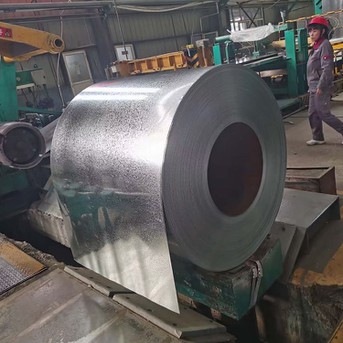
2.What is the typical tensile strength of the steel strip used for packaging cold-rolled coils?
The tensile strength of packaging steel strapping varies depending on its strength grade.
According to the national standard "Steel Straps for Packaging" (GB/T 25820-2018), cold-rolled packaging steel strapping is classified into several strength grades:
Ordinary strength: Tensile strength approximately 650 ~ 780 MPa
High strength: Tensile strength approximately 830 ~ 930 MPa
Ultra-high strength: Tensile strength can reach 1150 ~ 1250 MPa and above
In practical applications, commonly bluing or painted packaging steel strapping typically requires a tensile strength of 700 MPa or higher; for example, some enterprise standards require ≥700 MPa or ≥880 MPa.
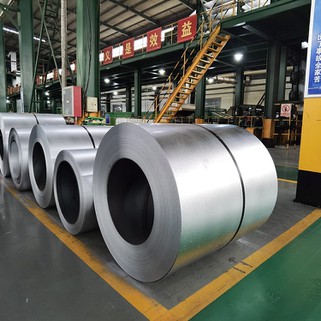
3.How much locking force (binding force) does the baler actually apply?
Manual/Pneumatic Tools: The most commonly used pneumatic baling heads in China have a maximum locking force of approximately 6,000~8,000 N (Newtons). This is greatly affected by air pressure and manual operation.
Fully Automatic Baling Machines: Advanced fully automatic baling machines from abroad have much greater locking forces. For example, SIGNODE's fully automatic baling heads can reach a maximum locking force of 20,000 N, and TITANPACK's is approximately 17,000 N. This high locking force effectively prevents steel coils from scattering during transport.
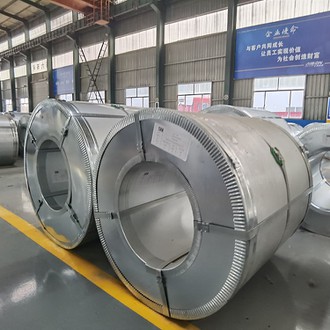
4.Besides tension, does the joint method affect the packing tension?
**Snap-on type:** Connected by metal snap-fit, with a bonding force typically > 6,000 N.
**Snap-free type:** Connected through stamping and deformation, with a bonding force > 14,000 N, making it more robust than the snap-on type.
**Welded type:** Connected through spot welding, with a bonding force > 20,000 N. This is currently the strongest joint method and is mainly used in fully automatic baling machines.
5.In actual production, is there a unified standard or calculation formula for the tensile force of packaging?
Bundling passes: No fewer than 3 passes in both the circumferential and radial directions (for steel coils weighing over 8 tons, this may need to be increased to 4-6 passes).
Basic principle: Ensure that the steel coils do not loosen or deform during normal transportation and storage.