


1.How to choose substrate?
Hot-dip galvanized coils (such as SGCC and DX51D) or electro-galvanized coils are typically used as substrates, with thicknesses typically ranging from 0.15 to 2.0 mm. Widths vary depending on production line specifications (typically 1000 to 1500 mm). The thickness and surface quality of the zinc coating (e.g., absence of spangles or minimal spangles) directly impact the performance of the pre-painted coating. For example, substrates with a high zinc coating are more suitable for outdoor corrosion resistance.
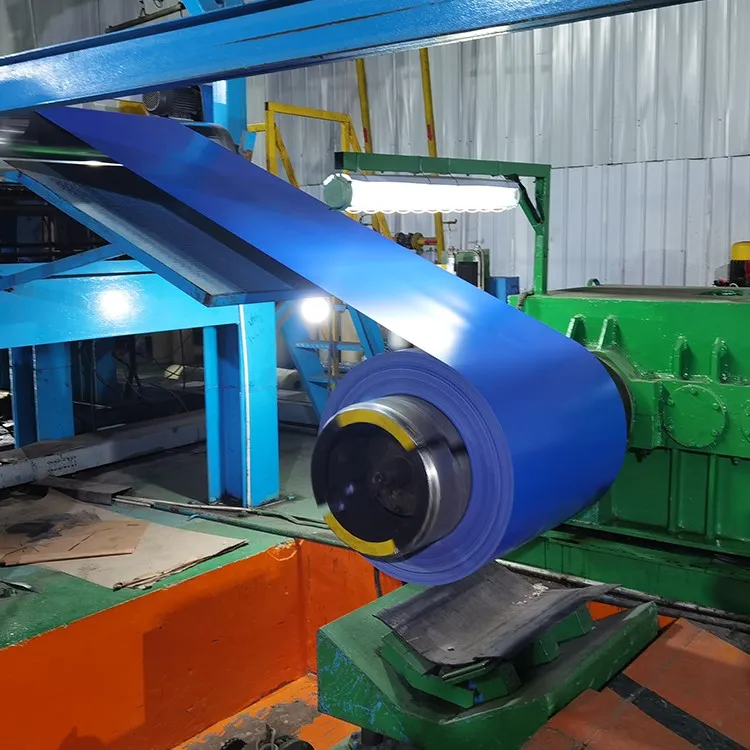
2.How to open the book and connect?
The rolled galvanized substrate is unwound using an unwinder to remove any wrapping paper or protective film.
If multiple rolls are produced continuously, welding equipment is required to connect the end of the previous roll to the beginning of the next roll to ensure continuous production line operation. (The welded area must be polished to avoid affecting the uniformity of the subsequent coating.)
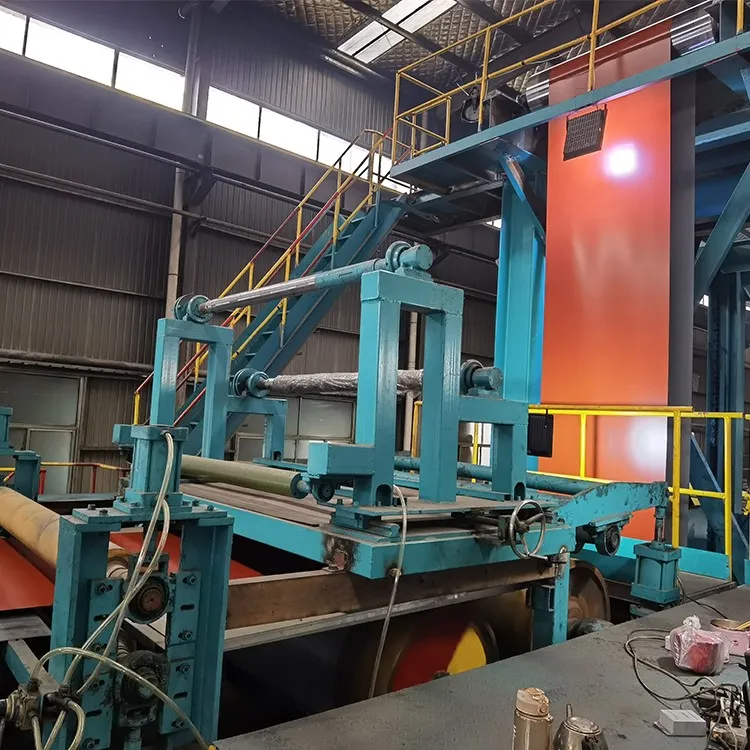
3.How does preprocessing work?
Degreasing
Purpose: Removes impurities such as oil, dust, and rolling fluid from the substrate surface to prevent them from interfering with coating adhesion.
Method: Use an alkaline wash (such as sodium hydroxide solution) or spray cleaning, combined with high temperature (50-70°C) to enhance degreasing. Rinse residual alkaline solution with clean water.
Surface Conditioning (Optional)
Activates the passivation layer of galvanized substrates, typically using a weak acid solution (such as phosphoric acid) to create a uniform micro-rough surface structure and enhance the adhesion of the subsequent chemical conversion coating.
Chemical Conversion Treatment
Purpose: Forms a thin chemical conversion film (such as chromate or chromium-free passivation film) on the substrate surface to strengthen the adhesion between the coating and the substrate and further enhance corrosion resistance.
Common Processes:
Chromate Treatment: A traditional process that provides excellent corrosion resistance, but contains chromium (hexavalent chromium is toxic) and is gradually being replaced by chromium-free processes.
Chromium-free passivation: Treatments such as zirconate and titanate are environmentally friendly and offer performance similar to chromate, making them the mainstream trend. After treatment, it needs to be dried at low temperature (60-80℃) to remove moisture without damaging the conversion film.

4.What are the coating process steps?
Primer Application (Optional, Upon Request)
For products requiring high corrosion resistance (such as outdoor architectural applications), a primer (such as an epoxy primer) is required to enhance adhesion and corrosion resistance between the substrate and the topcoat.
Application Methods: Roller application (most commonly used, using a rubber roller to evenly transfer the paint to the substrate surface), spraying, or electrostatic spraying (suitable for special shapes).
Topcoat Application
Select the coating type (such as PE, SMP, HDP, PVDF, etc.) based on the product requirements and mix the coating according to the formulation (color and gloss can be customized).
Application Method: Roller application is also the primary method, with coating thickness controlled by adjusting roller pressure and speed (typically 10-30μm dry film thickness, but 50μm or greater is possible upon request).
If double-sided coating is required, the coating process (primer + topcoat or direct topcoat application) must be repeated on the other side.
5.What are the baking and curing steps?
Initial Drying (Pre-Curing)
The coated substrate enters the initial drying oven, where surface moisture is dried at a low temperature (80-120°C) to prevent runny or blistering during high-temperature curing.
High-Temperature Curing
Entering the curing oven, the temperature and time are controlled according to the coating type:
PE, SMP: Curing temperature 180-220°C, curing time 30-60 seconds.
HDP, PVDF: Curing temperature 220-250°C, curing time 60-90 seconds (high temperature ensures full cross-linking of the fluorocarbon resin, improving weather resistance).
During the curing process, the solvent in the coating evaporates, and the resin undergoes a chemical cross-linking reaction, forming a hard, continuous coating.
Cooling
The cured substrate enters the cooling section, where it is cooled by air or water (to avoid condensation on the surface) to below 50°C to prevent sticking of the coating during subsequent winding.