


1.Why does adhesion decrease as thickness increases?
Internal Stress Accumulation:
During the deposition or solidification process, internal stress is generated in the coating. This internal stress accumulates as the coating thickness increases.
When the internal stress (especially tensile stress) exceeds the bonding force between the zinc layer and the steel substrate, it can lead to coating arching, microcracks, and even large-area peeling.
Formation of Brittle Phases (Especially for Hot-Dip Galvanizing):
During hot-dip galvanizing, the molten zinc reacts with the steel substrate to form a series of iron-zinc alloy layers (such as Gamma, Delta, and Zeta phases). These alloy layers are hard and brittle with poor plasticity.
Thicker coatings mean potentially longer reaction times, resulting in thicker brittle alloy layers. Under external forces (such as bending or stamping), this brittle layer is prone to cracking and adhesion failure.
Reduced Surface Roughness and Mechanical Interlocking:
An important mechanism for coating adhesion is "mechanical interlocking," where the coating material embeds into microscopic pits on the substrate surface.
When the coating is very thick, it "fills in" these micro-roughnesses like paint, which weakens the mechanical interlocking effect and makes the adhesion rely more on the metallurgical bond between atoms, which is less stable in the case of thick layers.
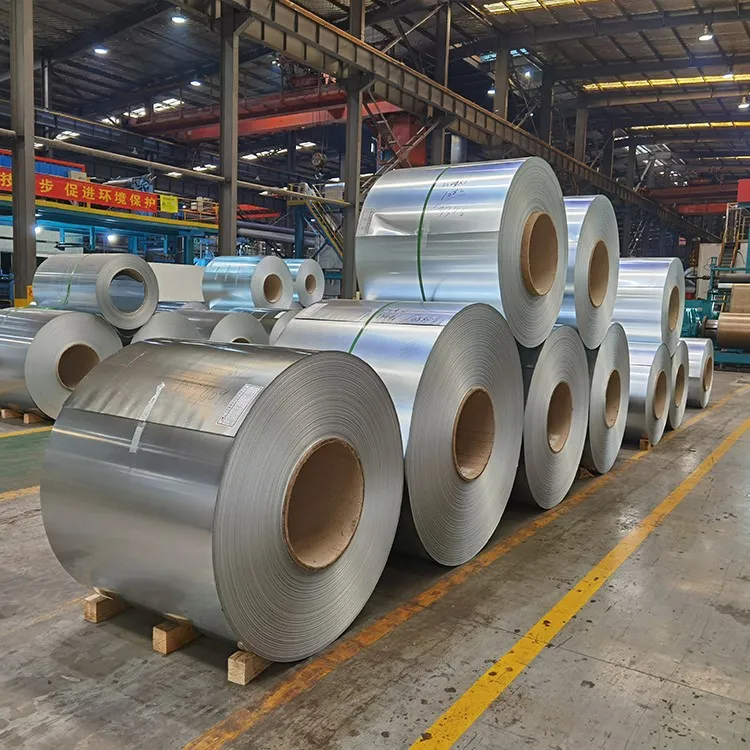
2.What is the relationship between the adhesion of hot-dip galvanizing and its thickness?
The negative correlation is the most obvious.
Increased thickness typically means longer immersion times in the zinc bath or higher zinc bath temperatures, which can lead to the overgrowth of a brittle iron-zinc alloy layer, severely impairing adhesion. A very thick pure hot-dip galvanized layer generally has poor bending properties.
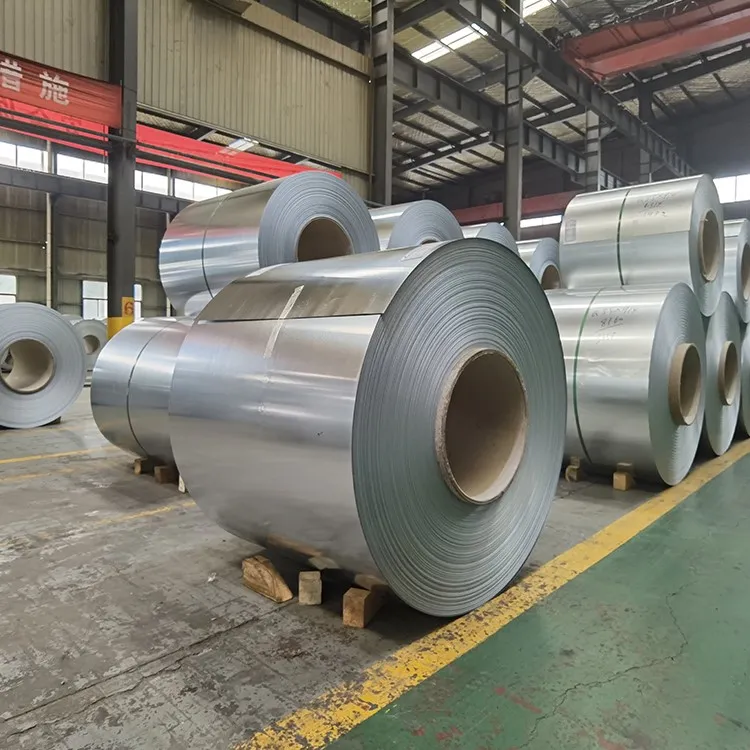
3.What is the relationship between the adhesion of electroplated zinc and its thickness?
Relationship is relatively controllable
By precisely controlling parameters such as current density and additives, good adhesion can be achieved over a relatively thick range. However, the problem of internal stress still exists, and the adhesion will decrease significantly once the thickness reaches a certain level.
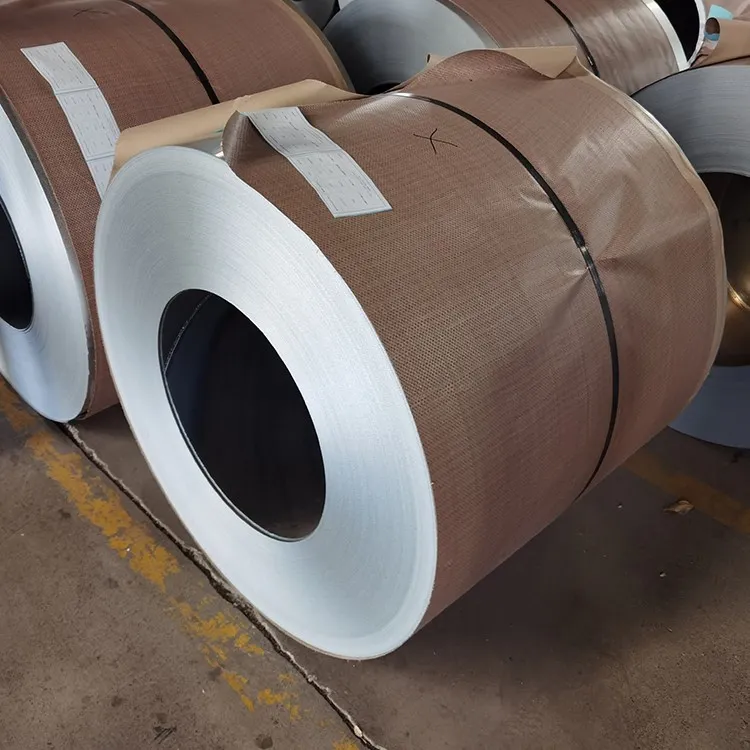
4.What is the relationship between adhesion and thickness in hot-dip galvanizing-annealing?
Improved through post-processing
This is a common process for modern high-end galvanized coils (such as GI). Immediately after hot-dip galvanizing, an annealing treatment (such as alloying) is performed, which completely transforms the pure zinc layer into an iron-zinc alloy layer. Although the overall structure becomes more brittle, a uniform metallurgical bond is achieved, and its adhesion is stable and controllable for a given thickness.
5.How to balance thickness and adhesion?
Thickness Selection Based on Needs:
Corrosion Protection Needs: In highly corrosive environments (such as coastal areas and de-icing salt regions), a thicker zinc layer is required to provide a longer sacrificial protection lifespan.
Processing Needs: For parts requiring drastic forming (such as deep drawing and sharp-angle flanging), a coating with good adhesion and ductility should be prioritized. This often necessitates controlling the maximum thickness or choosing a type with a high percentage of pure zinc.
Choosing the Correct Product Type:
Ordinary Hot-Dip Galvanizing: Used for general corrosion protection and simple forming.
Deep-Drawing Hot-Dip Galvanizing: Uses a better substrate and optimized processes, providing excellent adhesion and formability while maintaining a certain thickness.
Alloyed Galvanizing: The surface is dark gray, and the coating is entirely an iron-zinc alloy. It has better weldability and paint adhesion, but its formability is worse than a pure zinc coating of the same thickness.
Quality Control and Testing:
The adhesion and formability of galvanized sheets of a specific thickness are verified through methods such as bending tests and cupping tests.
The standard specifies the minimum bending radius or cupping value that must be met for a certain thickness level.