


1.Q: In which specific parts and equipment of food machinery is cold-rolled steel primarily used?
A: Its application spans the entire food processing process, covering the three main stages: processing, conveying, and storage.
**Food Processing Equipment:** Widely used in manufacturing core equipment that comes into direct contact with food, such as the bodies, hoppers, and internal components of cutting machines, mixers, and filling equipment. For example, mixing blades made of 316L stainless steel cold-rolled sheets ensure that they will not corrode or detach even with frequent contact with food.
**Food Conveying Equipment:** Used in manufacturing conveyor belts and conveying pipes. Their easy-to-clean properties effectively prevent food from becoming contaminated and growing bacteria during transport. Conveyor belts made of 316L stainless steel will not rust even when in contact with salts or acids in food.
**Food Storage Containers:** Used in manufacturing the inner and outer shells of refrigerators, freezers, crisper cases, and large food storage tanks, ensuring good sealing and insulation performance.
**Food Packaging Materials:** The core substrate for manufacturing metal food cans (tinplate). For example, the cold rolling core technology provided by MCC Saidi has been used to produce new food-grade tinplate materials with a thickness of only 0.17 mm to 0.55 mm.
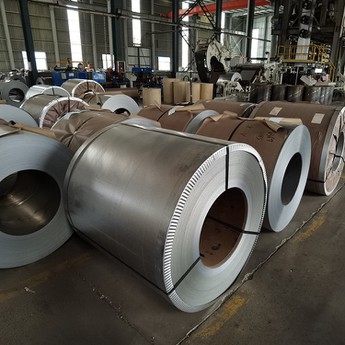
2.Q: Why do food machinery manufacturers generally choose stainless steel cold-rolled coils instead of ordinary carbon steel cold-rolled sheets?
A: This is mainly due to the stringent hygiene and safety standards in the food industry. The key differences between ordinary carbon steel cold-rolled sheets (commonly known as "iron sheets" or "A3 sheets") and stainless steel cold-rolled sheets are as follows:
Rust and corrosion resistance: Excellent. A dense passivation film forms on the surface through the addition of elements such as chromium (Cr), resisting acid, alkali, and salt corrosion. Poor. It rusts easily in humid environments or in contact with food liquids, requiring rust prevention through spraying or electroplating.
Hygiene and safety: High. The surface is smooth, easy to clean and disinfect, and does not release harmful substances into food, meeting food hygiene standards. Low. Rust can contaminate food, and if the surface coating is damaged, it may peel off and contaminate the food.
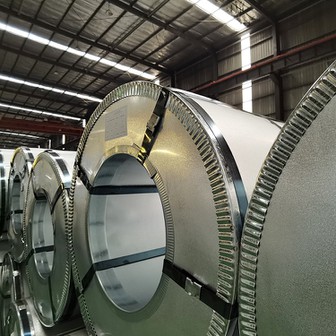
3.Question: What are the common grades of cold-rolled stainless steel sheets used in food machinery? What are their respective applications?
Answer: 304 and 316L are the two most common grades. Their main differences lie in corrosion resistance and application scenarios.
304 Stainless Steel: The most widely used austenitic stainless steel. It has good corrosion resistance, heat resistance, and excellent processing performance, making it the preferred material for manufacturing most food processing equipment, conveying equipment, and storage containers.
316L Stainless Steel: An upgraded version of 304. Due to the addition of molybdenum (Mo), its corrosion resistance, especially its resistance to chloride ions (such as salt) and acids and alkalis, is stronger. Therefore, it is mainly used in the manufacture of equipment that needs to be in long-term contact with highly corrosive foods (such as soy sauce, vinegar, and fruit juice), facilities in beach environments, and beer fermentation tanks, etc.

4.Q: What stringent standards must stainless steel cold-rolled coils used in food processing machinery meet?
A: Yes, they must meet mandatory national safety and hygiene standards to ensure absolute safety in the food production process.
These standards impose strict requirements on the entire process, including material selection, design, and manufacturing. Two of the most critical are:
**Food Machinery Safety and Hygiene** (GB 16798-1997): This is the general safety and hygiene standard for food machinery, stipulating that surface materials in contact with food must be non-toxic, odorless, corrosion-resistant, and non-absorbent.
**Cold-Rolled Stainless Steel Sheets and Strips** (GB/T 3280-2015): This is the quality standard for cold-rolled stainless steel products themselves, ensuring that the stainless steel used in food processing machinery meets acceptable levels in terms of chemical composition, mechanical properties, dimensional accuracy, and surface quality.
These standards collectively constitute the quality "red line" for cold-rolled coils used in food processing machinery.
5.Q: What are the main processing steps from cold-rolled steel coils to components in food machinery?
A: This process precisely shapes parts from rolls of cold-rolled steel. A typical processing flow is as follows:
Uncoiling and Leveling: The cold-rolled steel coils are unrolled and leveled to obtain flat cold-rolled steel sheets.
Precision Cutting: The basic shape of the part is precisely cut from the steel sheet using laser cutting or CNC punching.
Forming: Precision bending is performed using CNC bending machines, or one-time forming is achieved using stamping dies to create three-dimensional structures such as hoppers and shells.
Welding and Assembly: Multiple parts are assembled into a complete device or assembly using precision welding processes such as argon arc welding.
Surface Treatment (Critical Step): For surfaces that come into direct contact with food, polishing, brushing, or passivation are typically performed to further reduce surface roughness (e.g., Ra ≤ 0.8μm), reduce bacterial adhesion, and improve corrosion resistance. Ordinary carbon steel sheets require spraying or electroplating for rust prevention at this stage. Final cleaning and testing: The assembled equipment undergoes rigorous cleaning and disinfection, and passes safety testing for food contact materials to ensure that the finished product meets hygiene standards.