


1.What is a soft film rust preventative oil? What are its main differences from traditional rust preventative oils?
Soft film rust preventive oil is a solvent-diluted, thin-film rust preventive oil. After being applied to the metal surface, the solvent evaporates, leaving behind an extremely thin, transparent, and flexible rust-preventive film.

2.What are the key advantages of the oil film properties of soft film rust inhibitors?
Extremely thin and transparent, without obscuring the natural metallic color.
The oil film thickness is only 1-2 micrometers, transparent and colorless. After coating, the workpiece retains its original metallic luster, facilitating subsequent inspection and assembly.
Each kilogram can coat an area of over 37 square meters, resulting in economical usage and low cost.
Soft and non-sticky, does not attract dust.
The oil film is soft, contains oil but is not sticky, and will not attract dust, fibers or other foreign matter from the air.
Traditional hard film or wax film rust-preventive oils are sticky and easily attract impurities, affecting product appearance and subsequent processing.
Excellent Penetration
Soft film rust-preventive oil has low viscosity and good fluidity, enabling it to penetrate into the fine pores and thread gaps on the metal surface, where ordinary rust-preventive oils cannot reach, achieving comprehensive protection.

3.How effective is the rust prevention of stretch rust inhibitor? How long does it provide protection?
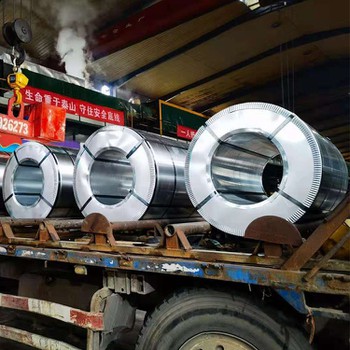
Soft film rust-preventive oil has excellent rust-preventive properties and can meet the protection needs of cold-rolled coils from inter-process to medium and long-term storage.
Indoor storage: 1-3 years
Outdoor or sea transport: 3-12 months (depending on packaging and environment)
Some high-end products claim a rust-preventive period of 3-5 years
Protective mechanism: The rust-preventive additives in the soft film rust-preventive oil form a dense adsorption layer on the metal surface, effectively isolating it from the corrosion of air, moisture, salt spray, and acidic gases. Simultaneously, its excellent drainage performance quickly removes residual moisture from the metal surface.
4.How is the ease of cleaning of soft film rust-preventive oil reflected in downstream processes?
In most cases, it can be used directly without cleaning.
The soft film rust-preventive oil produces an extremely thin and transparent film that does not affect the product's appearance, allowing for direct assembly, welding, and other subsequent processes.
Some products explicitly state that "no cleaning is required during the assembly and operation of the rust-prevented parts."
Easy to clean, with flexible cleaning methods.
If removal is necessary, it can be easily removed with petroleum solvents (such as gasoline or kerosene), alkaline cleaning agents, or solvent oils.
After removing the oil film, there is no residue or spots, and it does not affect subsequent coating, electroplating, or other surface treatments.
5.Given the specific characteristics of cold-rolled coil processing, what are the compatibility advantages of soft film rust-preventive oil?
Perfectly compatible with electrostatic oiling equipment
The soft film rust-preventive oil has low viscosity (kinematic viscosity at 40℃ approximately 3~18 mm²/s) and good fluidity, making it suitable for the high-pressure atomization requirements of electrostatic oiling machines.
It can be used with an online oil film thickness gauge to achieve closed-loop control, ensuring uniformity of the oil film across the entire width and length of the plate.
Highly compatible with subsequent processes
Stamping: Thin and uniform oil film prevents stamping slippage.
Welding: Direct welding without cleaning, no spatter or porosity.
Coating: Easily removed by alkaline cleaners, leaving no residue and not affecting coating adhesion.
Meets environmental and safety requirements
Most products comply with SGS and RoHS standards
Low toxicity, low odor