


1. Q: What are the basic components and main characteristics of polyester coating?
A: Polyester coating (PE) uses polyester resin as a base material, combined with amino resin for cross-linking and curing. Its main characteristics are: good flexibility, strong adhesion, rich colors, and high cost-effectiveness. It is currently the most widely used coating type for color-coated coils, accounting for over 70% of the market share.
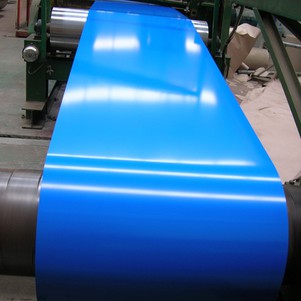
2. Q: How is the weather resistance of polyester coatings? Is it suitable for long-term outdoor use?
A: Weather resistance is moderate. In general outdoor environments (non-strong UV radiation, non-industrial pollution areas), the coating lifespan is approximately 5-8 years. The main failure modes are gloss loss, chalking, and fading. It is not suitable for high UV radiation areas (such as plateaus, near the equator) or highly corrosive environments (such as coastal areas, chemical plants). For these scenarios, PVDF (fluorocarbon) or HDP (high-durability polyester) should be selected.
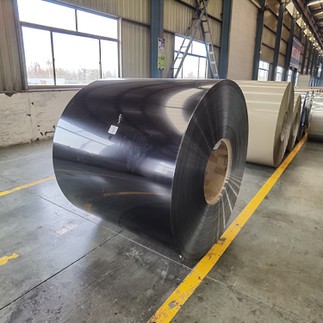
3. Q: How does the polyester coating perform in terms of processing properties (bending, stamping)?
A: Excellent processing properties. The polyester coating has good elasticity and ductility, and can pass tests such as T-bend test (usually ≤3T) and reverse impact (≥9J). It can adapt to forming processes such as compression molding, bending, and interlocking, and is not prone to cracking or peeling. It is suitable for making common building profiles such as corrugated sheets, roofing panels, and wall panels.
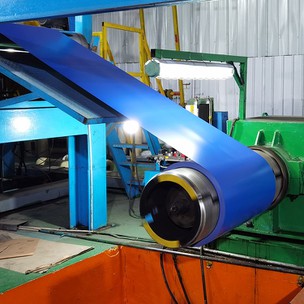
4. Q: How much does the cost difference lie between polyester coating and silicone-modified polyester (SMP) and fluorocarbon coating?
A: Polyester coating is the cheapest. According to current market references, the cost of ordinary polyester coating is approximately 80% of that of silicone-modified polyester (SMP) and approximately 40%~50% of that of fluorocarbon coating (PVDF). Therefore, polyester coating is widely used in economical projects such as indoor spaces, temporary buildings, warehouses, and factories where weather resistance requirements are not high.
5. Q: What are the limitations of polyester coatings? What should be considered when choosing one?
A: Limitations:
Poor resistance to damp heat and chemicals; easily corroded by acid rain and alkaline insulation materials;
Weak resistance to UV aging; darker coatings fade faster;
Usage temperature generally does not exceed 120℃; not suitable for high-temperature baking environments.
Selection Recommendations: Polyester coatings are preferred for indoor or ordinary atmospheric environments; if a visual retention rate of more than 5 years is required, HDP or PVDF coatings should be upgraded.