


1. In which elevator components are galvanized coils mainly used? What are the differences in thickness requirements for different components?
Answer: Galvanized coils are widely used in elevator manufacturing and are an important material constituting the core sheet metal parts of elevators, with nearly 1,000 related parts. In terms of application scenarios, thinner gauges (e.g., 0.2 to 0.8 mm) are often used to make gaskets; medium gauges (1.0 to 1.5 mm, some reaching 2.0 mm) are the mainstream thickness range, mainly used for car tops, wall panels, landing doors, reinforcing ribs, cable trays, control cabinet housings, boxes, and covers; while thicker gauges (2.0 to 3.0 mm, special parts up to 2.5 mm) are used to make load-bearing components, such as emergency guide rails, car bottoms, brackets, and door system structural components. Therefore, the primary task when selecting is to determine the thickness level based on the specific application of the component.

2. What are the commonly used galvanized steel coil grades for elevator parts? How to select materials based on processing requirements?
Answer: The commonly used and widely accepted material grades in the elevator industry are mainly divided into several series. The most basic cold-forming steel grade is DX51D+Z (European standard). Its base material has excellent cold workability, making it particularly suitable for stamping, bending, and other forming processes, and is an economical and universal choice. For parts requiring deep drawing or complex forming, there are more options available, such as Baosteel's high elongation DC series, deep-drawing-specific DC53D+Z, the excellent deep-drawing and drawing grade DC56D+Z, and the JAC270E series for high-precision machining. In addition, the Japanese standard grade SGCC is also commonly used in this field. For high-end precision components with higher conductivity and fingerprint resistance requirements, electroplated zinc materials (SECC) should be considered.

3. Regarding rust prevention, what are the specific regulations for the zinc coating weight of galvanized steel coils for elevator components?
Answer: The zinc coating weight is crucial in determining the rust-resistant lifespan of components. According to the Chinese national standard GB/T 2518, various zinc coating weight specifications are available. In the elevator industry, especially for general protection needs in dry indoor environments such as control cabinets and cable trays, the zinc coating weight of electro-galvanized steel sheets is typically between 30 and 90 grams per square meter. However, for general indoor and outdoor applications requiring higher corrosion resistance, hot-dip galvanized steel sheets are often chosen, with a zinc coating weight generally starting at 100 grams per square meter, and more commonly ranging from 120 to 275 grams per square meter. When components are in extreme environments of high humidity and high corrosion, such as components located in pits or outdoor escalators, the highest protection level of 275 grams per square meter (double-sided) hot-dip galvanized steel sheets or aluminized zinc sheets should be preferred to ensure a service life of over 20 years.
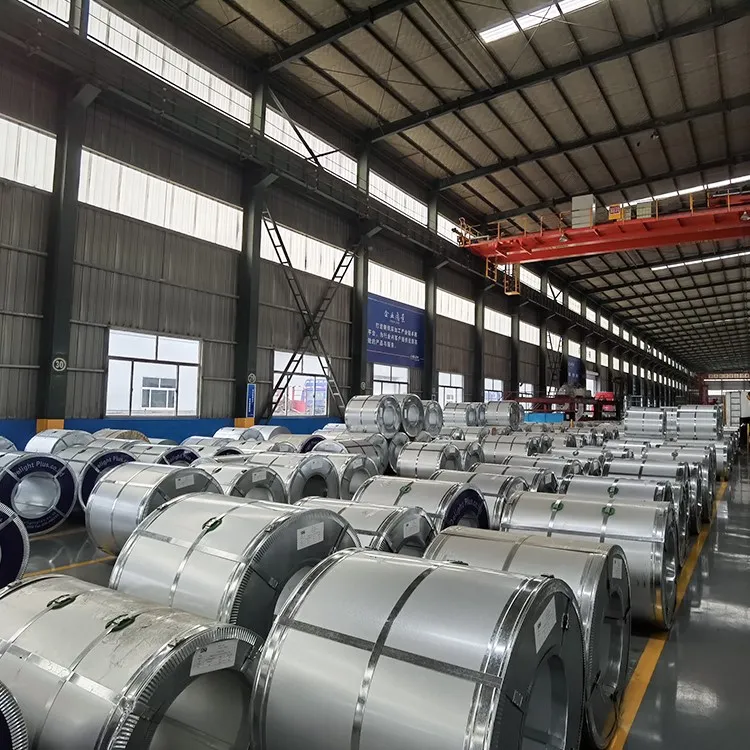
4. What are the mainstream steel plate width specifications on the market when purchasing galvanized coils for elevators?
Answer: To ensure material utilization and processing efficiency, there are preferred mainstream widths for galvanized coils used in elevators. In common CNC stamping and shearing processes, 1250 mm is the most common width standard, along with 1000 mm and 1200 mm. Furthermore, for the mass production of some standard parts, 1219 mm (converted from 4 feet) is also a commonly used width. From an application perspective, some small-sized parts may use widths of 700 to 1000 mm, while for manufacturing large car wall panels, wide coils of 1200 to 1830 mm may be used to meet the demand for single sheets of material ranging from 2400 to 3200 mm in length.
5. What are the special performance requirements for galvanized steel coils used in elevator components? What are the relevant industry standards?
Answer: As special equipment, elevators have extremely strict requirements for the precision and material performance of key components. For example, guide components such as emergency or enclosed guide rails require a total length twist of no more than 0.5 degrees/meter and a total length straightness of less than 3.5 millimeters. To ensure long-term safe bending performance, high yield strength and base material ductility are required when selecting materials. To ensure long-term safety, components must have excellent weldability, and the weld seams must be zinc-treated after welding. Furthermore, for plates used as exterior parts for the car or door frames, color-coated steel sheets (color-coated plates) are often used, and the standard usually follows "T/CISA - Color-coated Steel Sheets and Strips for Elevators".
5. What are the special performance requirements for galvanized steel coils used in elevator components? What are the relevant industry standards?
Answer: As special equipment, elevators have extremely strict requirements for the precision and material performance of key components. For example, guide components such as emergency or enclosed guide rails require a total length twist of no more than 0.5 degrees/meter and a total length straightness of less than 3.5 millimeters. To ensure long-term safe bending performance, high yield strength and base material ductility are required when selecting materials. To ensure long-term safety, components must have excellent weldability, and the weld seams must be zinc-treated after welding. Furthermore, for plates used as exterior parts for the car or door frames, color-coated steel sheets (color-coated plates) are often used, and the standard usually follows "T/CISA - Color-coated Steel Sheets and Strips for Elevators".