


1.What is the difference in corrosion resistance between galvanized channel steel and ordinary channel steel?
Galvanized channel steel: In normal atmospheric environment, the service life can reach more than 20 years; in harsh environments such as high humidity, salt spray (ocean), industrial pollution, etc., the corrosion resistance is significantly better than ordinary channel steel.
Ordinary channel steel: It is easy to rust in ordinary environments and needs to be regularly coated (such as painting) for maintenance;
It corrodes quickly in harsh environments and may cause structural safety hazards.

2.What is the difference in appearance between galvanized channel steel and ordinary channel steel?
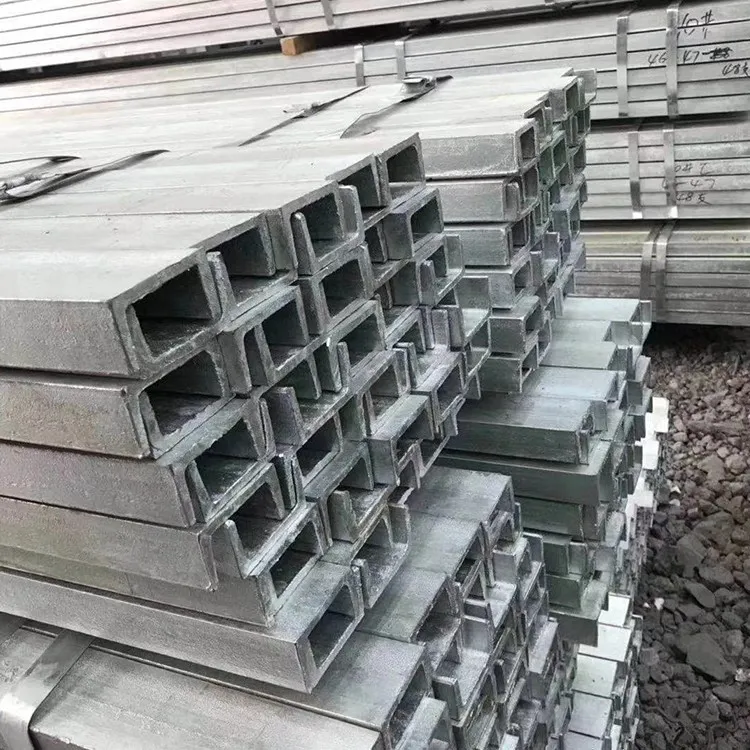
Galvanized channel steel: The surface of hot-dip galvanized channel steel is silvery white or gray with uniform luster; the surface of cold-dip galvanized (electro-galvanized) is brighter, but the coating is thinner.
Ordinary channel steel: The surface is the original metal color (iron gray), easily oxidized to form dark brown rust, rough and uneven.
3.What is the difference in mechanical properties between galvanized channel steel and ordinary channel steel?
Galvanized channel steel: The steel undergoes annealing during the hot-dip galvanizing process, which may slightly reduce the strength, but the overall mechanical properties (such as tensile strength and compressive strength) are similar to those of ordinary channel steel.
Ordinary channel steel: Without annealing, the strength is slightly higher, but the toughness may vary due to processing technology (such as cold bending).

4.What is the difference between the processes of galvanized channel steel and ordinary channel steel?
Galvanized channel steel: requires additional galvanizing treatment (hot dip or electroplating);
Hot dip galvanizing process: rust removal → pickling → hot dip galvanizing → cooling → passivation, the process is complicated.
Ordinary channel steel: direct rolling forming, simple process, short production cycle.
5.What are the differences in application scenarios between galvanized channel steel and ordinary channel steel?
Galvanized channel steel: building steel structures, bridges, guardrails, solar brackets, etc.; chemical equipment, offshore platforms, sewage treatment facilities, etc.; exposed structures of commercial buildings, landscape projects, etc.
Ordinary channel steel: short-term temporary structures (such as construction site scaffolding), dry indoor brackets (such as factory ceilings). Indoor mechanical parts without corrosion risk (such as machine tool guide rails). Concealed projects (such as internal wall supports), scenes with no requirements for appearance.