


Q: What are the main categories of passivation processes for galvanized coils based on their chemical composition?
A: They are mainly divided into two categories: chromate passivation and chromium-free passivation. Chromate passivation uses hexavalent chromium compounds, which have excellent corrosion resistance but are toxic, and environmental restrictions are becoming increasingly stringent. Chromium-free passivation is an environmentally friendly alternative process, and common types include trivalent chromium passivation, silane passivation, titanium-zirconium salt passivation, and organic composite passivation.
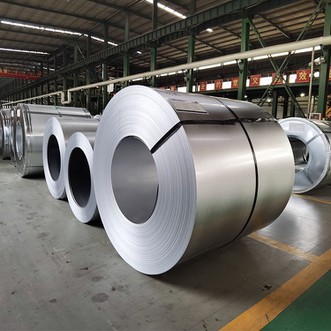
Q: What are the specific characteristics and mechanism of chromate passivation?
A: Chromate passivation is a traditional process that involves immersing or roll-coating galvanized coils with an acidic solution containing hexavalent chromium, forming a chromium-zinc composite conversion film on the zinc layer surface. This film has self-healing capabilities and can withstand salt spray for over 120 hours. However, hexavalent chromium is a carcinogen, and wastewater treatment is costly; therefore, it is currently being phased out.
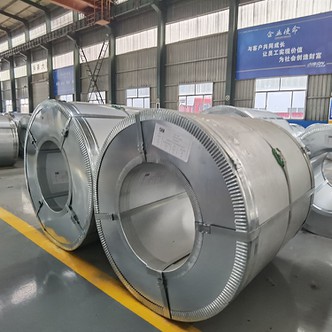
Q: What are the similarities and differences between trivalent chromium passivation and hexavalent chromium passivation?
A: Trivalent chromium passivation uses trivalent chromium salts instead of hexavalent chromium and is currently the mainstream environmentally friendly transition process. Its film formation mechanism is similar, but the film layer lacks self-healing ability, and its corrosion resistance is slightly lower than that of hexavalent chromium (salt spray time approximately 72-96 hours). Trivalent chromium has lower toxicity and complies with RoHS directives, but the passivation solution has poorer stability, requiring strict control of pH and temperature.
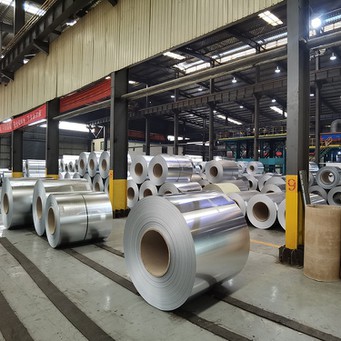
Q: What is the working principle of silane passivation? What are its suitable applications?
A: Silane passivation utilizes an organosilane coupling agent that, after hydrolysis, undergoes a condensation reaction with the hydroxyl groups on the zinc layer surface, forming a dense Si-O-Zn covalent network. This ultra-thin film (50-200 nm) not only provides a physical barrier but also enhances the adhesion of subsequent coatings. It is suitable for applications requiring completely zero metal ion emissions, but demands extremely high pretreatment cleanliness.
Q: What are the advantages of titanium-zirconium salt composite passivation? What other chromium-free processes are there?
A: Titanium-zirconium salt passivation is based on a fluorotitanic acid or fluorozirconic acid system, depositing a mixed oxide nanofilm on a zinc layer. Its corrosion resistance is close to that of trivalent chromium, and it has a long bath life. Other chromium-free processes include organic resin passivation (such as acrylic and epoxy resin coatings) and phytic acid passivation. The former blocks corrosive media through an organic film, while the latter utilizes phytic acid to chelate zinc ions to form a dense protective layer, but it is more expensive.