


Q:What are the key points for selecting the thickness specifications of galvanized angle steel?
A:1. Force requirements: Light load scenarios (such as interior decoration, temporary brackets): 3~5mm thickness (such as ∠40×4, ∠50×5) can be selected.
Heavy structures (such as industrial plant trusses, bridge supports): 8~20mm thick angle steel (such as ∠100×10, ∠160×16) is required, and the cross-sectional size is determined by calculation.
2. Anti-corrosion requirements: Hot-dip galvanizing: The coating thickness increases with the thickness of the angle steel (such as when the thickness is ≤5mm, the coating is ≥65μm; when the thickness is >5mm, the coating is ≥85μm), suitable for outdoor or highly corrosive environments.
Electrogalvanizing: The coating thickness is usually 12~25μm, which is only suitable for dry indoor environments (such as indoor pipe brackets).
3. Standards and supply: The mainstream supply specifications in the domestic market are ∠20×3~∠200×20, and unconventional thicknesses (such as >20mm) need to be customized. Export projects must select corresponding specifications according to international standards (such as ASTM A992, EN 10025-2).
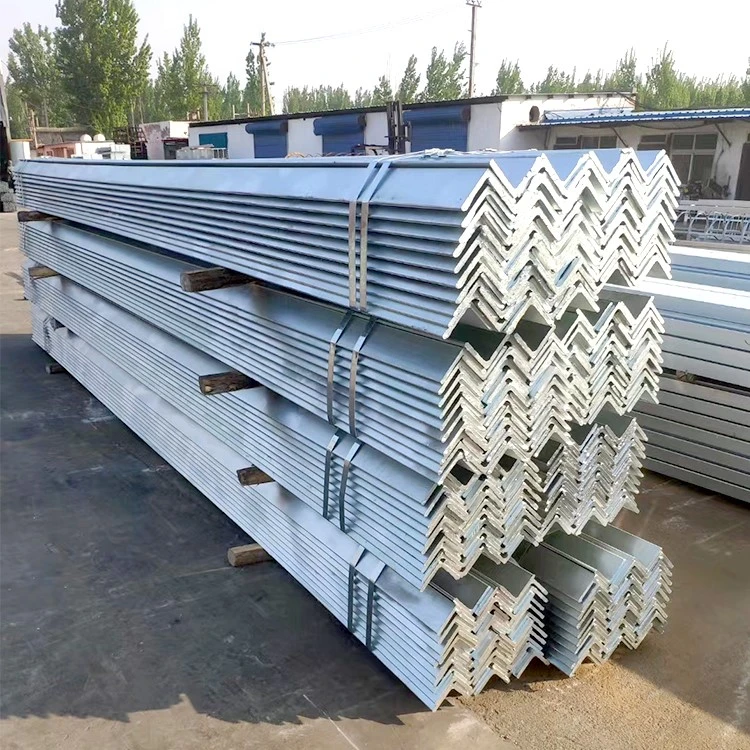
Q:What are the common misunderstandings and precautions about the thickness selection of galvanized angle steel?
A:"The thicker the better": It needs to match the force calculation. Excessive pursuit of thickness will increase the cost and structural deadweight. For example, it is sufficient to use ∠30×3 for balcony railings, and there is no need for ∠50×5.
Confusion between galvanized layer and steel thickness: The thickness of the galvanized layer (such as 85μm) and the thickness of the angle steel itself (such as 5mm) are two concepts. The former affects corrosion resistance, and the latter determines strength.
Risks of non-standard products: "Negative tolerance" angle steels produced by some small manufacturers (such as a nominal thickness of 5mm but only 4.8mm in reality) may result in insufficient bearing capacity, and the quality inspection report needs to be checked.
Q:What are the key factors to consider when choosing the thickness of galvanized angle steel?
A:Load requirements,Application scenarios, environmental corrosivity, design specifications and standards, expected service life, and economic efficiency

Q:What are the steps to select galvanized angle steel?
A:1. Identify the purpose: Where is it used? What is it used for?
2. Analyze the load: How much force does it need to withstand? (static load, dynamic load, wind load, snow load, earthquake force, etc.)
3. Evaluate the environment: How corrosive is the use environment? (inland, coastal, industrial area, indoor, outdoor)
4. Check the specifications: What design specifications and standards does the project need to comply with?
5. Preliminary estimate: Based on experience or similar projects, preliminarily estimate the required edge width range and thickness range.
6. Calculation/consultation: Perform structural calculations or consult engineers to determine specific specifications.
7. Consider life and cost: Under the premise of meeting safety regulations, weigh the expected life and economy.
8. Clarify the galvanizing requirements: Determine the minimum required galvanizing layer thickness according to the environment.

Q:What are the important precautions for galvanized angle steel?
A:1. Matching of side width and thickness: The specifications of angle steel are usually expressed as "side width x side width x thickness" (unit: mm), for example, 50x50x5. When determining the thickness, the side width also needs to be determined at the same time, because the load-bearing capacity is determined by both. The thickness cannot be considered in isolation.
2. Galvanized layer thickness: Clearly state the requirements for the thickness of the galvanized layer to the supplier (for example, "average of 85μm or more according to GB/T 13912"), and consider specifying it in the contract. The thickness of the zinc layer directly affects the anti-corrosion life. A coating thickness test report may be required during acceptance.
3. Standard compliance: Ensure that the purchased angle steel meets the corresponding hot-rolled steel standards (such as GB/T 706) and galvanized standards (such as GB/T 13912).