


1.Salt spray test - What are the standards for evaluating corrosion resistance?
Method: Place the sample in a 35℃, 5% sodium chloride salt spray chamber and spray continuously.
Evaluation Criteria: After the test (e.g., 500h, 1000h, 1500h), check:
Single-sided corrosion spread width at the scratch: Make an "X" shaped scratch to the substrate and measure the distance (unit: mm) from the scratch to both sides under the coating. The smaller the distance, the better. High-quality PVDF coatings can achieve ≤ 1mm (after 1000h salt spray).
Whether the unscratched area shows blistering, rusting, discoloration, or loss of gloss. Generally, no blistering and no rust are required.
"Grade" Interpretation: The industry often uses "passing XXX hours of neutral salt spray test" as a capability indicator. For example:
Ordinary polyester (PE): Generally requires ≥ 500 hours.
High-performance polyester (HDP)/silicone-modified polyester (SMP): Generally requires ≥ 720 hours.
PVDF fluorocarbon: Typically requires ≥ 1000 hours, while high-performance products can reach over 1500 hours.
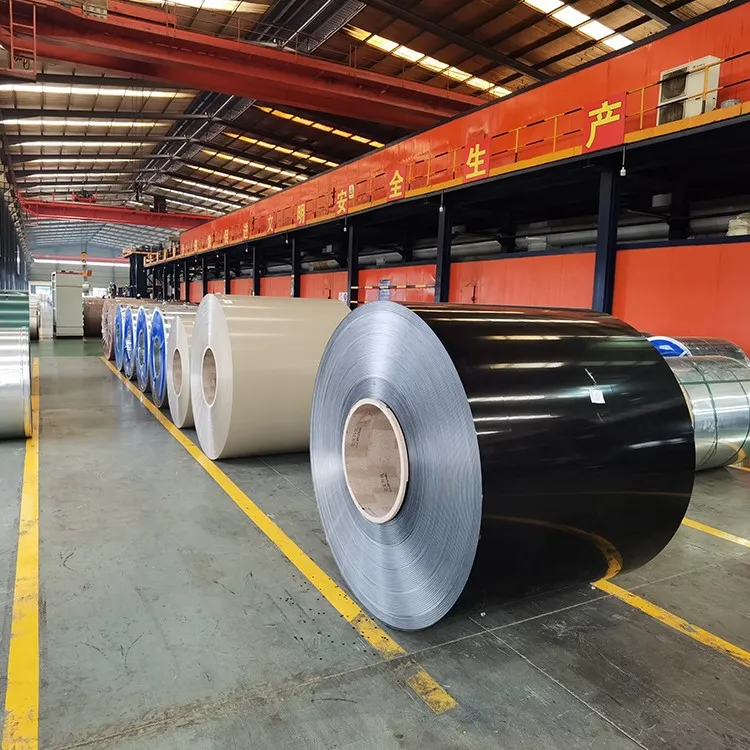
2.What are the testing procedures and standards for damp heat resistance tests?
Method: Place the sample in a constant high-temperature and high-humidity environment (e.g., 40℃±2℃, relative humidity ≥95%), or expose it to condensation.
Evaluation Criteria: After testing (e.g., 240h, 480h, 1000h), the main checks are:
Adhesion Change: Compare the adhesion to the initial adhesion using the cross-cut test to determine the grade degradation (e.g., a drop from 5B to 4B is acceptable, a drop below 3B is unacceptable).
Blistering: Evaluate the density (number) and size of bubbles according to the ASTM D714 standard chart. For example, "10S2" indicates small and dense bubbles, and "2M" indicates large and sparse bubbles. A high-quality coating should have no blistering (rating 10).
Color and Gloss Change: Measure ΔE and gloss retention using a colorimeter and gloss meter.
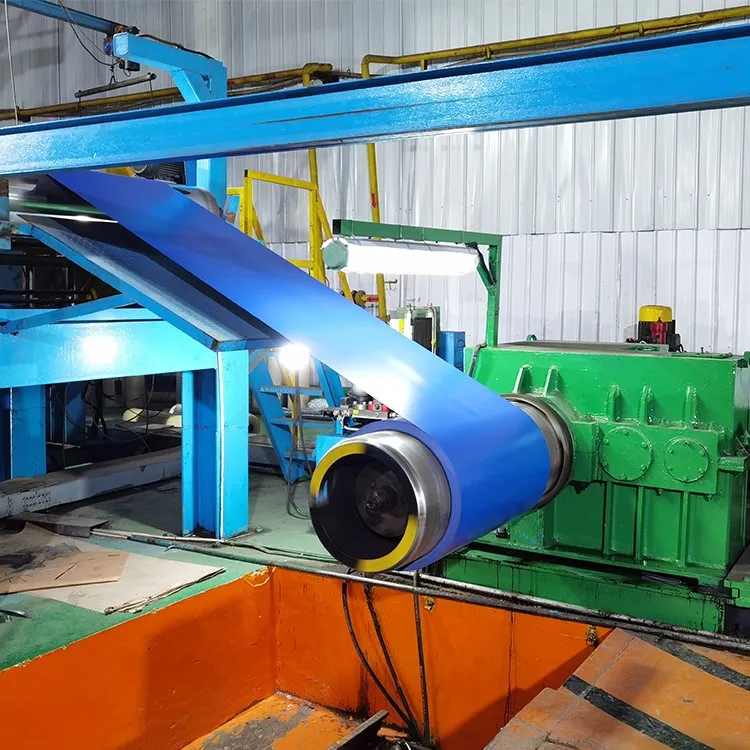
3.What are the test procedures for the boiling water test - extreme acceleration test?
Method: Immerse the sample in boiling distilled water (100℃) for several hours.
Evaluation Criteria: This is a very rigorous test that can expose defects in coating adhesion in a short time. After the test, check for loss of adhesion, blistering, and peeling. Coatings that pass the 2-4 hour boiling water test generally have excellent resistance to damp heat.

4.What requirements should the coating system meet?
Salt spray resistance: After 1000 hours of testing according to ASTM B117, the single-sided corrosion spread width at the scratched area is ≤ 2.0 mm, and there is no blistering or rust in the unscratched area (rating ≥ 8).
Damp heat resistance: After 480 hours of testing according to ASTM D2247, the adhesion (ASTM D3359 cross-cut test) decreases by no more than 1 grade (e.g., from 5B to 4B), there is no blistering on the surface (rating 10), and the color difference ΔE is ≤ 2.0.
Coating system: PVDF fluorocarbon or equivalent high-performance coating is recommended.
5.What are the differences in the "damp heat resistance rating" of coil coatings for different environments?
For general environments, the testing requirements for standard polyester (PE) can be referenced.
For harsh environments such as coastal areas, high humidity areas, and industrial areas, high-performance polyester (HDP/SMP) or PVDF fluorocarbon coatings must be selected, and higher testing specifications (such as salt spray ≥1000h) must be specified in the contract.