


1.What is non-oxidative heating of cold-rolled coils? What are the essential differences between it and traditional heating?
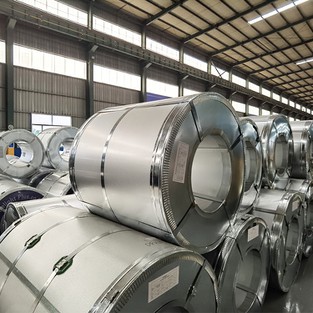
Oxidation-free heating refers to a process in which cold-rolled coils are heated to the annealing temperature under a protective atmosphere, preventing oxidation reactions (i.e., the formation of oxide scales such as FeO and Fe₂O₃) on the surface of the strip. Unlike traditional air atmosphere heating (which inevitably leads to surface oxidation and requires subsequent pickling), oxidation-free heating controls the redox potential of the atmosphere inside the furnace, allowing the strip to maintain its metallic luster throughout the heating process, achieving the goal of "surface protection completed during heating."
2.What is the core principle of non-oxidizing heating?
The core principle is to control the oxygen partial pressure in the furnace atmosphere to be lower than the decomposition equilibrium partial pressure of iron oxides.
According to the iron-oxygen balance diagram, when the oxygen partial pressure in the atmosphere is lower than the decomposition pressure of FeO, iron cannot be oxidized; instead, existing iron oxide can be reduced.
In actual production, by introducing reducing gases (such as H₂) and strictly controlling the content of oxidizing impurities (such as H₂O and O₂), the atmosphere is kept in the "stable region" for iron, thereby thermodynamically inhibiting the oxidation reaction.

3.How can a protective gas achieve "non-oxidation" in non-oxidizing heating?
The protective gas (H₂ + N₂) achieves oxidation-free operation through two pathways:
Reduction: H₂ reacts with the micro-oxide layer on the strip surface: FeO + H₂ → Fe + H₂O. The generated water vapor is carried away by the gas flow, restoring the surface to a pure iron state.
Isolation: The continuously introduced N₂ and H₂ create positive pressure, completely isolating the outside air and preventing oxygen from contacting the strip surface.
Dew point control: By controlling the dew point (i.e., water vapor content) of the atmosphere, the H₂O/H₂ ratio is ensured to be below the critical value required for the reduction of iron oxides (typically requiring a dew point ≤ -40℃).

4.What are the key process control points for achieving oxidation-free heating?
Furnace Body Sealing: The furnace shell, roller inlets, thermocouple interfaces, etc., must be strictly sealed to prevent air ingress.
Atmosphere Purity: The O₂ content in the protective gas must be <10 ppm, and the H₂O content must be <30 ppm (dew point below -40℃).
Positive Pressure Control: The furnace pressure should be maintained at a slightly positive pressure (usually 20-50 Pa) to ensure that outside air cannot flow back in.
Purge and Replacement: Before feeding, the air inside the furnace should be fully replaced with N₂; when shutting down the furnace, purge with N₂ first, then cool down to prevent air from being drawn in by negative pressure.
Airtightness Testing: Regularly perform furnace airtightness tests to ensure that the leakage rate is within the allowable range.
5.What is the specific significance of achieving oxidation-free heating for the quality of cold-rolled coils?
Surface Quality: The strip surface is free of oxide discoloration and adhesive oxide scale, resulting in a bright surface that eliminates the need for subsequent pickling and avoids surface defects caused by over-pickling.
Performance Consistency: It avoids localized decarburization or carburization caused by oxidation, ensuring uniform and stable mechanical properties (hardness, deep-drawing performance) across the entire strip surface.
Post-Process Compatibility: The oxide-free surface allows direct entry into galvanizing, tinning, or coating processes, significantly improving coating adhesion and coating quality. It is particularly suitable for products with high surface requirements, such as automotive exterior panels and high-end appliance panels.