


1.What is "dew point"? What does dew point control in cold rolling annealing?
Dew point refers to the temperature at which water vapor in an atmosphere begins to condense into liquid water. In cold rolling annealing, dew point actually represents the water content (water vapor partial pressure) of the furnace atmosphere.
The core of dew point control is the precise management of the oxidation-reduction capacity of the furnace atmosphere-the lower the dew point (the lower the water content), the stronger the reducing power of the atmosphere; the higher the dew point, the stronger the oxidizing power. For a protective atmosphere (H₂+N₂), the dew point is typically required to be controlled between -40℃ and -60℃ to ensure the atmosphere is within the stable reducing region of iron.
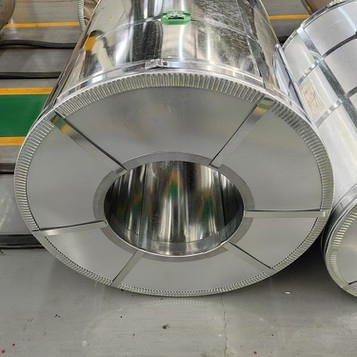
2.Why does the dew point directly affect whether the strip surface oxidizes?
According to the equilibrium reaction of iron, oxygen, and water vapor:
Fe + H₂O ⇌ FeO + H₂
The equilibrium constant for this reaction is K = P(H₂O)/P(H₂).
When P(H₂O)/P(H₂) is higher than the equilibrium value, the reaction proceeds to the right, and iron is oxidized to form iron oxide (FeO).
When P(H₂O)/P(H₂) is lower than the equilibrium value, the reaction proceeds to the left, and iron oxide is reduced to metallic iron.
Since P(H₂O) is directly determined by the dew point, the dew point determines whether the atmosphere is "oxidizing" or "reducing." If the dew point rises uncontrollably, even with the introduction of pure hydrogen, the strip steel may still oxidize, resulting in "oxidation color" or "bluish" defects.
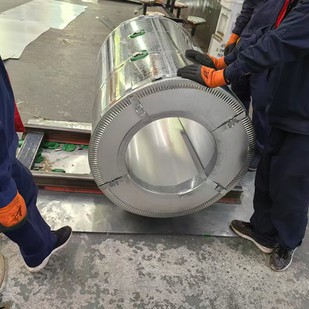
3.What specific quality defects can improper dew point control cause in cold-rolled coils?
Surface Oxidation Color: When the dew point is too high, an extremely thin oxide film forms on the strip surface, appearing yellow, blue, or gray, affecting the appearance and subsequent coating adhesion.
Selective Oxidation: For steels containing alloying elements such as silicon, manganese, and aluminum, excessively high dew points cause these alloying elements to accumulate and oxidize on the surface, forming oxide "pinning" and severely deteriorating coating performance.
Decarburization: When the dew point is too high and the temperature is also high, water vapor in the atmosphere reacts with carbon in the steel: C + H₂O → CO + H₂, leading to surface decarburization, reducing surface hardness and fatigue performance.
Carburization: Reverse carburization may occur when the dew point is extremely low and the carbon-containing atmosphere is abnormal, but in actual production, the risk of decarburization is more common.
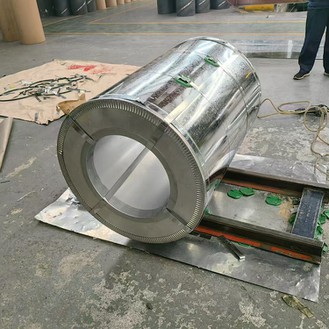
4.What are the differences in dew point control requirements for different steel grades?
Ordinary carbon steel (e.g., CQ, DQ grade): A dew point of -30℃ to -40℃ is sufficient to meet basic surface requirements, as it contains few alloying elements and is less prone to selective oxidation.
High-strength steel (containing Si, Mn): Requires a dew point ≤ -45℃, or even ultra-low dew points below -60℃, to prevent silicon and manganese from accumulating and oxidizing on the surface; otherwise, "uncoating" or "poor coating adhesion" will occur during galvanizing.
Automotive outer panels (IF steel, bake-hardening steel): The dew point must be strictly stabilized at -50℃ to -60℃, combined with a high-hydrogen atmosphere (≥5% H₂), to ensure top-quality surface with "no oxide color + no selective oxidation".
Silicon steel: Extremely sensitive to dew point, typically requiring a dew point ≤ -50℃ to avoid the oxide layer affecting magnetic properties.
5.How can we achieve precise control and monitoring of dew point in production?
Furnace Body Sealing: The furnace shell, furnace roller inlets, thermocouple interfaces, welds, etc., must be strictly airtight to prevent the infiltration of external humid air; regular airtightness tests (pressure holding method or helium leak detection) should be performed.
Online Dew Point Meters: Mirror dew point meters or capacitive dew point meters should be installed at key locations such as the heating section, cooling section, and furnace nose of the annealing furnace to monitor dew point values in real time and connect to the automated control system.
Atmosphere Conditioning:
When the dew point rises, the protective gas flow rate should be automatically increased, or the system should switch to a gas source with lower moisture content (such as liquid ammonia decomposition into hydrogen or purified nitrogen).
A "dry box" or "dry gas seal" should be installed in the furnace area to prevent humid air from flowing back into the furnace from the furnace nose.
Regular Calibration and Maintenance: Dew point meters need to be calibrated regularly, and desiccants and filters need to be replaced periodically to ensure the accuracy and reliability of the test data.