


Q1: How strong exactly is considered "high-strength steel substrate"?
High-strength steel substrates have clearly defined grades, with "high" referring to their strength relative to ordinary building steel plates. The specific differences are as follows:
Category | Yield Strength (MPa) | Application Scenarios
Ordinary Substrate | Approx. 140 - 250 MPa | General indoor and outdoor decoration, simple non-load-bearing structures
High-Strength Substrate | 280 MPa and above | Load-bearing roofs, walls, light steel structures
Higher Strength Grades | 350 MPa, 420 MPa, 450 MPa | Photovoltaic brackets, high-rise buildings, automated warehouses
Ultra-High Grades | 550 MPa and above | Bridges, large stadiums, special vehicle components
Q2: What are the most direct benefits of higher strength?
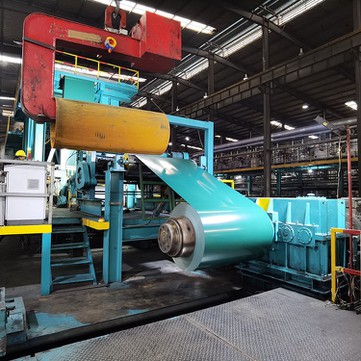
The most direct benefits are achieving "lightweighting" and "cost reduction," which are also the most significant economic advantages of high-strength substrates.
Thinner and lighter material: High-strength steel has a higher "specific strength" (strength to weight ratio). This means that, under the same load, using high-strength substrates can significantly reduce the thickness of the steel plate.
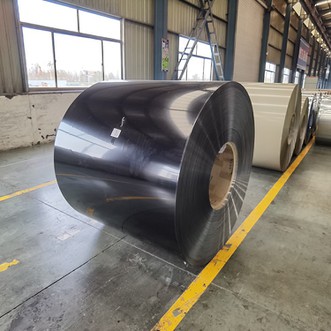
Significantly reduced costs: Due to the reduced material usage, the overall cost decreases rather than increases. For example, some companies have reduced their cost per ton of steel by 256-294 yuan after adopting high-strength substrates. In the photovoltaic industry, this weight reduction design can save more than 50% of zinc resources.
Q3: Besides cost savings, what other hidden performance advantages does high-strength substrate offer?
The advantages of high-strength substrate go beyond just cost savings; they lie in its strength. Its high performance addresses many of the pain points of ordinary steel:
Stronger load-bearing capacity: It can be safely applied to designs such as large-span beam-free arched roofs, providing architects with greater design freedom.
Longer service life: High-strength substrates are often combined with more advanced coating technologies such as zinc-aluminum-magnesium (ZAM), forming a powerful synergy that significantly improves the overall structural durability.
Less maintenance: A stronger substrate combined with superior coatings means lower product failure rates and lower overall operating costs in complex environments such as photovoltaic systems and livestock farming.

Q4: Will such high strength affect processing and welding?
This is a crucial question. In the past, high strength and ease of processing were indeed difficult to achieve simultaneously. However, technological advancements have now made it possible to balance both.
Processing Performance: Innovations in metallurgical processes have resolved this contradiction. For example, Baosteel's 590MPa grade high-strength steel can achieve an elongation of over 10%; recently, patented products have also achieved a yield strength of 550MPa while maintaining an elongation of 14%. This is sufficient to meet common processing requirements such as bending and stamping.
Welding Performance: Modern high-strength steels, through optimized alloy composition and processes, also possess excellent weldability. Even in processes such as spot welding, crack susceptibility is effectively reduced.
Q5: As a purchaser, how should one correctly select and apply high-strength substrates?
This requires systematic consideration from the design stage:
Conduct structural optimization design: Traditional design methods may not fully utilize the performance advantages of high-strength materials. It is recommended to consult a structural engineer and utilize the high-strength characteristics for "weight reduction" design to achieve the best cost-effectiveness ratio.
Pay attention to comprehensive indicators such as elongation: Don't just focus on yield strength; pay attention to elongation and yield strength ratio simultaneously. A qualified, genuine high-strength steel product also guarantees processing performance.
Verify complete product grade: Request the supplier to provide the complete grade, such as S350GD+AZ (high-strength hot-dip galvanized steel sheet) or TS550GD+Z (high-strength color-coated galvanized steel sheet), and verify the product warranty certificate to ensure performance meets standards.