


1. In which areas of medical devices are cold-rolled coils mainly used?
Cold-rolled coils are used in a wide range of fields, from basic equipment housings to precision implants. Taking stainless steel cold-rolled coils as an example, their main application scenarios are as follows:
Large medical equipment housings and structural components: housings, chassis, brackets, and trolleys for CT scanners, X-ray machines, and patient monitors.
Medical Furniture and Cabinets: Medicine Temperature Control Cabinets, Operating Tables, Medical Trolleys, Testing Tables
Surgical instruments: scalpel, forceps, retractor, needle holder, suture needle
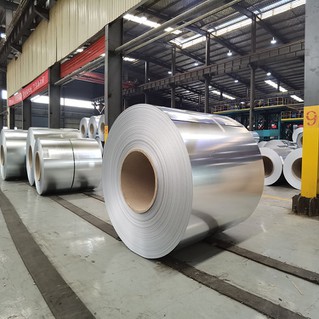
II. What are the unique advantages of medical-grade stainless steel cold-rolled coils compared to ordinary carbon steel cold-rolled coils?
The advantages of stainless steel cold-rolled coils mainly lie in their corrosion resistance and hygiene safety, two aspects that ordinary carbon steel cold-rolled coils cannot match.
Superior Corrosion Resistance: Stainless steel cold-rolled coils (such as 304 and 316L) contain chromium, which forms a dense oxide film on the surface, effectively preventing rust. Ordinary carbon steel cold-rolled coils (SPCC) have poor corrosion resistance and rust rapidly in humid environments or environments with chemical disinfectants.
Excellent Hygiene Performance: Medical-grade stainless steel has a smooth surface, making it less prone to bacterial growth. It can withstand repeated cleaning with various disinfectants such as alcohol and iodine, reducing the risk of hospital-acquired infections. Ordinary cold-rolled steel sheets must be coated with a coating through electrostatic spraying before use; once the coating is damaged, the easily corroded substrate is exposed.
Good Biocompatibility: Certain grades of medical-grade stainless steel (such as 316L) have extremely low metal ion release, meeting implant standards, which is completely impossible for ordinary carbon steel.

3. What stringent standards must be met in the manufacture of cold-rolled medical stainless steel?
Material Standards: ASTM F138/F139 - Specific Chemical Composition and Mechanical Property Requirements for Stainless Steel for Surgical Implants
GB/T 3280-2015 - Clarifying the Chemical Composition Specifications for Medical Stainless Steel Materials such as S30408
Medical Device Standard: YY/T 0294.1-2024 - Grades and Hardness Ranges of Metallic Materials for Surgical Instruments
Management Standard: ISO 13485 - Full Traceability Requirements for Medical Device Quality Management Systems

4. How to select the most suitable cold-rolled coil material for medical devices?
Medical grade cold-rolled stainless steel coils (e.g., 304/316L)
Extremely corrosion resistant, hygienic and safe, with stable performance; however, it is relatively expensive and heavy.
Ordinary carbon steel cold-rolled coil (such as SPCC) + surface treatment
Extremely low cost, good processing performance
Not corrosion resistant, must rely on surface coating; failure of the coating renders the product ineffective.
5. What are the technological trends in cold-rolled coils for medical devices?
The rapid development of the medical device industry is driving continuous innovation in cold-rolled steel technology. Key trends include:
Towards higher precision and more complex performance: To meet the demands of minimally invasive surgery, cold rolling processes are pushing the limits of ultra-thin wall processing to 0.05mm. Simultaneously, the combination of new materials such as shape memory alloys (e.g., nickel-titanium alloys) and biodegradable magnesium alloys with cold rolling processes is bringing new possibilities for implantable devices such as spinal correction devices and cardiovascular stents.
Intelligent upgrades in process and quality control: The manufacturing process is incorporating AI control systems to achieve online dimensional compensation with precision down to 0.001mm. Simultaneously, online eddy current detection systems achieve 100% defect screening, ensuring the safety of high-risk devices.
From "usable" to "customized, integrated services": Downstream companies' requirements for steel suppliers have gone beyond the material itself. Service providers like Hubei Daming, by integrating upstream resources such as Baowu Steel, provide one-stop solutions from high-precision slitting and leveling to agile delivery, ensuring that every coil of cold-rolled finished product exceeds the stringent quality standards of the medical device industry.