


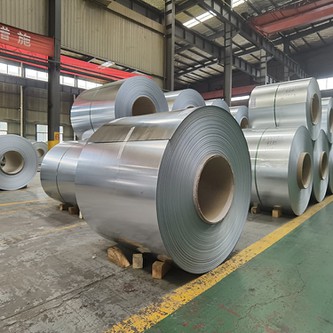
1. In which lighting fixture components is cold-rolled coil primarily used?
Cold-rolled coil is widely used in lighting fixtures, with a wide variety of applications, covering almost all major metal structural components of various lighting fixtures. Its applications can be broadly categorized as follows:
Lamp Body and Housing: This is the most common application, encompassing various lighting fixture types:
Brackets and Lamp Bodies: Used to manufacture iron brackets and lamp bodies for LED fluorescent tubes. For example, the LED double-tube covered iron bracket produced by Dongguan Liansheng Lighting Electric Co., Ltd. uses high-quality cold-rolled steel plate with a thickness of 0.5mm. In addition, professional lighting boxes (such as those used in high-requirement lighting environments in factory workshops) are often made from thicker cold-rolled steel plates.
Lamp Shades and Reflectors: Used to manufacture lamp shades (such as ceiling light shades) and reflectors. For example, the T8 bright mirror reflector bracket is made of high-quality cold-rolled steel plate.
Specialty Lighting Fixture Housings: Used to manufacture housings for high-power searchlights, outdoor specialty lighting fixture housings (such as Ocean King Lighting products), and panels for emergency sign lights.
2. Why are cold-rolled coils suitable for manufacturing lighting fixture components? What are their advantages?
The widespread use of cold-rolled coils in the lighting industry is mainly due to the following advantages:
Excellent forming and processing performance: Lighting fixture components, especially lampshades and chassis, typically require complex processes such as stamping, stretching, and bending. Cold-rolled steel sheets, due to their excellent stamping performance and ductility, are ideal for these processes. For example, the DC03 ultra-thin deep-drawing cold-rolled steel strip developed by Jiuquan Iron & Steel Group demonstrated excellent stamping and processing performance in a trial application for ceiling light shades at a well-known lighting company.
Superior surface quality and precision: Cold-rolled steel sheets have a smooth, clean surface and high flatness, making them ideal as a substrate for subsequent surface treatments such as powder coating and painting, resulting in uniform and aesthetically pleasing coatings. Simultaneously, their precise thickness and tolerance control ensures the accuracy and consistency of the final product.
Excellent cost-effectiveness: Compared to materials such as aluminum alloys and stainless steel, cold-rolled steel is more cost-effective, effectively controlling the manufacturing costs of lighting products. This is particularly important in the cost-sensitive LED lighting industry. Good strength and rigidity: As a structural support component of the lamp, cold-rolled steel sheet provides sufficient mechanical strength to ensure the lamp's stability and durability.
3. What are the limitations or points to note when using cold-rolled coils for lighting fixture accessories?
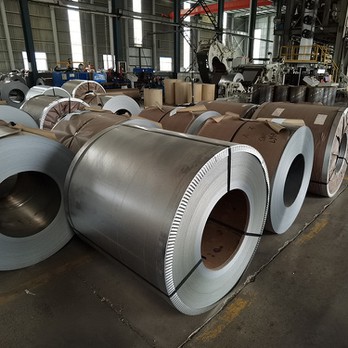
While cold-rolled steel sheets offer significant advantages, their biggest drawback is poor corrosion resistance, making them highly susceptible to rust.
Surface treatment is mandatory: Untreated cold-rolled steel sheets oxidize and rust rapidly in humid air. Therefore, almost all cold-rolled sheets used in lighting fixture accessories must undergo surface treatment, most commonly electrostatic spraying (powder coating), to form a dense protective layer.
Unsuitable for outdoor or humid environments: Due to its high dependence on the surface coating, once the coating is scratched or worn away, the substrate will be exposed and rust. Therefore, lighting fixture accessories made from ordinary cold-rolled steel sheets are not recommended for use in outdoor, bathroom, kitchen, or other environments with prolonged humidity or corrosion. In these scenarios, galvanized steel sheets, stainless steel, or aluminum alloys are typically chosen as alternatives.
Heat treatment affects performance: Cold-rolled coils are available in "cold-hardened" and "annealed" states. For lighting fixture components used in complex stretching and deep drawing, annealed cold-rolled coils must be used to eliminate internal stress and restore plasticity. If high-strength, low-plasticity cold-rolled coils are mistakenly used, they are very prone to cracking during stamping.
4. How should lighting manufacturers select suitable cold-rolled steel coils for different accessories?
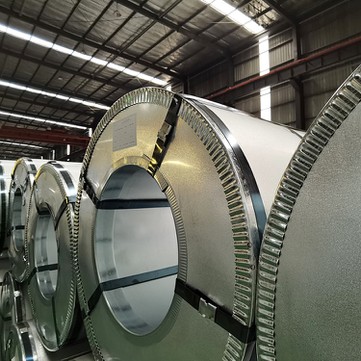
Selecting the appropriate cold-rolled steel coil for specific lighting accessories requires comprehensive consideration of product design requirements, usage environment, and cost control. Here are some material selection suggestions:
Consider the stamping difficulty of the product:
For accessories with simple shapes and low processing volume (such as ordinary brackets), general-purpose cold-rolled steel sheets such as SPCC can be selected.
For components requiring deep drawing and complex forming (such as curved lampshades and deep-bottomed chassis), deep-drawing grade cold-rolled steel sheets such as DC03, SPCD, or 08F with better stamping performance should be selected.
Consider the product's usage environment:
For lighting accessories used in indoor, dry environments (such as offices, shopping malls, and home living rooms), cold-rolled steel sheets with high-quality powder coating are the most cost-effective choice.
5. What are the development trends of cold-rolled coil applications in the lighting industry?
With the advancement of lighting technology and industrial upgrading, the application of cold-rolled coils in lamp manufacturing is showing several clear development directions:
Towards thinner, lighter, and more precise materials: To meet the demands of lightweight and aesthetically pleasing modern lamp structures, the market demand for ultra-thin, high-precision cold-rolled strip steel is increasing. For example, some LED industry patented technologies precisely control the thickness of cold-rolled strip steel to 0.15mm-0.20mm, with a tolerance of only ±0.005mm.
Continuously upgrading performance requirements: The upgrading of the lighting industry has placed new demands on the performance of upstream steel. High-strength, high-formability, and high-surface-quality cold-rolled steel sheets will become mainstream.
Green and recyclable: Under the "dual carbon" goal, the steel industry is promoting green transformation, and the production and use of cold-rolled steel will place greater emphasis on environmental protection and recyclability.
Changes in the market competition landscape: According to research reports, the global cold-rolled low-carbon steel market will continue to grow in size by 2025. In China, although the supply pattern of cold-rolled steel sheets may face changes such as total volume control and structural optimization, its application demand in new energy, home appliances (including lighting) and other fields remains strong. It is expected that by 2030, the proportion of cold-rolled steel demand in the new energy field will increase significantly.