


1. Q: What are the main tasks of packaging machinery in the entire manufacturing process of cold-rolled coils?
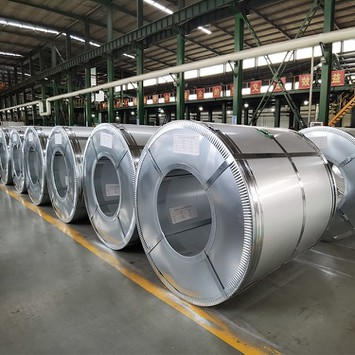
A: Packaging machinery is mainly used in the finished product packaging process after cold-rolled coils have completed rolling. Its core task is to provide multiple layers of protection for the cold-rolled coils through automated equipment, effectively resisting physical damage and chemical corrosion during subsequent storage, transportation, and hoisting.
Specifically, these machines can automatically or semi-automatically complete a series of processes including ① rust prevention treatment, ② mechanical protection, ③ bundling and tying, and ④ labeling and identification.
2.Q: What are the main types of packaging equipment? What are their respective functions?
A: A complete cold-rolled coil packaging line typically consists of various pieces of equipment with different functions, working together to complete complex packaging tasks. The main types and their functions are as follows:
**Wrap-around machine:** Automatically wraps steel coils with crepe paper and stretch film containing VCI vapor phase corrosion inhibitors to form a sealed, moisture-proof, and rust-proof protective layer.
**Outer sheathing machine:** Wraps a sturdy outer sheath (such as cardboard or steel plate) around the outermost layer of the steel coil to resist impacts and abrasion during lifting and transportation.
**Automatic strapping machine:** Uses steel strapping or PET strapping to perform multiple circumferential and radial strapping operations on the steel coil, ensuring the packaging material is tightly secured and preventing loosening.
**Conveying/transfer equipment:** Such as coil transport vehicles, walking beams, and C-hooks, smoothly and accurately transport steel coils within the packaging line and between different processes, avoiding the risks associated with manual handling.
3.Q: Why does cold-rolled coil packaging require so many layers? How does the packaging machinery achieve this?
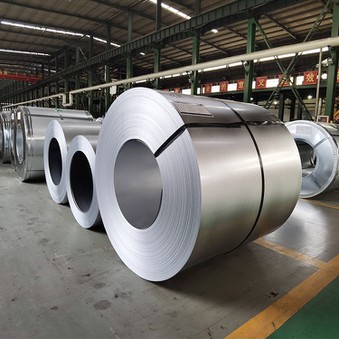
A: The reason packaging machinery constructs multiple layers of protection is to systematically address the various risks in warehousing and logistics. It's a well-defined "sandwich" structure:
Inner layer (rust-proof layer): Wrapped with paper or film impregnated with VCI vapor phase corrosion inhibitors. By releasing protective molecules, a molecular layer is formed on the metal surface to prevent oxidation and rusting.
Middle layer (protective/fixing layer): Tightly wrapped with PE stretch film. Its main function is to form a moisture-proof seal and provide restraint for the steel coil, preventing it from loosening and shifting during transportation.
Outer layer (mechanical protection layer): A sturdy outer protective layer (such as corrugated cardboard, galvanized steel sheet, etc.) is added to resist direct physical impact and abrasion during lifting and transportation.

4.Q: How automated are cold-rolled coil packaging lines? What specific benefits do they bring?
A: Modern cold-rolled coil packaging lines are highly automated, having largely transitioned from semi-automatic to fully automatic operation.
Key benefits include:
Leap in efficiency: Automated packaging lines have high processing speeds, with a single line capable of handling 15 to 60 coils per hour, far exceeding manual labor.
Stable quality: Machine-packaged products offer high consistency, avoiding quality issues caused by human error.
Cost optimization: Significantly reduces reliance on manual labor and labor intensity in the packaging process, while precisely controlling the amount of packaging materials used, reducing waste.
Enhanced safety: Replacing manual handling and packaging with automated equipment significantly reduces the risk of workplace accidents.
5.Q: What are the special requirements for packaging different types of cold-rolled coil products?
A: Different types of cold-rolled coils have varying requirements for surface precision, material properties, and rust prevention levels, therefore packaging machinery needs to be adjusted accordingly.
For example:
Cold-rolled steel sheet: Especially for steel sheets used in automobiles or home appliances where strict appearance requirements are necessary, packaging lines will be equipped with flexible contact components to prevent surface scratches during packaging.
Galvanized/cold-rolled steel strip: This type of steel strip has sharp edges, so packaging equipment will be equipped with special edge protection pads to prevent scratches to the film or operators during winding.
Precision/stainless steel strip: Packaging equipment requires a more precise tension control system to prevent the steel strip from stretching and deforming due to excessive tension during winding or packaging.