


1. Q: Is cold-rolled coil suitable for ductwork? What are its main advantages?
A: Partially applicable, but careful material selection is necessary. Cold-rolled coil can be used as a ductwork substrate, but it must be paired with comprehensive anti-corrosion measures.
Main advantages:
Good formability: Cold-rolled coil has an elongation rate ≥28%, meeting the requirements of ductwork seams, folding, roll forming, etc., suitable for manufacturing rectangular, round, and irregularly shaped ducts;
Smooth surface: High thickness accuracy (±0.05mm), tight seams, and low air leakage rate;
Cost advantage: Raw material costs are approximately 70%~80% of galvanized steel and 30%~40% of stainless steel.

2.Question: What are the main restrictions on cold-rolled coils?
Key limitations:
Poor corrosion resistance: Bare cold-rolled coils are extremely prone to rusting in humid or corrosive gas environments and cannot be used directly for air ducts;
Requires post-treatment: Requires anti-corrosion treatments such as galvanizing, spraying, or film coating, increasing the process and cost;
Not suitable for specific scenarios: Not recommended for use in environments such as kitchen exhaust fumes (containing acidic substances), chemical plant exhaust (corrosive gases), and damp basements.
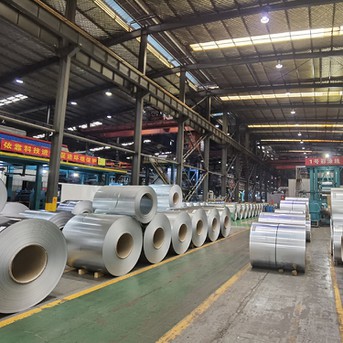
3.Question: When using cold-rolled coils to manufacture ducts, how should the galvanized layer be matched with the processing technology?
Key points for processing technology adaptation:
Sealing/Bending: The galvanized layer is prone to cracking during processing. The inner bending angle R should be controlled to ≥1.0t (plate thickness), and sharp-angle bending should be avoided. It is recommended to use special lubricating oil for seaming machines to reduce coating wear.
Welding: Zinc vapor is generated during the welding of galvanized sheets. Ventilation should be strengthened. Spot welding can be used instead of continuous welding, or the coating can be ground before welding.
Cutting edge protection: Cut edges are weak points for corrosion. A zinc-rich primer should be applied to the cutting edges to ensure overall corrosion resistance.
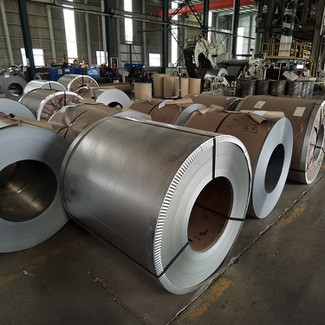
4. Question: How does the cost-effectiveness of cold-rolled coiled air ducts compare to galvanized sheet air ducts and stainless steel air ducts?
Conclusion:
For standard indoor ductwork: Hot-dip galvanized steel (GI) is the most cost-effective option, requiring no secondary treatment and offering the lowest overall cost.
For short-term projects/temporary ventilation: Cold-rolled coils with spray coating can be used, but a shorter lifespan must be accepted.
Not recommended: Using bare cold-rolled coils to make ductwork (without any anti-corrosion treatment) is highly susceptible to corrosion even in indoor environments, and the subsequent maintenance costs far outweigh the material savings.
5. Q: If cold-rolled coil is chosen for ductwork, how can quality and lifespan be ensured? Please provide implementation suggestions.
A: If cold-rolled coil must be used as the substrate, the following measures must be strictly implemented:
1. Substrate Control:
Use DC01 grade or higher cold-rolled coil, with a thickness tolerance ≤ ±0.05mm and flatness ≤ 3IU to ensure uniform coating.
Prioritize purchasing pre-galvanized cold-rolled coil (i.e., hot-dip galvanized sheet) rather than galvanizing bare sheet to avoid damage to the coating during secondary processing.
2. Corrosion Protection Process:
If galvanizing bare sheet is used, ensure the galvanizing plant is qualified, the coating uniformity passes the copper sulfate test, and the coating weight is ≥ 80g/m².
When using a spray coating method, control the phosphating film weight to 2~4g/m², the coating thickness ≥ 80μm, and pass the salt spray test for ≥ 240 hours.