


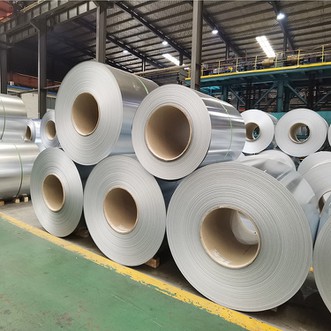
1. Q: Can cold-rolled coils be used directly outdoors?
A: No, they cannot be used directly. Bare cold-rolled coils corrode rapidly in outdoor environments, primarily due to the following reasons:
Lack of natural protective layer: Cold-rolled coils lack coatings or passivation films, leading to rapid oxidation upon direct exposure to oxygen and moisture;
Outdoor corrosion factors: Rainwater (containing acidic substances), condensation caused by diurnal temperature variations, SO₂ in industrial environments, and chloride ions in coastal areas all accelerate electrochemical corrosion;
Corrosion rate: Under typical outdoor conditions, visible rust spots appear on bare cold-rolled coils within 24-72 hours, and the rust depth can reach 0.1-0.3 mm after 1-3 months, severely impacting structural strength and appearance.
Conclusion: Bare cold-rolled coils are absolutely prohibited from direct use in outdoor products or structural components. Protection must be provided through coatings, plating, or the selection of weather-resistant materials.
2. Question: What protective solutions are available for outdoor cold-rolled coils? How effective are they?
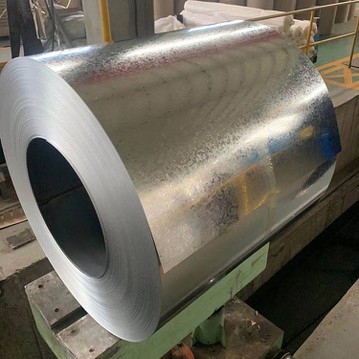
For outdoor use, the recommended galvanized coating thickness is ≥80g/m² (double-sided), and ≥180g/m² is recommended for coastal or heavily polluted industrial areas; the powder coating thickness must be ≥80μm and pass the cross-cut test and weather resistance test (QUV 1000 hours).

3. Question: How do cold-rolled coils compare in terms of cost-effectiveness with hot-dip galvanized sheets and stainless steel in outdoor applications?
Standard outdoor structures: Hot-dip galvanized steel sheet (GI) offers the best cost-performance ratio, balancing corrosion resistance, processability, and cost.
High corrosion resistance/long lifespan requirements (coastal areas, industrial zones): Aluminized zinc sheet (AZ) or hot-dip galvanized steel sheet with heavy-duty anti-corrosion coating.
Temporary/short-term outdoor use: Cold-rolled coil with hot-dip galvanizing (outsourced processing), but cut edge protection must be controlled.
Not recommended: Cold-rolled coil with ordinary spray coating for outdoor use; the coating will rust quickly once scratched.
4. Question: Even with protective measures, what risks remain for outdoor applications of cold-rolled coils? How can these risks be mitigated?
Protective layers cannot completely eliminate risks; the following weak points require special attention:
Risk Point | Failure Mechanism | Mitigation Measures
**Cutting/Cut Surface Corrosion:** Damage to the plating or coating at shearing, punching, or welding points, exposing the substrate. Apply zinc-rich primer or cold galvanizing spray to all cuts; sand and recoat after welding.
**Coating Aging/Chlorination:** Degradation of organic coatings due to outdoor UV radiation, temperature differences, and humidity. Use weather-resistant powders (such as polyester or fluorocarbon), requiring a QUV test of ≥1000 hours; lighter colors offer better weather resistance than darker colors.
**Local Damage to Coating:** Bumps and scratches during transportation and installation. Strengthen packaging protection; provide galvanized repair paint on-site and promptly treat damaged areas.
5. Q: In which outdoor scenarios can cold-rolled coil substrate be used? In which scenarios is its use strictly prohibited?
A: Based on protection costs and failure risks, the applicable boundaries are clearly defined:
✅ Scenarios where it can be used (reliable protection required):
Photovoltaic brackets, communication towers (hot-dip galvanized, coating ≥80g/m²);
Outdoor cabinets, distribution box housings (hot-dip galvanized sheet + powder coating, double-layer protection);
Billboard structures, street light poles (hot-dip galvanized or aluminized zinc);
Guardrails, fences (hot-dip galvanized, coating ≥120g/m²);
Temporary outdoor facilities (short-term use, maintenance acceptable).
❌ Scenarios where the direct use of bare cold-rolled coil is strictly prohibited:
Any outdoor environment directly exposed to rain or condensation;
Coastal areas (within 5km of the coastline), where chloride ion concentration is high, even ordinary galvanizing is prone to failure;