


While the cost of solar mounting structures accounts for only a small percentage (a few percent) of the total photovoltaic (PV) power generation system cost, the selection of the right type is critical. The core considerations include durability: the mounting system must ensure structural reliability over a 25-year service life, withstand environmental corrosion, wind and snow loads, deliver safe and reliable installation with minimal installation costs for optimal performance, and offer low maintenance, reliable after-sales support, and recyclability at the end of its lifecycle. When designing and constructing a PV power station, the choice of mounting type must be tailored to local conditions, as each type has its own advantages and disadvantages.
Among the most common options on the market are C-channel and U-channel solar mounts. This guide will break down their key differences, performance characteristics, and ideal use cases to help you make the right choice for your project.
Core Design & Appearance Differences
The most fundamental distinction between C-channel and U-channel solar mounts lies in their cross-sectional design, which directly impacts their mechanical performance and manufacturing process.
-
U-Channel Solar Mounts
U-channel mounts feature a simple, open "U" shaped cross-section with no curled edges. This open design offers high flexibility for on-site adjustments, making it a popular choice for projects with variable on-site conditions. U-channel steel is typically formed through cold-bending or hot-rolling processes, with a straightforward production flow that allows for quick customization of lengths and hole positions.
-
C-Channel Solar Mounts
C-channel mounts are distinguished by their curled, folded edges on both sides of the "C" shaped cross-section. This unique design is automatically formed by specialized C-channel roll forming machines, which can precisely produce consistent profiles based on custom dimensional requirements. The curled edges create a closed, reinforced structure that significantly enhances the section's torsional and bending strength.

Mechanical Performance & Load-Bearing Capacity
The structural design of each channel type translates to distinct performance characteristics, making them suitable for different load requirements and project environments.
-
U-Channel Mount Performance
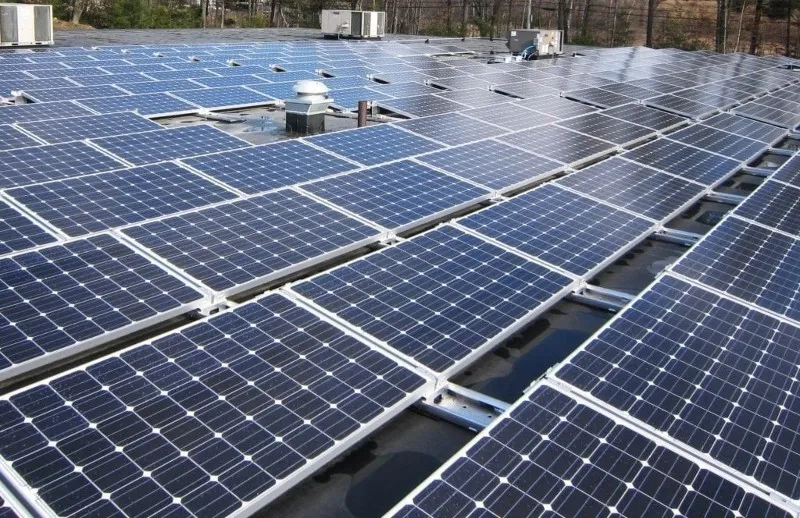
U-channel mounts are engineered for high pressure resistance and long-term structural stability. Their thick-walled, open design delivers excellent load-bearing capacity, making them ideal for heavy-load scenarios such as large-format PV modules, high wind/snow load regions, and ground-mounted power stations. Key advantages include:
High rigidity and low deformation: The solid U-section resists bending and torsion under extreme loads, ensuring long-term structural integrity.
Excellent impact resistance: The open design dissipates impact force effectively, reducing the risk of structural damage during installation and operation.
Suitable for heavy-duty applications: Ideal for large-scale ground-mounted PV plants, solar carports, and projects in harsh climate zones with extreme wind or snow.
-
C-Channel Mount Performance
C-channel mounts are optimized for shear resistance, slip resistance, and impact resistance, with a focus on lightweight high-strength performance. GNEE STEEL's C-channel steel is manufactured from high-strength aluminized zinc steel through precision cold-bending processing, delivering exceptional section performance with a thin wall and light weight. Key advantages include:
Superior strength-to-weight ratio: The curled edge design boosts section modulus by 30-40% compared to U-channel of the same weight, enabling higher load capacity with less material.
Excellent anti-slip and shear performance: The folded edges create a secure locking interface for connections, eliminating the risk of component slippage under dynamic loads.
Lightweight design: Reduces foundation loads, transportation costs, and installation labor, making it ideal for distributed rooftop projects.
Comprehensive Performance Comparison Table
| Performance Indicator | C-Channel Solar Mount | U-Channel Solar Mount |
|---|---|---|
| Cross-Section Design | Curled edge, closed reinforced structure | Open U-shape, no curled edge |
| Strength-to-Weight Ratio | Excellent (30-40% higher than U-channel at same weight) | Good (high rigidity, heavier weight) |
| Torsional & Bending Resistance | Superior, ideal for dynamic wind loads | Excellent, ideal for static heavy loads |
| Material Cost per Unit Load | 15-25% lower (lightweight, high material utilization) | Higher (thicker wall, more material required) |
| Corrosion Resistance | Excellent (hot-dip galvanized/Al-Mg-Zn coating, 25+ year service life) | Excellent (same coating options, 25+ year service life) |
| Best For | Distributed rooftop, floating PV, complex terrain, low-load projects | Large-scale ground-mounted, solar carports, high wind/snow load zones |
Installation & Construction Efficiency
The design differences between C-channel and U-channel mounts lead to distinct installation workflows, directly impacting project timelines and labor costs.
-
U-Channel Mount Installation
U-channel mounts are primarily fixed through their web plate, with pre-punched holes manufactured during production. This design offers maximum on-site flexibility:
On-site adjustability: Installers can drill additional holes or adjust fixing points to accommodate on-site deviations, making it ideal for projects with uneven foundations or variable terrain.
Simple connection: Uses standard bolts and brackets for quick assembly, with no specialized tooling required.
Suitable for custom projects: Ideal for small-scale, custom-designed PV systems where on-site modifications are common.
-
C-Channel Mount Installation
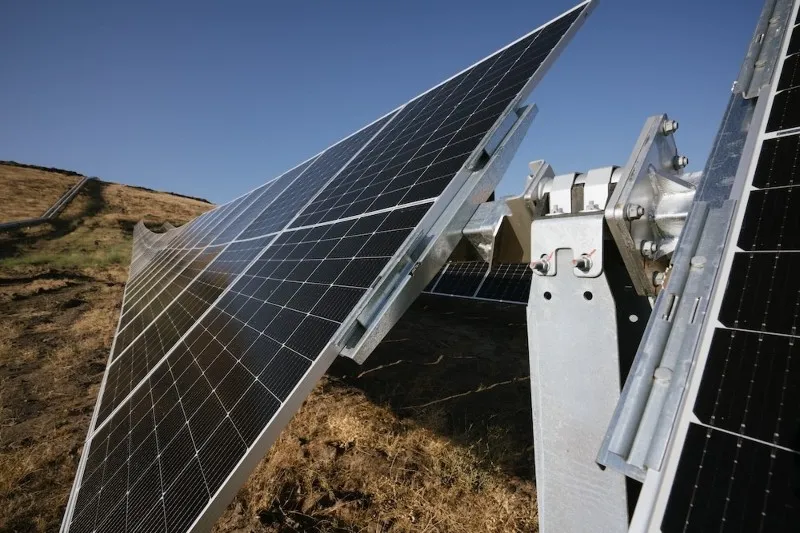
C-channel mounts are connected via bolts through both the flange and web plate, with pre-engineered, standardized hole positions. This modular design delivers exceptional installation efficiency:
Factory prefabrication: All holes, notches, and cuts are completed in the factory, eliminating on-site secondary processing and reducing construction errors.
Modular "plug-and-play" assembly: Components are designed for quick, tool-free or minimal-tool assembly, cutting on-site installation time by 50% compared to traditional U-channel systems.
Enhanced connection reliability: The flange-web dual-bolt connection creates a rigid, locked structure that resists loosening under long-term wind vibration, reducing maintenance requirements.
Scalable for large projects: The standardized design enables mass production and rapid deployment, making it the preferred choice for utility-scale PV power stations.
Additional Key Differentiators: Cost, Maintenance & Application Scenarios
Beyond design and performance, there are critical practical factors to consider when choosing between C-channel and U-channel mounts.
4.1 Total Cost of Ownership (TCO)
C-Channel Mounts: While the unit material cost may be similar, the lightweight design reduces transportation, foundation, and labor costs, delivering a 10-20% lower total project cost compared to U-channel for most applications. The modular design also reduces long-term maintenance costs.
U-Channel Mounts: The higher material weight increases transportation and foundation costs, but the simple design offers lower upfront tooling costs for small-batch custom orders, making it cost-effective for small, one-off projects.
4.2 Long-Term Maintenance & Durability
C-Channel Mounts: The closed, curled edge design traps less dust, water, and debris, reducing corrosion risk and extending service life. The pre-engineered connections minimize the need for on-site adjustments, resulting in near-zero maintenance over the 25-year lifecycle.
U-Channel Mounts: The open design can accumulate debris in harsh environments, requiring periodic inspection and cleaning. The on-site drilled holes may also require touch-up anti-corrosion treatment, increasing long-term maintenance workload.
4.3 Ideal Application Scenarios
| Mount Type | Best Project Types |
|---|---|
| C-Channel | Distributed rooftop PV, residential/commercial solar, floating PV, agrivoltaic (agri-PV) systems, complex terrain projects, utility-scale ground-mounted plants |
| U-Channel | Large-scale ground-mounted PV power stations, solar carports, solar canopies, high wind/snow load regions, heavy-load custom projects |

How to Choose the Right Mount for Your PV Project
Selecting the optimal mount type depends on a holistic evaluation of your project's specific requirements:
- Project Scale & Type: For large-scale utility ground-mounted plants, U-channel offers robust heavy-load performance; for distributed rooftop and floating PV, C-channel delivers superior cost efficiency and installation speed.
- Environmental Conditions: In high wind/snow load regions, U-channel provides maximum rigidity; for coastal or highly corrosive environments, C-channel's closed design offers better corrosion protection.
- Installation Timeline: C-channel's modular design is ideal for fast-track projects with tight deadlines, while U-channel's flexibility suits projects with variable on-site conditions.
- Budget Constraints: C-channel delivers a lower total cost of ownership for most projects, while U-channel may be more cost-effective for small, custom orders.
Frequently Asked Questions (FAQ)
Q1: Can C-channel mounts be used for large-scale ground-mounted PV power stations?
A: Absolutely. While C-channel is widely used in rooftop projects, its high strength-to-weight ratio and modular design make it an excellent choice for utility-scale ground-mounted plants. GNEE STEEL has supplied custom C-channel mounting systems for 100MW+ ground-mounted projects in Southeast Asia, the Middle East, and Europe, delivering 15% lower total project costs compared to traditional U-channel solutions.
Q2: What is the difference in service life between C-channel and U-channel mounts?
A: When using the same high-quality anti-corrosion coating (hot-dip galvanized or aluminum-magnesium-zinc), both C-channel and U-channel mounts have a service life of 25+ years, fully matching the 25-year power generation warranty of PV modules. C-channel's closed design offers slightly better long-term corrosion resistance in harsh environments, extending service life by 3-5 years in coastal or industrial zones.
Q3: Can I use a mix of C-channel and U-channel in the same PV project?
A: Yes, this is a common and effective design strategy. For example, you can use C-channel for the main rail system (for lightweight and fast installation) and U-channel for the column and foundation connections (for heavy load-bearing). Our engineering team can provide a customized hybrid solution to optimize performance and cost for your specific project.
Q4: What certifications and testing do your mounting systems have?
A: All GNEE STEEL C-channel and U-channel solar mounting systems comply with international standards including ASTM A653, EN 10346, and AS/NZS 1170. We provide third-party testing reports from SGS, BV, and TÜV, including mechanical load testing, corrosion resistance testing, and wind tunnel testing, to ensure compliance with local building codes and project requirements.
Q5: What is the minimum order quantity and lead time for custom mounting systems?
A: For standard C-channel and U-channel profiles, our MOQ is 5 tons with 3-7 day lead time for spot stock. For custom-processed products (special dimensions, pre-punched holes, custom coatings), the MOQ is 10 tons with a 7-15 day production lead time, depending on order quantity. We also offer flexible shipping solutions to meet your project timeline.