


1. When comparing the cost-effectiveness of galvanized color-coated coils, which core indicator should be considered first?
The first step in comparing cost-effectiveness is not to look at the unit price, but rather at the "total life-cycle cost" per unit area. The core indicators are the "weight of the galvanized layer" and the "type and thickness of the coating." For example, for 0.5 mm thick color-coated coils, a product with a galvanized layer weight of 120 grams per square meter (double-sided) may have a rust-proof lifespan several times longer than a product with a galvanized layer weight of 60 grams per square meter, but the price difference per ton may only be a few hundred yuan. Therefore, cost-effectiveness should not only be considered in terms of price per ton or per meter, but also by calculating the average annual cost over the expected service life. For coastal areas or areas with severe industrial corrosion, choosing products with a higher galvanized layer (such as 180 grams per square meter) and fluorocarbon coating, although the initial unit price is higher, requires no maintenance for more than ten years, resulting in a higher overall cost-effectiveness.

2. Besides the galvanized layer and coating, how do the strength and thickness of the substrate affect the cost-effectiveness?
A: The strength of the substrate determines the load-bearing capacity and wind uplift resistance of the structure. For example, for ordinary Q235 grade and structural S350 or S550 grade color-coated coils of the same thickness, the yield strength of the latter is more than 1.5 times that of the former. This means that under design loads, using a high-strength substrate allows for a reduction in the thickness of the sheet or the purlin spacing, thereby reducing the overall steel consumption. When comparing cost-effectiveness, the "material cost required per kilonewton-meter load-bearing capacity" should be calculated. If a high-strength sheet costs 800 yuan more per ton, but the thickness can be reduced from 0.6 mm to 0.5 mm, then the steel cost per square meter is actually lower, and the roof is lighter and safer-this is a typical example of cost-effectiveness optimization.
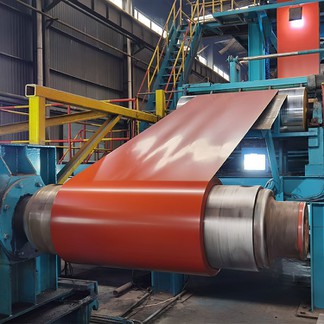
3. How to compare the cost-effectiveness of different color coating types (such as polyester, silicone-modified polyester, and fluorocarbon)?
A: The cost can be measured by "weather-resistant lifespan unit price". Ordinary polyester coatings are the cheapest, but outdoor warranties are typically only 5 to 7 years, after which fading, chalking, and even peeling may occur. Silicone-modified polyester coatings are about 10% to 20% more expensive, but offer a warranty of 10 to 15 years, suitable for general industrial plants. Fluorocarbon coatings may cost 1.5 to 2 times more than ordinary polyester, but offer a warranty of over 20 years and excellent color and gloss retention. When comparing, calculate the "coating cost required for each year of warranty": if ordinary polyester costs 20 yuan per square meter with a 5-year warranty, that's an average of 4 yuan per year; fluorocarbon costs 40 yuan per square meter with a 20-year warranty, that's an average of 2 yuan per year. Clearly, fluorocarbon offers better long-term cost-effectiveness. For temporary or short-term buildings, ordinary polyester is more economical; for permanent buildings, fluorocarbon is the high-cost-performance choice.
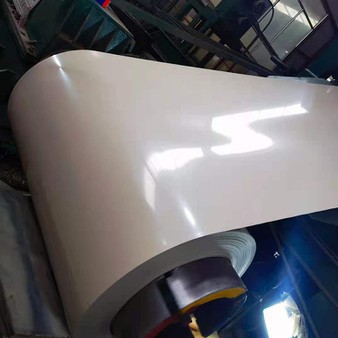
4. When comparing cost-effectiveness, what hidden costs and risks are easily overlooked?
A: There are four easily overlooked points. First, processing losses: Genuine sheets have small width tolerances and flat shapes, resulting in a low scrap rate during molding; while substandard sheets often have inconsistent widths and bends, leading to potentially more than 5% waste per 10 meters during molding. Second, transportation and storage: Low-quality color-coated coils have poor scratch resistance; even minor bumps during transportation can cause extensive paint damage, requiring repainting or scrapping. Third, installation efficiency: Genuine sheets with a lubricating film are easy to punch and rivet, while substandard sheets with rough surfaces are prone to jamming drill bits, reducing construction speed and increasing labor costs. Fourth, post-construction maintenance costs: Once rusted or faded, repainting one square meter costs at least 30 to 50 yuan, far exceeding the initial price difference. Only by incorporating these hidden costs into the calculation can a true cost-effectiveness be obtained.
5. Is there a simple "cost-effectiveness comparison formula" or practical steps?
A: Yes, it is recommended to use "Cost-effectiveness index = Expected qualified service life ÷ Comprehensive unit price (RMB/ton or RMB/meter)", but this is contingent on consistent brand reputation and warranty commitments. The practical steps are divided into five steps: First, clarify the usage environment (inland, coastal, acid/alkali workshops, etc.) and design life (5 years, 10 years, 20 years). Second, obtain detailed specifications from multiple suppliers, recording the weight of the galvanized layer, coating type and thickness, and substrate grade. Third, request small samples for self-testing: use copper salt for accelerated salt spray testing or simple scratching followed by salt water immersion, and observe the rust formation time. Fourth, calculate the cost per square meter delivered to the construction site (including freight, taxes, and loss rate). Fifth, substitute the lifespan and cost into the formula, or directly compare "the lowest total cost solution under the design life requirements". Remember: the cheapest is often not the most cost-effective; the truly high cost-effectiveness lies in the option that can safely last for the design life without requiring maintenance.