


1.What impact will potential problems with the master volume itself have?
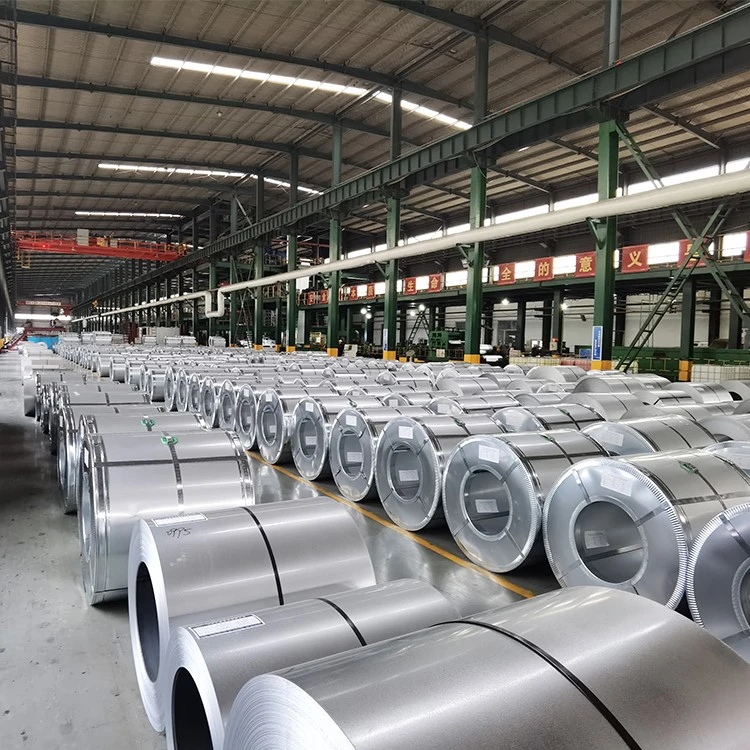
Sickle Curve: The coiled material forms an arc along its length, which is one of the most difficult defects to completely correct using a cross-cutting line.
Wave Shape: This includes edge wavy (wrinkling at both edges), center wavy (bulging in the center of the sheet), and rib wavy (periodic fine waves). These are manifestations of uneven internal stress.
Tower Shape: Uneven winding results in a tower-like end face, affecting unwinding and feeding stability.
Uneven Raw Material Properties: Uneven thickness, hardness, or zinc layer thickness of the substrate before and after galvanizing leads to inconsistent internal stress, making it difficult to achieve perfect straightness even after straightening.
2.What impact will issues with the equipment and processes used in the cross-cutting line have?
Insufficient capacity or improper settings of the straightening machine:
Insufficient number of straightening rollers: The more rollers, the better the straightening effect. Ordinary cross-cutting lines may only have 7-9 rollers, while high-precision lines will have 11-17 or even more.
Improper roller gap setting: Excessive, insufficient, or uneven pressure will not effectively eliminate internal stress.
Weared straightening rollers: Worn rollers cannot effectively apply force to the sheet metal.
Shearing section quality: Improper blade clearance or dulled blades can cause burrs, torque, and even localized deformation of the sheet metal during shearing.
Unstable tension control: Tension fluctuations during uncoiling, straightening, and winding can cause the sheet metal to be elongated or compressed, creating new waviness.

3.How to achieve and determine if flatness meets the standard?
Standards Applied
Generally, national or industry standards are followed. For example, China's GB/T 708 "Dimensions, Shape, Weight and Permissible Deviations of Cold-Rolled Steel Sheets and Strips" clearly specifies the flatness requirements for steel sheets.
The flatness tolerance requirements vary depending on the thickness and width of the sheet. Users can also propose enterprise standards or special requirements that exceed national standards.
Inspection Methods
Platform Method: Place the sheet freely flat on the inspection platform and measure the maximum gap between the sheet and the platform using a feeler gauge.
Straight Ruler Method: Place a straight ruler on the sheet surface and measure the maximum gap between the ruler and the sheet surface.

4.How can we control it at the source?
During procurement, clearly define the requirements for the external tolerances of the master roll, such as camber and waviness.
Conduct a preliminary inspection of the master roll before it goes into production.
5.What should we pay attention to in order to ensure that the flatness meets the standard after cross-cutting?
Equipment Maintenance (Cross-cutting Line):
A cross-cutting line equipped with a high-rigidity, multi-roll straightener was selected.
Regular maintenance of the equipment, especially the wear of the straightening rollers and shearing blades, is performed.
Process Control (Technology and Operation):
Straightening parameters (such as the reduction of the straightening rollers) are dynamically adjusted according to the actual conditions of each roll (thickness, material, original sheet shape). This reflects the operator's skill level.
Optimize production line tension.
Ensure the shearing gap is set correctly.
Post-processing:
Sheared sheets should be stacked flat with sufficient support at the bottom; the stack height should not be too high.
Use appropriate tools for handling and lifting.