


1.What is the core reason why it is not applicable?
The underground environment of coal mines is extremely unique, containing methane gas and coal dust, both of which are highly flammable and explosive. Therefore, any equipment that could potentially generate an ignition source is strictly prohibited.
The chemical properties of zinc: Zinc is a relatively reactive metal with low hardness and melting point. When a galvanized layer comes into contact with hard rock or other metal parts through violent friction or impact, it can easily produce tiny sparks (called friction sparks).
Ignition risk: Experiments have shown that friction sparks produced by zinc alloys have enough energy to ignite a certain concentration of methane gas. This poses a fatal risk to coal mines.
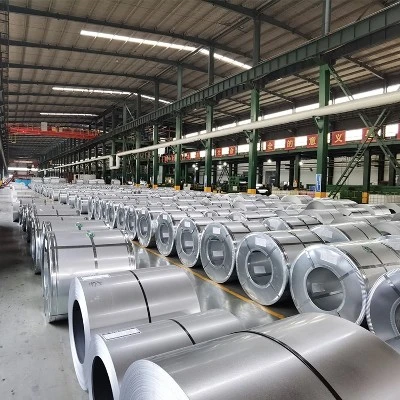
2.What are the operating conditions and environmental requirements for hydraulic supports?
Stringent Mechanical Requirements: Hydraulic supports must withstand immense formation pressure; therefore, their structural components (top beams, bases, shield beams, etc.) typically use high-strength steel plates, such as Q460C, Q550D, Q690D, or even higher strength steels. These steels possess high strength, toughness, and weldability. Ordinary galvanized coils (such as DX51D+Z) typically use commercial-grade or stamping-grade substrates, whose strength is far insufficient for the requirements of support structural components.
Extreme Wear and Impact: The underground working face environment is harsh, and the supports constantly rub and collide with coal seams and gangue. The galvanized layer is very thin (typically tens of micrometers), and under such severe wear, it is quickly worn away, losing its anti-corrosion function, after which the steel substrate corrodes rapidly.
Welding Issues: A significant amount of welding work is involved in the manufacture of hydraulic supports. The galvanized layer evaporates at the high temperature of welding, producing toxic zinc vapor (zinc oxide, which may cause "metal fume fever"), and at the same time, it will seriously damage the quality of the weld, producing defects such as porosity and cracks, affecting the structural integrity of the support.
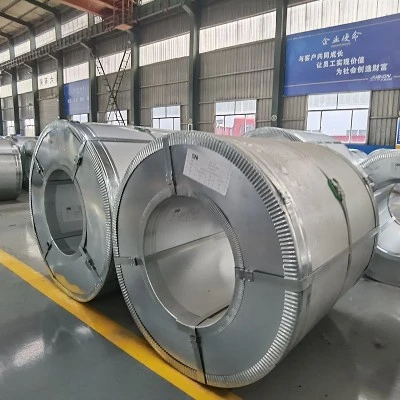
3.How effective is the pretreatment combined with high-performance coating spraying for corrosion protection?
Sandblasting/shot blasting: First, the high-strength steel plate structural components undergo rigorous surface cleaning to remove oxide scale and rust, achieving a certain cleanliness and roughness standard (e.g., Sa2.5 grade).
Primer and topcoat application: Then, an epoxy zinc-rich primer or inorganic zinc-rich primer is sprayed, followed by a wear-resistant and corrosion-resistant thick-film topcoat (e.g., epoxy coal tar paint, modified epoxy paint, etc.). The entire coating system is much thicker than the zinc plating layer, providing a long corrosion protection life and eliminating the risk of frictional sparks.
This is currently the most mainstream and reliable anti-corrosion process.
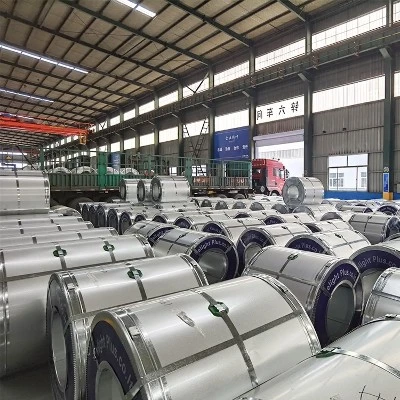
4.What is the correct corrosion protection solution for hydraulic supports in underground coal mines?
Dacromet/Zinc-Chromium Coating
This is an electrolytically-free coating technology with excellent rust prevention and no sparks generated by friction.
It is commonly used for bolts and small parts on brackets. However, for large structural components, the cost and process complexity are higher, making it less widely used than spray coating.
Weathering Steel
In some less corrosive conditions, steel with a certain degree of atmospheric corrosion resistance can be directly selected, but the cost is higher.
5.What are the reasons why galvanized coils are not suitable for manufacturing the main structural components of hydraulic supports in underground coal mines?
Primary reason: The galvanized layer poses a safety risk of friction-induced gas explosion, violating coal mine safety regulations.
Secondary reason: The substrate lacks sufficient mechanical strength and has poor weldability, failing to meet the mechanical performance and manufacturing process requirements of the hydraulic support.