


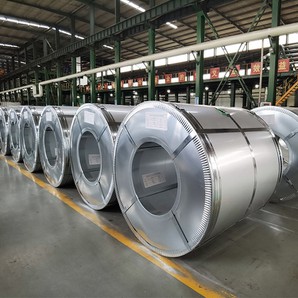
1. Q: What are the core requirements for cold-rolled coils used in appliance casings?
A: The most important factors for appliance casings are surface quality, formability, and coating adhesion.
Surface quality must reach FB grade (high-grade) or even FD grade (precision grade) to avoid defects such as streaks and orange peel after stamping.
Formability must be evaluated through tensile testing, n-value (work hardening index), and r-value (plastic strain ratio) to adapt to complex processes such as deep drawing and flanging.
Coating adhesion requires the substrate surface roughness (Ra) to be controlled between 0.4 and 1.5 μm, with no oil residue, ensuring no peeling or corrosion after spraying or coating.
2. Q: How to select the grade and specifications of cold-rolled coil according to the type of home appliance?
A: Classified by application:
Ordinary structural parts (e.g., air conditioner outdoor unit side panels): Use SPCC or DC01, thickness 0.6~1.0mm, to ensure basic strength and bending resistance;
Deep-drawn parts (e.g., washing machine inner drum, microwave oven cavity): Require SPCD, DC03, or higher grades of SPCE/DC04, with an elongation ≥38% and strictly controlled yield strength ≤240MPa to prevent cracking;
High-end appearance parts (e.g., refrigerator door panels, high-end oven panels): In addition to high-grade steel, hot-dip galvanized substrate without zinc spangle or electro-galvanized cold-rolled coil (e.g., SECC) is often required to improve fingerprint resistance and corrosion resistance.
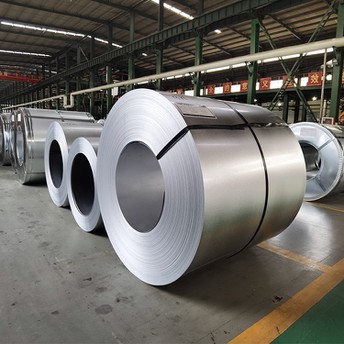
3. Q: How does the corrosion resistance of cold-rolled coil meet the long-term use requirements of home appliances?
A: Home appliance casings have strict standards for salt spray and humid heat environments, which are mainly addressed through two methods:
Substrate self-protection: Using weather-resistant steel (such as SPA-C) or galvanizing the cold-rolled coil (hot-dip galvanizing GI, electro-galvanizing EG), the coating weight is typically required to be ≥80~120g/m² on both sides (corresponding to no red rust after ≥240 hours of salt spray testing);
Post-treatment reinforcement: If the substrate is bare cold-rolled sheet, it must be reinforced through phosphating + powder coating or film coating processes. The coating must pass cross-cut adhesion testing, solvent resistance wiping, and humid heat cycling testing (such as GB/T 2423.3).
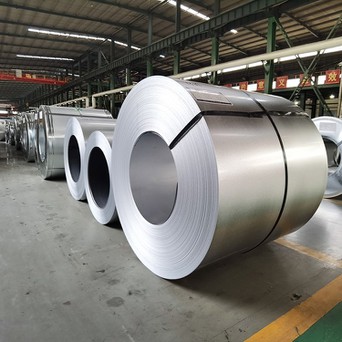
4. Question: How should the mechanical properties of cold-rolled coils be matched with the processing technology?
Answer: The key is to avoid "processing cracking" and "excessive springback":
Stamping and drawing parts: Requires a low yield ratio (≤0.7) and high uniform elongation. If necessary, use IF steel (interstitial steel) to ensure no cracking in complex areas;
Bending and rolling parts: Control the difference between tensile strength and yield strength to avoid excessive springback after bending. Generally, a 90° bend with an inner diameter R ≤ 0.5t (t is the plate thickness) should result in no cracks;
Laser or resistance welding: The chemical composition of the cold-rolled coil (especially C and Si content) must match the welding process to prevent weld embrittlement or excessive spatter.
5. Q: How to balance cost control and material selection?
A: From the perspective of total life cycle cost:
Thinning Design: While ensuring strength, use high-strength cold-rolled coils (such as HC340LA) instead of ordinary SPCC, which can reduce thickness by 10%~20%, but the mold rigidity and forming window must be evaluated simultaneously;
Surface Treatment Substitution: For non-appearance parts, passivated bare plates + electrostatic spraying can replace pre-galvanized plates, which can reduce the material cost per ton by about 500~800 yuan, but the compatibility of the pretreatment line must be strictly verified;
Standardized Procurement: Standardize the specifications of cold-rolled coils for various types of home appliance shells (such as uniformly using 0.8mm DC03 + 80g galvanization), reduce the variety of inventory, improve bargaining power, and can usually reduce the overall procurement cost by 5%~10%.