


1: Which part accounts for the highest proportion of the cost of galvanized color-coated coils?
Answer: The substrate costs the highest proportion, usually accounting for 60% to 70% of the total cost, and is the fundamental factor that determines the price. The "substrate" here is usually a hot-dip galvanized substrate (GI), and its price is directly driven by the upstream hot-rolled coil (HRC) market conditions.
In addition to the substrate, coating costs account for about 15%-25% of the total cost, and the remaining 10%-15% comes from processing, manufacturing, transportation, and profits.
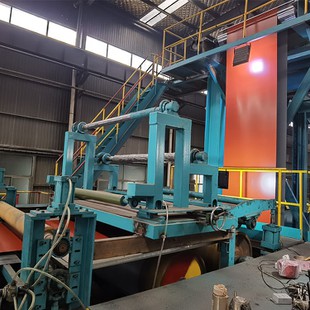
2: How do zinc prices and steel market conditions affect the price of color-coated coils?
A: The impact is direct and cost-oriented. The substrate accounts for more than 60% of the total cost of color-coated coils, which means that any factors that affect the price of steel and zinc raw materials will be quickly transmitted to the final selling price of color-coated coils.
In 2025, the price center of galvanized and color-coated coils in the Shanghai market will shift downward as a whole, precisely because the settlement price trend of the upstream hot coil base material is highly synchronized with the price of color-coated sheets. At the same time, the price adjustment of color-coated plates often refers to the ordering policies of upstream steel mills (such as Baosteel). For example, if the steel mills increase the ex-factory price of substrates or color-coated products, downstream prices will also rise accordingly.
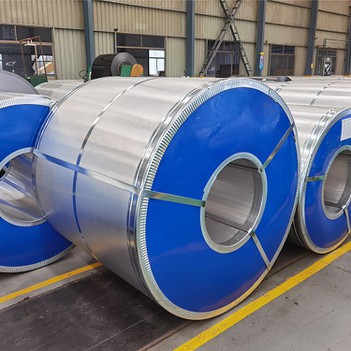
3.How does the market supply and demand affect the price of color-coated coils?
Answer: The game of market supply and demand is the most direct market factor that affects prices. Currently, the domestic color-coated board market shows a pattern of "weak domestic demand and strong external demand", which has a complex two-way impact on prices.
Loose domestic supply: In the past three years, domestic production has declined year by year, from 26.75 million tons in 2023 to 22.79 million tons in 2025. However, the overall market supply is still relatively loose, restraining price increases.
Cautious downstream demand: Downstream procurement is basically based on rigid demand, and demand in construction and other industries continues to be sluggish, resulting in a lack of overall upward momentum in the market.
Export diversion support: While domestic demand is weak, export volume continues to rise, increasing from 6.38 million tons to 9.6 million tons. Strong export demand has diverted domestic supply to a certain extent and supported prices.
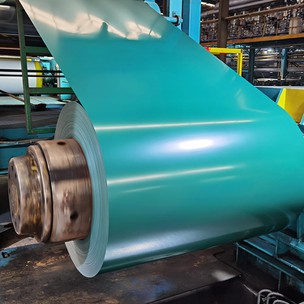
4.How big is the price difference between coatings and plating products with different specifications?
A: There is a big difference. Different product specifications and performances constitute the price ladder of color-coated rolls. The main influencing factors include:
Influencing factors Grade/Specification Market reference price in early 2026 (yuan/ton) Price logic description
Coating type Ordinary polyester coating (PE) About 5200–5800 High cost performance and wide application
High-performance coating (such as fluorocarbon PVDF) about 6500–7800, stronger weather resistance and corrosion resistance, high technical content, and higher price
Substrate type Ordinary galvanized substrate (Z275) About 5200–5800 The most commonly used substrate type, price basis
Galvalume base plate (AZ150) about 6500–7800. The corrosion resistance is better than that of pure galvanized plate, and the cost is higher.
5.How do policies and macro-environment affect the price of color-coated coils?
Answer: Policies and macro-environment have an indirect but profound effect on prices by affecting production costs and market expectations.
Environmental protection policy: Increasingly strict environmental protection requirements force companies to carry out technological upgrades and green transformation, which directly increases production costs. Some small businesses with backward technologies were even eliminated as a result, which affected the market supply pattern to a certain extent.
International trade policy: Trade tariff barriers and geopolitical conflicts will directly lead to an increase in the import cost of raw materials (such as zinc and steel), or affect the export of finished color-coated coils, which will be transmitted to the domestic market price.
Macroeconomic and industrial policies: Economic stimulus plans or large-scale infrastructure projects will directly boost demand, while real estate regulation will suppress demand. At the same time, the high-end and quality upgrades encouraged by industrial policies also lead the market to tilt towards high value-added products.