


1: What exactly is the "ordinary substrate" we often call? How is it different from the galvanized substrate we talked about before?
Answer: What we usually call "ordinary substrate" refers specifically to cold-rolled steel plates that have not been treated with any coating (such as galvanized, galvalume). It is essentially different from the galvanized substrate (GI) we discussed before:
Galvanized substrate (GI): Based on the cold-rolled plate, a hot-dip galvanizing process is added to form a dense zinc-iron alloy protective layer. This layer of "armor" can provide long-term cathodic protection for steel plates.
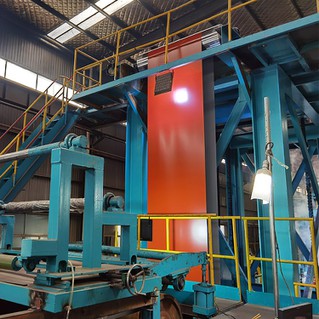
Ordinary substrate (cold-rolled plate): It is a "semi-finished product" of galvanized substrate. There is no coating protection on the surface, and its anti-corrosion performance completely depends on the organic coating coated on the surface. Once the coating is scratched or damaged, the substrate will be directly exposed to the air and will easily rust.
2: Since the "ordinary substrate" does not have a coating, does it have any unique advantages?
Answer: The biggest advantage of "ordinary substrates" is the balance between cost and processing performance.
Cost advantage: Since the galvanizing process and metal raw materials such as zinc and aluminum are omitted, the raw material cost of "ordinary substrate" color-coated coils is the lowest among all substrate types. For projects on a tight budget, this is an attractive option.
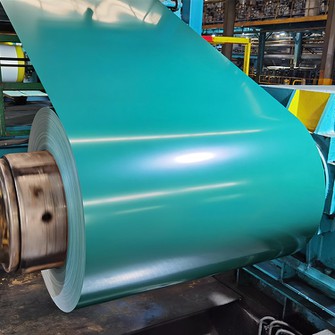
Excellent processing performance: The surface of the cold-rolled plate is very smooth and smooth, and there is no brittle coating. Therefore, in complex forming processes such as stamping, bending, and deep drawing, it shows better flexibility and ductility, and is not prone to coating cracking.
3.Where are the "ordinary substrate" color-coated rolls suitable for use? Where should you definitely avoid?
Answer: The applicability of "ordinary substrate" is very clear: it is perfectly suitable for all indoor, dry and low-corrosion requirements.
Specifically, it is ideal for use in:
Internal structural parts of home appliances (such as internal back panels of air conditioners and refrigerators)
Furniture (e.g. steel office furniture, filing cabinets)
Interior decoration (such as indoor partitions, suspended ceilings)
Temporary facilities (such as temporary isolation fences, exhibition structures)
Undemanding indoor storage equipment
4.Under what circumstances can "ordinary substrate" be used instead of galvanized substrate?
Answer: This is a key question related to the success or failure of the project. Substitutions may be considered in the following very limited circumstances:
The use environment is strictly limited to indoors: this is the most basic prerequisite.
The product is rarely subject to friction and scratches during use: the coating is the only barrier against rust and any physical contact that could lead to damage to the coating must be absolutely avoided.
Product design life is short: For fast moving consumer goods, temporary buildings or display items with a design life of only a few years, "ordinary substrates" can meet the needs.
Processing deformations are very complex: For parts that require deep stamping or complex forming, using a "normal substrate" can avoid an increase in the defective rate caused by cracking of the zinc coating.
5.How should I scientifically choose "ordinary substrate" color-coated rolls?
A: The core of making an informed choice is following a four-step evaluation process:
Step one: Environment confirmation (required)
Is it indoors? If the answer is "no", directly eliminate "ordinary substrates" and use galvanized substrates.
Is the environment dry? Avoid humid environments such as kitchens, bathrooms, and basements.
Step Two: Protection Needs Assessment
Evaluate the likelihood that the coating will become scratched during product use and transportation.
For vulnerable parts, even indoors, priority should be given to galvanized substrates, whose zinc layer of sacrificial anodes can provide protection after scratches.
Step Three: Processability Matching
If the part requires complex forming (such as deep drawing), and the use environment fully meets the requirements of the first two steps, then "ordinary substrate" is a better choice than galvanized sheet because it will not crack.