


1. Q: What are cold-rolled coil tail coils? Where does the main difference in value between them and genuine coils come from?
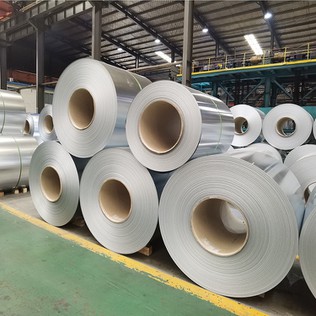
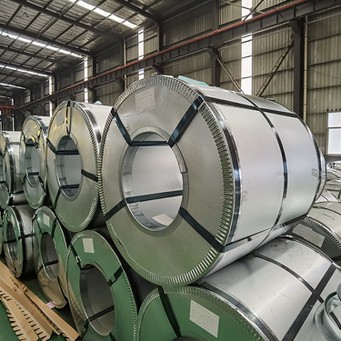
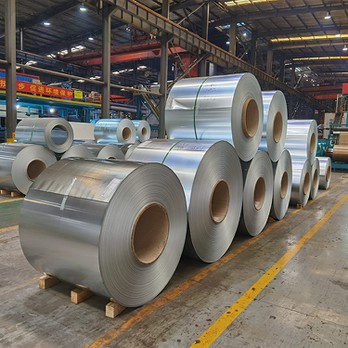
A: Cold-rolled coil tail coils refer to small coils that have been cut off during the rolling, annealing, and leveling processes due to excessive thickness at the beginning and end, poor shape, minor surface defects, or dimensional allowances. They typically weigh between 0.5 and 5 tons and retain the complete shape of the original coil.
Compared to genuine coils, the value difference of tail coils stems from three uncertainties:
Quality Uncertainty: Defects may not be fully exposed (such as edge cracks, inclusions, or localized excessive thickness), and buyers bear the risk of a "blind box" (unreliable product).
Non-standard Specifications: Width and thickness are often non-standard dimensions, requiring downstream users to match specific molds or processes.
Material Uncertainty: Some tail coils lack complete quality certificates, and the grade must be determined based on experience or testing.
2.What are the core parameters for calculating the value of end-of-cycle stock? How are they quantified?
Material traceability: If the master roll quality certificate and brand number are clearly identified, the coefficient is 0.85-0.95; if the material is unknown and requires testing, the coefficient is 0.70-0.85.
Appearance quality: Only the thickness at the beginning and end is out of tolerance; no surface defects, coefficient 0.85-0.95; minor scratches, rust, and edge cracks exist, coefficient 0.70-0.85.
Weight range: Coils weighing over 3 tons are close to small premium coils, with a higher coefficient; coils under 1 ton have a high proportion of loading and unloading costs, so the coefficient is reduced by 5%-10%.
3.How to balance and calculate the "direct use value" and "remelting value" of scrap steel coils?
Answer: The path to maximizing the value of scrap steel coils is to sell them directly to processing companies for continued use, rather than remelting them. The value difference between these two paths determines the reasonable pricing range for scrap steel coils:
Direct Use Value = The price acceptable to downstream customers, depending on whether they can process the scrap steel coils into finished products (such as small-sized stamped parts, structural parts, appliance back panels, etc.). The upper limit of this price is: Price of a standard coil - Processing loss cost borne by the customer - Risk discount
Remelting Value = The value of the scrap steel coils as scrap steel, calculated based on the price of high-quality cold-rolled scrap steel (or edge wire briquettes).
4.How exactly does the "discount pricing method" commonly used in end-of-life coil trading work?
Answer: The industry commonly uses two simple methods: the "weight discount method" and the "grade discount method":
(1) Weight Discount Method: Based on the price of the original coil, a discount is applied according to the weight of the end-of-life coil relative to the original coil. This method applies to end-of-life coils cut from the same original coil. The formula is:
End-of-life coil unit price = Original coil unit price × (1 − Discount rate)
The discount rate is usually 5%-15%, with higher discount rates for lighter end-of-life coils.
(2) Grade Discount Method: End-of-life coils are divided into three grades: A, B, and C, based on quality:
Grade A end-of-life coils: Only the thickness at the beginning and end is out of tolerance; the surface and shape are normal, and the quality certificate is traceable → 85%-90% of the original price
Grade B end-of-life coils: Slight surface defects (minor scratches, slight rust) or large dimensional deviations → 70%-80% of the original price
5. Q: What cost factors are easily overlooked in calculating the value of leftover coils?
A: The "net value" of leftover coils needs to be reduced by the following hidden costs; otherwise, the profit may be overestimated:
Testing Costs: If there is no quality certificate, the buyer needs to sample and test the chemical composition and mechanical properties, costing approximately 200-500 RMB per batch. This affects the unit price when amortized by ton.
Slitting/Leveling Costs: Leftover coils usually need to be slitted or leveled before use, with processing fees of approximately 80-150 RMB per ton. If the width of the leftover coil is non-standard, additional mold adjustment fees may be incurred.
Packaging and Logistics: Leftover coils often lack standard packaging, requiring additional reinforcement during transportation. Logistics costs are 10%-20% higher than ordinary steel coils.
"Hidden Yield" of Leftover Coils: Due to excessive thickness tolerances at the beginning and end, the actual usable length may only be 70%-85% of the total length. Buyers will work backwards from the actual output to determine the acceptable purchase price.