


1.What are the main materials used to categorize cold-rolled coil pallets? How should they be selected based on the environment?
Wooden pallets: Lower cost, offer some cushioning, suitable for short-term storage or indoor warehouses with controllable humidity. Hardwood (such as oak or pine) must be used, and treated with preservatives and insecticides; the surface must be free of burrs.
Steel pallets: High load-bearing capacity, stability, and resistance to deformation, suitable for long-term storage or heavy-duty rolls (over 15 tons per roll). Q235B or higher quality steel is recommended, with a rust-proof coating.
If the warehouse humidity is high or the storage period exceeds 3 months, steel pallets should be preferred to avoid moisture absorption by wooden pallets leading to rust at the bottom of the roll.

2.What impact does the structural design of the pallet have on the safety of cold-rolled coils?
The contact surface should use an arc-shaped or V-shaped saddle, with the curvature matching the outer diameter of the steel coil (usually designed according to common coil diameters, with the curvature angle controlled between 90° and 120°) to ensure surface contact rather than line contact between the steel coil and the pallet, preventing localized indentations.
The bottom of the pallet should have sufficient lateral support to prevent the pallet from twisting or tipping due to uneven ground. When stacking multiple layers, the lower pallet should have a stacking positioning structure (such as grooves or clips) to prevent the upper pallet from sliding.
Limiting blocks should be installed on both sides of the pallet to prevent the steel coil from rolling due to vibration or lifting impact.
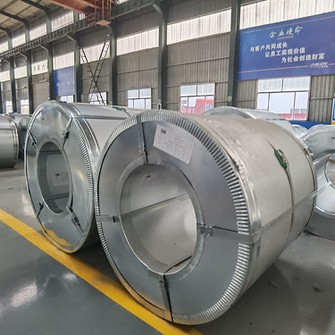
3.How can we determine if a pallet's load-bearing capacity meets safety requirements?
Static Load: The rated load capacity of a single pallet should be at least 1.5 times the maximum weight of the steel coil it holds. For example, if a single coil weighs 20 tons, the pallet's design load capacity should be no less than 30 tons.
Dynamic Load: Considering the impact loads during lifting and forklift transport, the pallet structure must pass a dynamic load test of 1.25 times the rated load without permanent deformation or cracking.
For steel pallets, welds must be full and defect-free, and reinforcing ribs should be installed in critical load-bearing areas; for wooden pallets, the connection strength between the crossbeams and longitudinal beams must be checked, and the use of knotted or cracked wood is strictly prohibited.
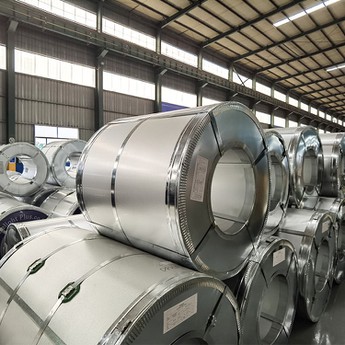
4.What protective effects does pallet surface treatment have on the quality of cold-rolled coils?
Wooden pallets: The contact surface should be covered with a rubber pad, felt, or non-woven fabric, at least 5mm thick, to prevent moisture, resin, or hard particles from the wood from damaging the steel coil surface.
Steel pallets: The contact surface must be covered with a soft material such as a polyurethane pad or abrasion-resistant rubber sheet, and the padding should be replaceable. The steel pallet body should be coated with a wear-resistant and rust-proof paint such as epoxy resin. Damaged paint should be repaired promptly to prevent direct contact between the steel parts and the coil material, which could lead to corrosion.
All pallets should have their protective layer inspected regularly, and any pallets showing signs of aging or damage should be replaced immediately.
5.What are the key safety inspection points for pallets during acceptance and daily use?
During acceptance:
Verify the design drawings, checking that the curvature and dimensions match commonly used steel coil specifications.
Inspect the weld flaw detection report for steel pallets; check the wood moisture content of wooden pallets (should be ≤18%).
Perform a full-load pressure test, observing deformation and confirming there are no abnormal sounds or tilting.
During daily use:
Before each hoisting operation, visually inspect the pallets for cracks, deformation, corrosion, worn pads, or other abnormalities.
If a pallet is found to be sinking, tilting, or cracked, immediately stop using it and replace it.
Establish a pallet log, recording the number of times it has been used and its load-bearing history. It is recommended to replace wooden pallets every 2-3 years, and inspect the welds and rust-proof layer of steel pallets every six months.