


1.What are the main materials used in cold-rolled stretch film? How should one choose among them?
LLDPE stretch film: With good tensile strength, strong puncture resistance, and moderate cost, it is the mainstream choice for cold-rolled coil packaging.
PVC film: Although it has good transparency and self-adhesion, it is environmentally unfriendly, prone to brittleness at low temperatures, and may release plasticizers; therefore, it is not recommended for rust-proof packaging of cold-rolled coils.
Special requirements: For long-term storage or sea transport, stretch film with added UV stabilizers should be selected to prevent aging and cracking.
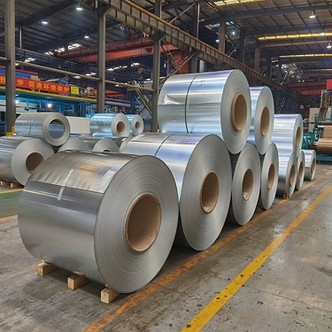
2.How should the thickness and width of the stretch film be matched with the specifications of the steel coil?
Thickness: The commonly used range is 20μm to 50μm. For small rolls (under 5 tons per roll) or short-term indoor storage, 20μm to 30μm is suitable; for large rolls (over 10 tons) or when multiple layers of winding are required, a thickness of 35μm to 50μm is recommended to ensure tear resistance and adhesion.
Width: Generally, 500mm or 750mm is chosen to accommodate different roll widths. Too narrow a width leads to excessive overlap and low efficiency; too wide a width makes it difficult to tighten and easily causes wrinkles.
Number of Winding Layers: Cross-winding is usually used, with at least 2-3 layers per roll. Additional winding is required at the ends to ensure a tight seal.
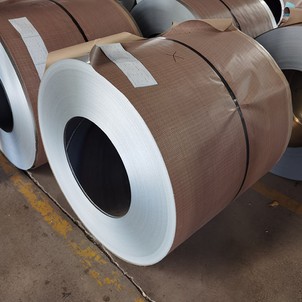
3.How do you determine the rust-proof ability of stretch film? Does it need to be used in conjunction with other materials?
Composite anti-rust stretch film is recommended. This type incorporates a vapor phase corrosion inhibitor into the LLDPE substrate, providing both physical protection and the release of anti-rust agents to form a vapor phase protection layer on the steel coil's end face and inner ring.
If using ordinary stretch film, VCI anti-rust paper or film must be wrapped first, followed by the stretch film as an outer protective layer to prevent moisture and dust intrusion and to secure the anti-rust material.
Key point: The seal between the stretch film and the anti-rust material is crucial. During wrapping, ensure the overlaps are completely closed to prevent air from entering.
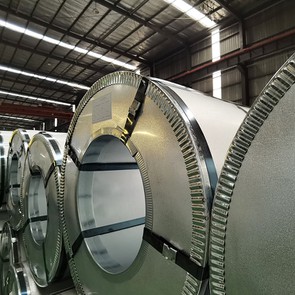
4.How to evaluate the puncture resistance and tensile properties of stretch film?
Elongation at break: Longitudinal elongation at break should be ≥300%, and transverse elongation should be ≥500% to ensure resistance to breakage during winding.
Puncture resistance: Tested according to GB/T 1040.3, it should be ≥2.5N (corresponding to a 25μm thickness), with the value increasing accordingly for thicker layers.
Self-adhesion (cling): The peel force between the self-adhesive layer and the backing should be moderate, ensuring a tight bond after winding without excessive adhesion that would hinder unwinding.
5.What safety precautions should be taken when storing and using stretch film?
Storage Conditions: Stretch film should be stored in a cool, dry indoor environment, avoiding direct sunlight and high temperatures (above 40℃ can easily cause adhesion failure). Shelf life is generally 6–12 months.
Pre-use Inspection: Confirm that the film roll is free from moisture, adhesion, and embrittlement, and that the end faces are not deformed.
Wrapping Operation: When using a dedicated wrapping machine or manual stretcher, maintain uniform tension. Overstretching is strictly prohibited, as it can cause localized breakage. Wrap an extra 2–3 turns around the ends and press firmly to prevent loosening of the film surface during transportation or hoisting.
Environmental Protection and Safety: Stretch film is flammable. The warehouse should be kept away from heat sources and electric welding operations, and fire-fighting equipment should be provided.