


1: What are the main substrates for color-coated rolls? What's the difference between them?
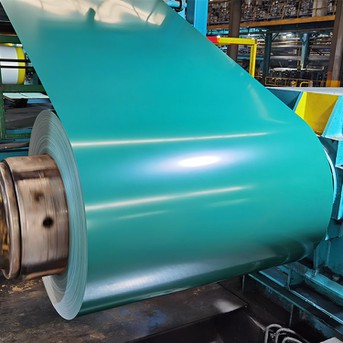
Answer: Depending on the production process and coating, the substrates of color-coated coils are mainly divided into the following types. Their core differences lie in corrosion resistance, processing performance and applicable scenarios:
Hot-dip galvanized substrate: cost-effective, with good paint adhesion and weldability, suitable for inland or general industrial environments, and is one of the mainstream choices for color-coated boards for construction.
Hot-dip aluminum-zinc substrate: The corrosion resistance is 2-5 times that of hot-dip galvanizing. It has strong salt spray resistance and is especially suitable for strong corrosive environments such as coastal and chemical industries. It has high heat reflectivity and better energy saving effect.
Hot-dip aluminum-zinc-magnesium substrate: As a new generation of high-performance materials, its corrosion resistance has been improved to a higher level (up to 5-10 times more than ordinary hot-dip galvanizing), and it has unique incision self-healing capabilities and superior overall performance.
Electro-galvanized substrate: The zinc layer is thin and has poor corrosion resistance, so it is not suitable for outdoor use. However, it has a beautiful surface and good processability. It is mainly used in indoor areas such as home appliances and audio.
2: What is the difference in the corrosion resistance of different substrates? How to choose according to the environment?
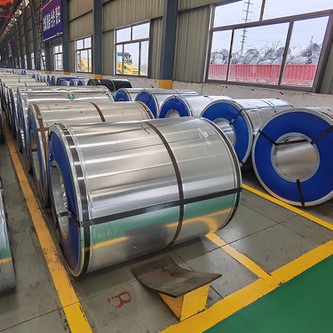
Answer: The difference is huge. Choosing the right substrate is the first step to resist corrosion. We can refer to the corrosion levels in the ISO 9223-2012 standard (C1 to CX, with the corrosion degree increasing step by step) for selection:
C1-C2 environment: such as dry countryside or lightly polluted urban areas. It is recommended to use hot-dip galvanized substrate (such as Z120-180) and ordinary polyester (PE) as the coating.
C3 environment: such as moderately polluted cities, general industrial areas or low-salinity coastal areas. It is recommended to use hot-dip galvanized (Z275) or galvanized substrate (such as AZ150 or above), and the coating needs to be upgraded to high durability polyester (HDP) or silicon modified polyester (SMP).
C4-C5 environment: such as heavy industrial areas, high-salinity seaside, pickling workshops and other high-humidity and high-corrosion places. It is recommended to use galvanized substrate (AZ180 or above is recommended for C4, AZ220 or above is recommended for C5), and the top-grade fluorocarbon coating (PVDF) should be used as the coating.
3.If my product requires stamping and bending, how should I choose the substrate material based on the processing method?
Answer: The mechanical properties of the substrate determine its processing adaptability. The key is to select the appropriate strength steel type based on the degree of deformation to prevent processing cracking.
General forming (simple bending, rolling): You can choose CQ grade (ordinary commercial grade) steel, such as grade DX51D+Z. The yield strength of this type of steel is usually between 260-320MPa, which can meet the forming needs of most building roofs and wall panels.
Stamping and deep drawing (complex parts): If complex stamping or deep drawing processing is involved, steel grades of DQ grade (for general stamping) or even higher elongation, such as DX52D+Z, DX53D+Z, etc., need to be selected.
High strength requirements (load-bearing structure): For components with load-bearing requirements (such as load-bearing floor slabs), you need to choose structural steel, such as S280GD+Z or S350GD+Z. The number in its grade represents the minimum yield strength, such as the yield strength of S350GD+Z ≥ 350MPa.
4.What do the brands of color-coated coil substrates (such as DX51D+Z, S350GD+Z) mean?
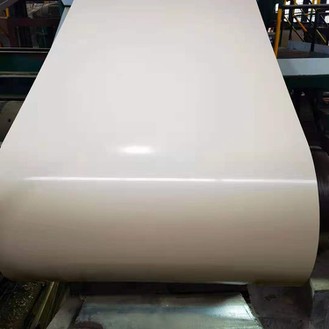
Answer: If you understand the brand number, you can quickly understand the material. According to the national standard GB/T 12754, the grade of color-coated plate consists of three parts. Take a commonly used grade TS280GD+Z as an example:
T: represents the code name of Caitu, which is the first letter of the pinyin of the word "Tu".
S280GD: represents the substrate characteristics code.
S: Represents structural steel, suitable for occasions with load-bearing requirements.
280: represents the minimum yield strength of 280MPa.
G: Indicates heat treatment.
D: Indicates that it is used for hot-dip process.
5.How to choose between the three major application fields of construction, home appliances, and transportation?
Answer: Different fields have completely different emphasis on materials. The following are targeted suggestions:
Application areas Core requirements Recommended substrates and steel types Reference instructions
Construction field: High weather resistance, structural strength: hot-dip galvanizing (GI), hot-dip galvanizing (GL), hot-dip galvanizing (ZM)
Steel type: CQ grade or structural steel (such as S280GD/S350GD), widely used in roofs and walls of factories, airports, and warehouses. CQ grade can be used for ordinary forming. If load-bearing or large-span requirements are required, structural steel must be used.
Home appliance field: exquisite appearance, good processability, electro-galvanizing (ZE), hot-dip galvanizing (GI)
Steel type: DQ-grade deep-drawing steel (such as DX52D/DX53D), used for casings and back plates of household appliances such as refrigerators, air conditioners, and washing machines. DQ grade steel ensures no cracking during complex stamping and forming.
Transportation High strength, good processability Hot-dip galvanized (GI), cold-rolled plate (CR)
Steel types: structural steel, high-strength steel (HSS) used for automotive interior parts, oil pans, cabin panels, etc. Both strength and stamping performance need to be taken into consideration.