


Q1: Why do burrs form after cutting galvanized color-coated steel coils?
The formation of burrs is mainly related to the cutting method and material properties:
Improper cutting method: When using ordinary scissors, electric shears, or saw blades, the blade edge cannot cleanly cut through the galvanized and color-coated layers, but instead tears and stretches them, forming raised burrs or curled edges.
Material toughness: The galvanized steel sheet substrate has a certain degree of ductility; plastic deformation during cutting will exacerbate burr formation.
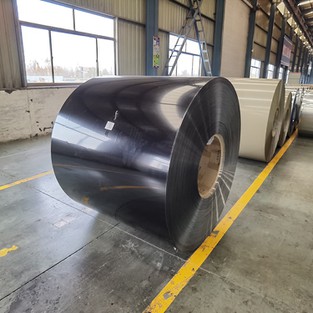
2.What are the dangers of burrs?
Scratch Risk: Sharp burrs can easily cut the operator's hands and scratch the painted surface of adjacent panels.
Coating Damage: The coating at the burr site is already damaged, losing its protective function and becoming the starting point for rust.
Poor Connection: During subsequent riveting or overlapping, burrs can prevent the panels from fitting tightly, affecting the sealing effect.
Coating Obstacles: If it is necessary to apply anti-rust paint to the cut area, burrs will cause uneven paint film adhesion.
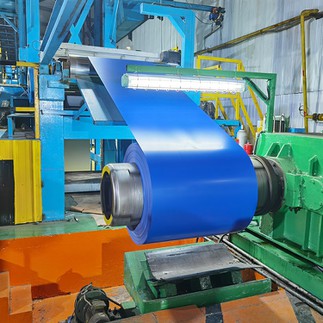
Q3: How to prevent rust at the cut edge after deburring? What treatments are needed?
Deburring is only the first step. The galvanized layer and color coating at the cut edge have been damaged, exposing the base material (cold-rolled steel) directly. Rust prevention treatment is essential.
Standard Rust Prevention Procedure (Three-Step Method):
Clean the Cut Edge: Use a clean cloth or brush to remove metal powder and dust generated during grinding. If the cut edge is oily, wipe it with alcohol or acetone and let it dry.
Apply Rust-Preventive Primer: Use a zinc-rich primer (zinc content not less than 70%) or epoxy zinc-rich primer, and apply it evenly to the cut edge with a fine brush. Zinc-rich primer provides cathodic protection, preventing the base material from rusting even if the coating is slightly damaged. For non-critical areas, quick-drying rust-preventive paint (such as red lead rust-preventive paint) can also be used, but the protective effect is not as good as zinc-rich primer.
Topcoat repair (optional): If high consistency in appearance and color is required, after the primer has dried, a repair paint of the same or similar color as the color-coated roll (in aerosol can or small bottle) can be sprayed or brushed on to cover the surface. Note that the repair paint should be compatible with the primer.
Q4: How to avoid damaging the surrounding paint coating when removing burrs and cuts?
Once the paint coating is scratched, it loses its protective ability. Therefore, extra care is needed when removing burrs:
Choose the correct tools and pressure:
Use a fine-toothed file (1-1.5mm tooth pitch) instead of a coarse-toothed file, and file in one direction only, avoiding back-and-forth sawing friction.
When using a scraper, the blade should scrape from the direction of the paint coating towards the burr, not the other way around, to prevent the blade tip from inserting into the paint coating and causing it to peel off.
When using sandpaper, only sand the raised areas of the burr, avoiding large-area friction on the paint surface.
Apply protective film:
Pre-apply masking tape or PVC protective film 10-15mm away from the cut line on both sides. Remove the protective film only after removing the burrs and completing the painting. This effectively prevents tools from accidentally scratching adjacent areas.
Q5: Are there better cutting methods that can reduce or avoid burrs from the source?
Factory Prefabrication: Preferably use a shearing machine or circular shears. After cutting, deburring is almost unnecessary; only simple finishing is required.
On-site Construction: If only electric or manual shears can be used, be sure to prepare a scraper or fine file for deburring.
Avoid Using: Ordinary hacksaws and jigsaws (metal saw blades) will generate a large amount of burrs and high temperatures, severely damaging the coating; they should be absolutely avoided.