


Q1: What is the root cause of coating damage during the pressing process of color-coated steel sheets?
Coating damage during the pressing process essentially stems from mechanical stress or processing damage exceeding the coating's physical limits. This can be categorized into three types:
Tensile/Compression Failure: This is the most common cause. When the sheet undergoes severe bending or stretching during pressing, if the coating itself lacks sufficient flexibility (often assessed in the industry through a T-bend test), cracks, fissures, or even large-area peeling will occur, exposing the substrate.
Shear/Scratch Damage: If the pressing rollers of the pressing equipment are not smooth, have hard scratches or wear, hard foreign objects such as chips and metal powder from the sheet can be pressed into the coating, potentially causing scratches, pits, and other physical damage directly to the coating surface.
Substrate Deformation Transmission Failure: If the substrate itself has defects (such as incomplete galvanization or pitting on the substrate), deformation during pressing will cause the coating at these weak points to lose support and "bulge," ultimately leading to cracking.
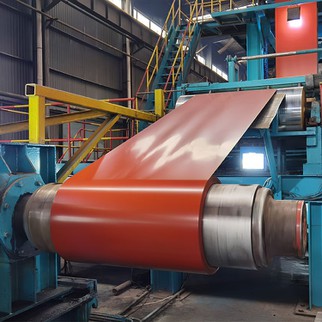
Q2: What specific factors cause coating damage during molding?
From the perspective of total quality management (TQM), the causes of molding damage can be systematically analyzed as follows:
Category | Specific Cause | Key Point
Materials (Material) | Insufficient coating flexibility/adhesion, excessive coating thickness or poor curing, defects in the substrate itself | Poor coating performance, over-baking, or defects in the substrate itself are the root causes
Equipment (Machine) | Hard scratches/wear/rust on the pressure rollers, improper adjustment of the upper and lower roller gap, poor equipment levelness | Defective pressure rollers are the direct physical cause of scratches
Process (Method) | Bending radius too small, forming speed too fast, improper pressure roller gap, poor board cleaning | Improper parameter settings are the key to coating cracking
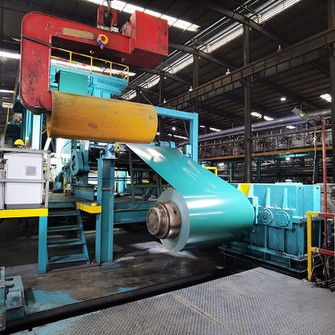
Q3: How to scientifically select and set process parameters to protect the coating during molding?
Scientific process parameters are the core of coating protection. Key parameters are as follows:
Bending radius (R angle): This is crucial in determining whether the coating will crack. A basic principle in the process is that the bending radius should not be less than twice the thickness of the sheet (for example, for a 0.5mm color-coated sheet, the minimum bending radius should not be less than 1mm). Too small a bending radius will cause the coating's elongation to far exceed its tolerance limit.
Molding speed: Excessive molding speed, especially for complex shapes, will increase the stress on the coating and the risk of peeling. A reasonable and stable molding speed should be set according to the equipment conditions and sheet characteristics.
Equipment clearance and cleanliness: It is necessary to ensure that the gap between the pressure rollers is precisely matched to the sheet thickness. At the same time, all parts in contact with the coating (such as pressure rollers and molds) must be clean, free of rust and hard objects to avoid scratching the coating.
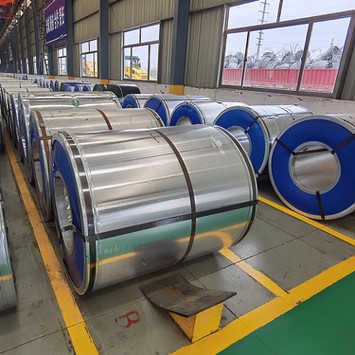
Q4: How to determine if the coating performance of a color-coated steel sheet is up to standard before molding?
Before mass molding, the following methods can be used to confirm material quality:
Request and verify the "Quality Certificate": Obtain a product quality certificate from the color-coated steel sheet supplier. Focus on the two core indicators: "T-bend performance" (assessing coating flexibility) and "coating adhesion" (assessing the bonding strength between the coating and the substrate). The lower the T-bend rating, the better the flexibility.
Conduct a "sample molding test": For important projects or batch processing, the safest method is to cut a small sample and test-press it on the production equipment using the set process parameters. Directly observe the coating condition after molding; this is the most intuitive and effective verification method.
Pay attention to specific coatings: Special attention is needed when using high-weather-resistant PVDF fluorocarbon coatings. PVDF coating films are relatively soft; to protect them during transportation and processing, it is usually recommended or required to cover them with a peelable transparent protective film.
Q5: How should I repair coating damage after molding?
If localized damage is found after molding, it should be repaired immediately to prevent further rusting. The repair steps are as follows:
Clean the damaged area: Use a clean cloth to remove dust, oil, and any loose paint from the damaged area.
Sanding (optional): For areas with peeling paint, gently sand the edges smooth with fine sandpaper (e.g., 400 grit or higher) to facilitate adhesion of new paint.
Apply primer: Use a neutral-curing zinc-rich primer or quick-drying rust-preventive paint, carefully applying it to the exposed metal substrate with a fine brush. The application should cover the damaged area and extend outwards by 5-10 mm.
Apply topcoat (optional): After the primer is completely dry, if color consistency is required, a special repair paint (aerosol can or small bottle) of the same color as the pre-coated roll can be used for coverage.