


Q: What type of roofing panel should be used with galvanized color-coated steel rain gutters?
A: It is recommended to prioritize color-coated roofing panels with the same substrate (e.g., hot-dip galvanized steel sheet) and a similar coating system (e.g., polyester, silicone-modified polyester, or fluorocarbon coating) as the rain gutters. This ensures consistent coefficients of thermal expansion and contraction, reducing deformation or cracking caused by temperature changes; simultaneously, the coatings have matching weather resistance, avoiding significant differences in color or corrosion rates after long-term use.
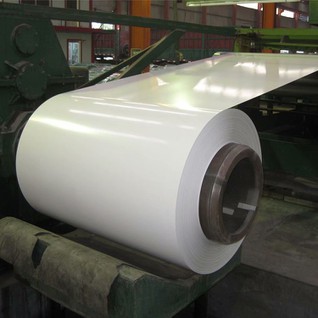
Q: How to choose the color matching between the gutter and the roof panel?
A: There are two common matching principles. First, a monochromatic approach: using the same color as the roof panel creates a unified visual effect, suitable for architectural styles that emphasize simplicity and uniformity. Second, an accent color approach: using white, dark gray, or a dark-colored gutter that contrasts with the main roof color highlights the lines of the eaves. However, it should be noted that dark-colored gutters may heat up faster in areas with strong sunlight; it is recommended to choose a coating with better heat resistance. It is not recommended to use a color that clashes with the roof (e.g., red roof panel with green gutter).
Q: How should the overlap length and sealing method be handled between galvanized color-coated steel rainwater gutters?
A: The overlap length between two sections of the rainwater gutter in the direction of water flow should not be less than 100 mm, and the upper section should cover the outer side of the lower section (in the direction of water flow). It is recommended to use a neutral weather-resistant sealant (such as silicone sealant) to fill the joint, and install a waterproof strip of color-coated steel sheet with a width of not less than 50 mm on the outside, securing it with rivets every 150-200 mm. It is strictly forbidden to rely solely on sealant without mechanical fixing, otherwise it will easily detach due to thermal expansion and contraction.
Q: What materials should be used for the brackets and screws used to fix the rainwater gutter?
A: Corrosion-resistant fasteners with a potential similar to that of the galvanized steel coil must be used. Hot-dip galvanized steel brackets or 304 stainless steel brackets are recommended. Screws should be stainless steel self-tapping screws with EPDM rubber washers or hot-dip galvanized screws. Ordinary iron or electroplated galvanized parts are strictly prohibited, as the zinc layer is thin and easily rusts. Rusting will cause electrochemical corrosion at the cut edges of the steel coil, eventually rusting through the entire gutter from the fixing holes.
Q: What are the key points to note when connecting a gutter to a downpipe?
A: First, the opening size of the downpipe connector must match the width and shape of the gutter (commonly K-type or semi-circular gutters). The opening should be located at the lowest point of the gutter and slightly below the bottom plane to avoid water accumulation. Second, a dedicated drain hopper must be installed at the connection point, and sealant should be filled between the hopper and the gutter, securing it with at least four stainless steel screws. Finally, the entire gutter must maintain a longitudinal slope of at least 1% (decreasing by 1-2 cm every 10 meters), sloping towards the drain hopper; otherwise, even with correct fitting, poor drainage will accelerate coating aging and corrosion.