


1. How are the grades of national standard galvanized coils (hot-dip galvanized steel sheets) structured? What do each letter and number in the code represent?
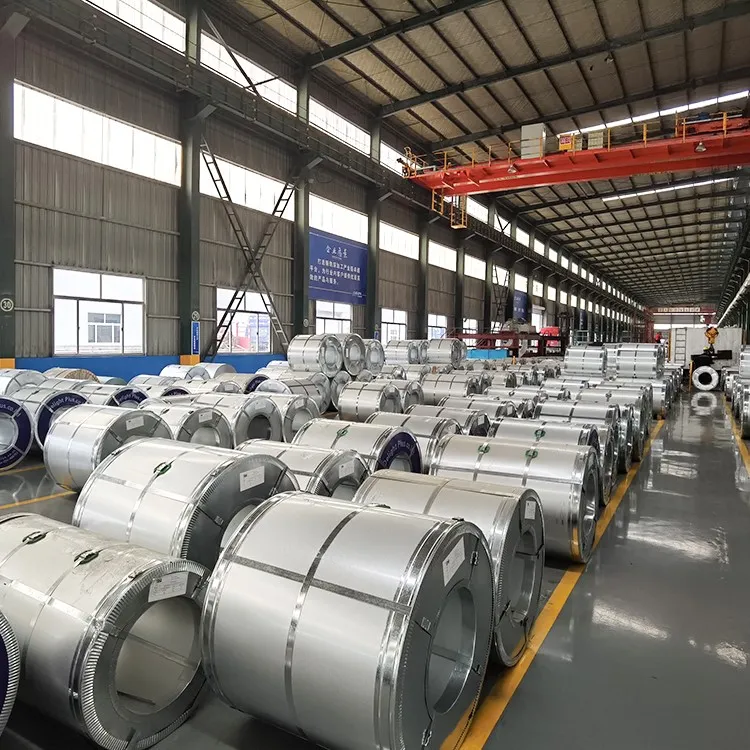
A: Taking the most common grade DC51D+Z as an example, the grade system specified in national standard GB/T 2518-2019 consists of three parts: base material type identification, numerical serial number, and coating type suffix. The first two letters represent the base material type, where D indicates cold forming (suitable for stamping and bending), H indicates hot-rolled base material (suitable for structural parts with low thickness requirements), and S indicates structural steel (emphasizing strength rather than formability). The third letter C indicates cold-rolled base material (Most common), while D represents a special designation for hot-dip galvanizing. The numerical designation is a key indicator of performance grade-51 represents general commercial grade (simple bending), 52 represents stamping grade (suitable for general stamping), 53 represents deep drawing grade (suitable for deep drawing), and 54 and higher represent ultra-deep drawing grade (suitable for complex deep-drawn parts). For structural steel, numbers such as 220/350/450 indicate the minimum yield strength value. The final suffix indicates the coating type: +Z for pure zinc coating, +ZF for zinc-iron alloy coating, +ZA for zinc-aluminum alloy coating, and +AZ for aluminum-zinc alloy coating.
2. What are the differences in yield strength, tensile strength, and elongation among different grades in the national standard? Which grade has the best processing performance?
A: The mechanical properties of the national standard grades show a clear gradient distribution. Commercial grade DC51D+Z has a yield strength ≤360MPa, tensile strength ≤440MPa, and elongation ≥20%, suitable for simple bending. Comparing the grades step by step, we find that DC52D+Z has a yield strength that decreases by about 100MPa to ≤260MPa, a tensile strength that narrows to 300-390MPa, and an elongation that increases to ≥28%, making it more suitable for stamping. DC53D+Z further relaxes these requirements, with a yield strength ≤200MPa, tensile strength 270-320MPa, and elongation ≥38%, suitable for moderate deep drawing. DC54D+Z is the optimal grade for ultra-deep drawing, with a yield strength ≤180MPa, tensile strength 270-310MPa, and elongation ≥40%, making it suitable for complex deep-drawn parts. Generally, grades with lower yield strength and higher elongation offer better forming and processing performance. For the deepest drawing processes, DC54D+Z should be the preferred choice, but the specific selection must be based on a comprehensive consideration of product geometry complexity, mold design, and subsequent surface treatment requirements.
3. How should one select the appropriate grade from the national standard grade system based on the actual processing technology (such as bending, shallow drawing, and deep drawing)?
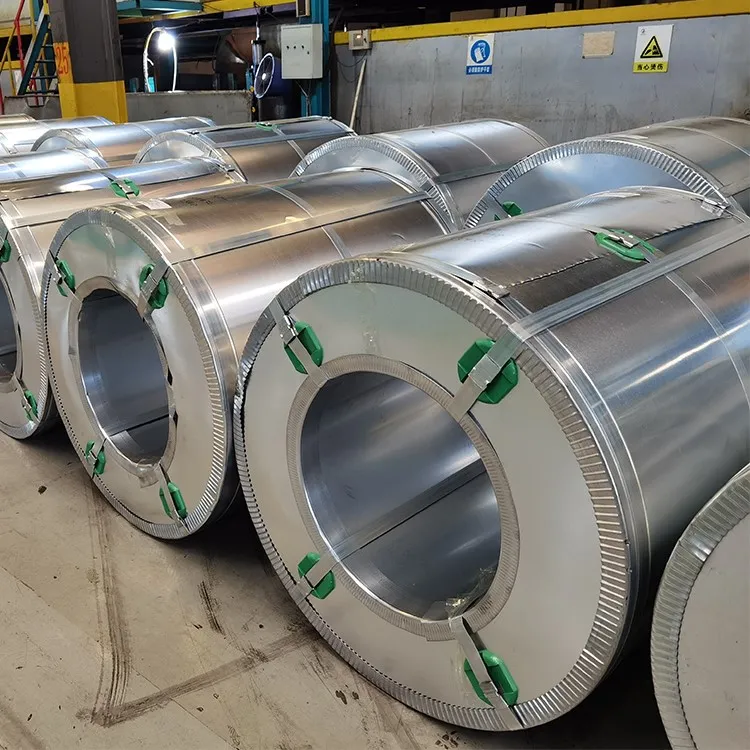
A: The key to selection is matching the grade to the degree of processing deformation. If the product only involves simple bending, trimming, or roll forming, commercial grade DC51D+Z is sufficient. This grade is the most widely used base material in the construction and light industry sectors, offering the best cost-performance ratio. When the product requires shallow drawing, such as manufacturing motor housings or shallow disc-shaped parts, it is recommended to use DC52D+Z stamping grade. This grade maintains good formability while offering high production efficiency. When deep drawing is required, such as manufacturing complex curved parts like automotive door panels, fenders, washing machine inner drums, and fuel tanks, DC53D+Z or the higher-specification DC54D+Z deep drawing grade must be used. These grades have a lower yield strength to tensile strength ratio, significantly improving the overall forming limit. In addition, structural steel grades S220GD+Z to S550GD+Z are specifically used for load-bearing components. The numbers represent the minimum yield strength. When selecting steel, the strength requirements of the structural design should be met rather than the formability. For example, S350GD+Z or S450GD+Z can be preferred for building structural components based on load requirements.
4. Compared to the old standard (GB/T 2518-2008), what changes have occurred in the grade system of the new standard GB/T 2518-2019? What should users pay attention to when selecting grades?
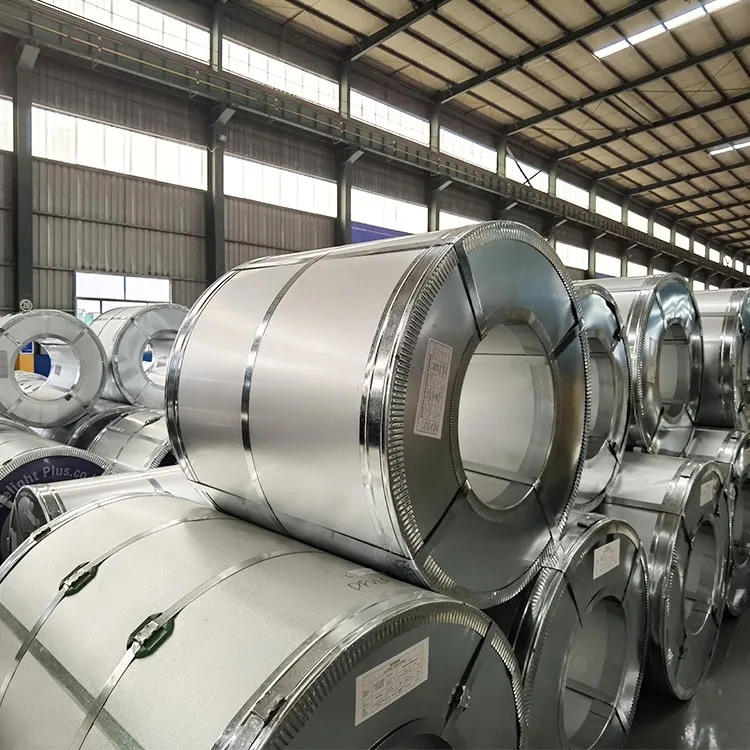
A: GB/T 2518-2019 is significantly different from GB/T 2518-2008 and has officially replaced both GB/T 2518-2008 and GB/T 14978-2008 standards. It integrates four coating types: pure zinc (Z), zinc-iron alloy (ZF), zinc-aluminum alloy (ZA), and aluminum-zinc alloy (AZ), providing a wider range. In the new system, it is recommended to use DC-level grades for comparison selection, as the SGCC grade (corresponding to the general galvanized sheet grade in the original national standard) is more common in the old standard. SGCC roughly corresponds to DC51D+Z, SGCD1 to DC52D+Z, SGCD2 to DC53D+Z, and SGCD3 to DC54D+Z. When selecting a product, users should pay special attention to the following: The new standard has modified the requirements for yield strength and tensile strength. The mechanical properties of some grades have been optimized compared to the old standard. It also makes stricter provisions for the elongation of transverse specimens beyond the rolling direction. When ordering, it is necessary to clearly indicate that GB/T 2518-2019 is being implemented to avoid the material properties not meeting the agreed quality requirements upon delivery due to incorrect reference to the standard version.
5. How to compare and select the appropriate grade of galvanized coil with international standards such as Japanese JIS and European EN?
A: Chinese standard grades and advanced international standards have good correspondence in mechanical properties, and equivalent selection can be made by referring to existing comparison relationships. The Chinese standard DC51D+Z is basically equivalent to the Japanese JIS G3302 standard SGCC, both belonging to general commercial grade; DC52D+Z is equivalent to SGCD1, suitable for stamping; DC53D+Z is equivalent to SGCD2, suitable for deep drawing; DC54D+Z is equivalent to SGCD3, suitable for ultra-deep drawing. From the internationally accepted European standard EN 10346, the prefix DX (not DC in the Chinese standard) in DX51D, DX52D, and DX53D corresponds to the same performance level system. For example, DX51D+Z is essentially equivalent to DC51D+Z. Regarding structural steel, the JIS G3302 SGHC series (hot-rolled base steel with hot-dip galvanization) has similar mechanical requirements to the national standard S series structural steel, but the delivery standards differ. When selecting steel across standards, it is recommended to use mechanical properties (yield strength, tensile strength, elongation) as rigid evaluation indicators, verify the tolerance level and zinc coating type one by one, and then carefully match them. If export or supply to foreign companies is required, in most cases the national standard grade can fully meet the requirements; only the version of the acceptance standard needs to be modified.