


1. What is the current gap between the total import and domestic production of galvanized coils? In which product areas are imports mainly concentrated?
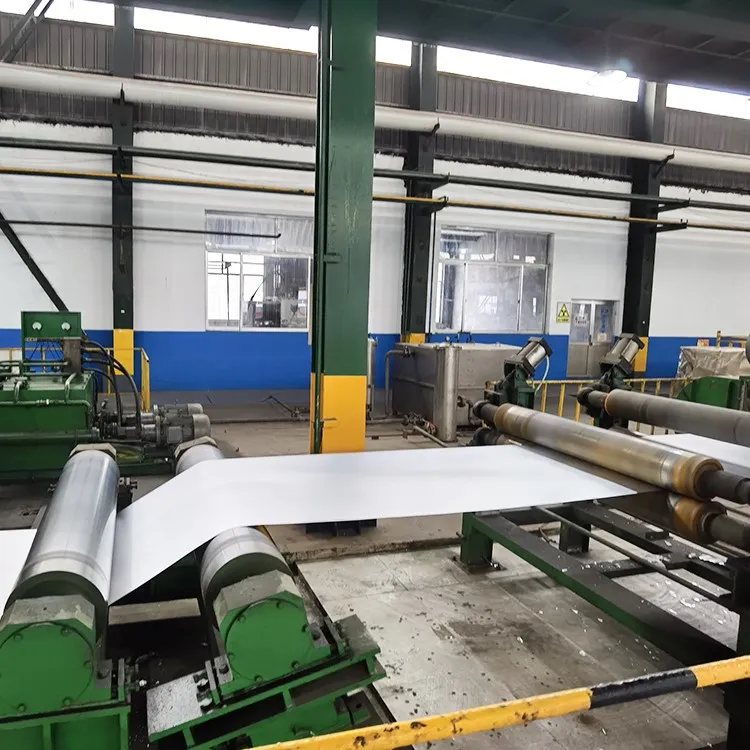
A: In terms of quantity, China's domestic production capacity for galvanized coils far exceeds imports. In 2025, the total national production capacity of galvanized steel coils was approximately 78 million tons, with actual output reaching around 65 million tons, maintaining a capacity utilization rate of around 83%. In the same year, the total import volume of coated steel sheet and strip was only 910,500 tons, with an import dependence rate of less than 3%, representing only about 1.4% of the total domestic production. However, imports are not simply "filling the gap" in quantity, but rather "filling the gap" in product categories. Imports are concentrated in high-end areas where domestic production cannot yet achieve stable mass production or where costs are too high, mainly including high-strength corrosion-resistant, ultra-thin specifications (such as thin-gauge hot-dip galvanized coils with a thickness of 0.25–0.47 mm), and special galvanized coil products with ultra-high zinc coatings (above 600 g/m²). Overall, domestic galvanized coil production has achieved complete self-sufficiency in conventional product areas, with imports only retaining a certain market space in high-tech barrier areas.
2. What are the main technological differences between imported and domestically produced galvanized coils?
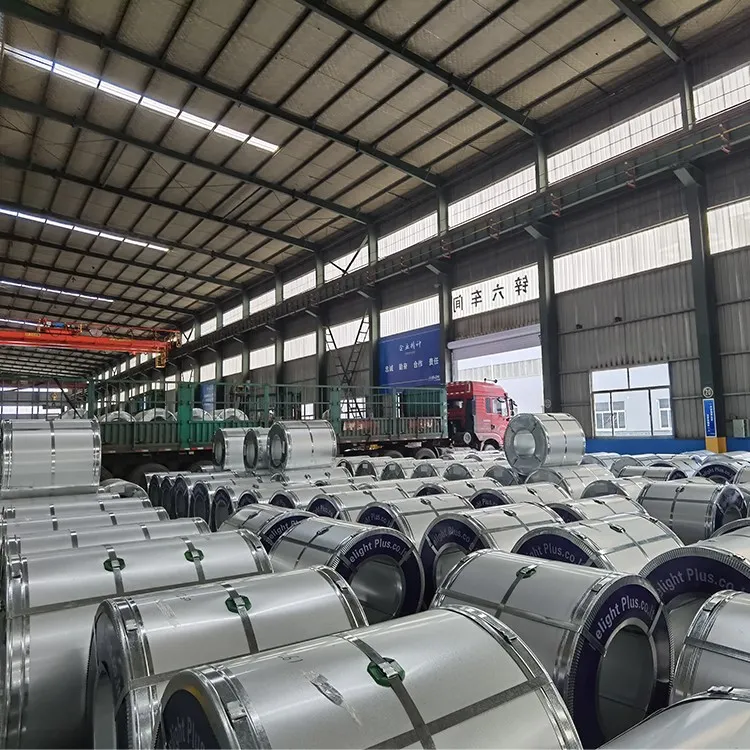
A: Regarding advanced high-strength hot-dip galvanized products, foreign companies such as POSCO in South Korea have developed acid-free reduction hot-dip galvanizing technology. This technology achieves acid-free galvanizing through precise control of the laminar flow cooling process after hot rolling, effectively reducing environmental pollution and production costs. Domestic companies still lag significantly behind in the research and application of this technology. In the field of high-end automotive galvanized steel sheets, foreign companies have achieved a stable supply of series with tensile strengths of 590MPa, 780MPa, and even 980MPa. While domestic companies have made breakthroughs, they still need to import some mature technologies to fill the gaps. Furthermore, galvanized aluminum-magnesium coated steel sheets have become a technological hotspot in recent years. Their service life can be 4 to 5 times that of ordinary galvanized sheets, and they have good fracture protection and alkali corrosion resistance. Their applications have expanded to emerging fields such as 5G base stations and photovoltaic power plants. Domestic companies still lag behind imports in terms of patent barriers and industrialization maturity in this field.
3. What are the differences in product quality between imported and domestically produced galvanized coils?
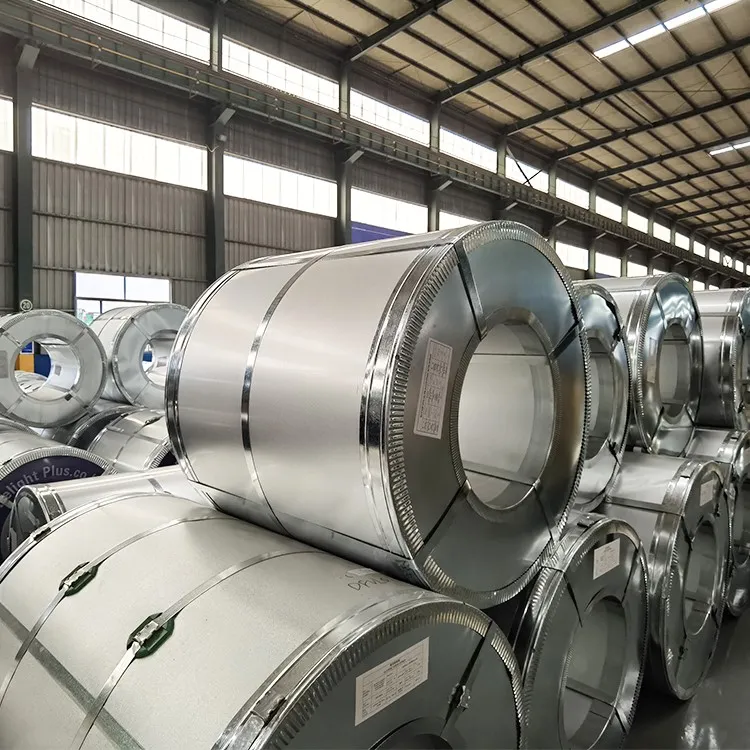
A: The quality differences are mainly reflected in four aspects. First, coating uniformity: Imported galvanized coils have more precise control over the zinc layer thickness. Comparing actual alloyed hot-dip galvanized products, imported products are often superior to domestic ones in multiple dimensions, including coating powdering, coating quality, coating surface morphology, and brittle fracture morphology. The continuity and consistency of the coating are also more stable. Second, substrate cleanliness: Imported high-grade galvanized coils have more refined control over inclusions. For example, the proportion of inclusions with an equivalent diameter of less than 5μm in imported steel wire can reach over 90%, while the proportion of inclusions of the same level in domestic products is relatively low. Third, surface treatment processes: Imported products have stricter standards in chromic acid passivation treatment, surface roughness control, and the absence of tactile air knife marks. However, in the past two years, the technological level of domestic products has improved rapidly. Companies such as Rizhao Steel have successfully developed 600g ultra-high zinc coating galvanized sheets, breaking the monopoly of imported products. Many indicators can now be compared with imported competitors.
4. What are the differences between imported and domestically produced galvanized coils in terms of price and standards?
A: The most significant difference is in price. The price of imported galvanized coils has remained relatively stable at a high level, consistently between $1200 and $1400 per ton for the past three years, far exceeding the average export price of domestically produced galvanized sheets. This price gap directly reflects the structural differences in technological added value, brand premium, and supply-demand relationship between imported products. There are also differences in standards: imported galvanized coils mostly adopt international standards, such as the European EN standard, the Japanese JIS standard (Japanese galvanized coil technical specifications are more refined), the American ASTM standard, and the ISO international standard; domestically produced galvanized sheets and coils mainly comply with the Chinese national standard GB/T 2518 (continuous hot-dip galvanized steel sheet and strip). Although the content of the standards is largely similar, there are still differences in the stringency of specific technical indicators, the frequency of inspections, and factory quality assurance. Imported products typically require higher batch consistency and stricter factory testing standards.
5. What is the progress of import substitution for galvanized coils? When will domestically produced galvanized coils completely eliminate import demand?
A: The import substitution trend is established, with import volumes showing a downward trend for several consecutive years. In 2025, the total import volume of galvanized sheet and strip decreased by 19.15% year-on-year; in the first quarter of 2026, the total import volume was 191,600 tons, still a year-on-year decrease of 19.01%. Regarding import sources, South Korea and Japan are the main suppliers of galvanized coils to China, but in the first 11 months of 2025, imports from South Korea decreased by 22.93% year-on-year, and imports from Japan decreased by 13.58% year-on-year, showing a clear contraction trend. The driving force for domestic substitution is twofold: on the one hand, domestic steel companies are accelerating technological upgrades, achieving breakthroughs in niche areas such as ultra-high zinc coatings and ultra-thin specifications; on the other hand, the overall contraction in domestic real estate and manufacturing demand is continuously strengthening the comprehensive advantages of domestically produced galvanized products in terms of quality, cost, and supply. However, it will take time to completely eliminate import demand, because imports are mainly concentrated in application areas with high technical barriers and long verification cycles, such as automotive outer panels and high-end home appliance panels. These areas have extremely stringent requirements for the consistency of material forming, the uniformity of coating, and the stability of supply, and have already formed long-term and stable supply chain relationships with downstream customers.