


1. Q: Is cold-rolled coil suitable for making filing cabinets? What are its main advantages?
A: Absolutely. Cold-rolled coil is the mainstream base material for filing cabinet manufacturing, with a market share exceeding 80%. Key advantages include:
High surface smoothness: Cold rolling process ensures a sheet thickness accuracy of ±0.05mm, resulting in a smooth, oxide-free surface that provides a good base for spraying, leading to a smooth and aesthetically pleasing finished cabinet surface;
Excellent formability: Elongation ≥28%, meeting the processing requirements for bending, punching, and pressing of filing cabinet doors, side panels, drawers, and other components, resulting in sharp edges and no cracking after forming;
Moderate strength: Yield strength of 140~240MPa ensures the cabinet's load-bearing capacity (30~50kg per compartment) while facilitating processing without damaging the mold;
Economical cost: Raw material costs are approximately 30%~40% of stainless steel, making it the most cost-effective choice for mass-producing office furniture;
Strong coating compatibility: After phosphating and electrostatic spraying, the coating has strong adhesion and uniform color, meeting various color and surface effect requirements.

2. Question: How should materials be selected for different parts of the filing cabinet? What are the specific requirements for cold-rolled coils?
Thickness optimization suggestion: A thickness of 0.6~0.8mm for the main material of a standard filing cabinet is sufficient to meet the usage requirements. Excessive thickness (≥1.0mm) will significantly increase costs without any actual performance improvement.

3. Question: When making filing cabinets from cold-rolled coils, how should the surface treatment be selected?
Key Control Points:
Phosphating film: Weight controlled at 2~5g/m² to ensure coating adhesion;
Coating performance: Passes cross-cut adhesion test (grade 0), pencil hardness ≥2H, solvent resistance ≥100 wiping cycles;
Environmental requirements: Powder coating must comply with RoHS standards, formaldehyde emission ≤0.124mg/m³ (compliant with GB/T 3324).
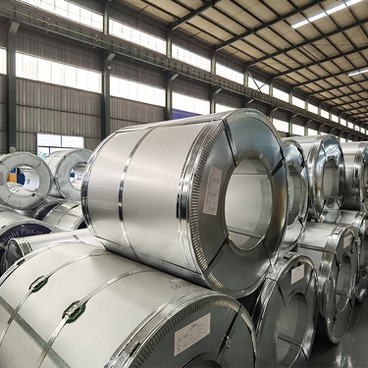
4. Question: How does the cost-effectiveness of cold-rolled coil in making filing cabinets compare to other materials?
Cold-rolled coils with powder coating offer the best cost-performance ratio for filing cabinets, with the lowest overall cost and balanced performance.
High-end office furniture can utilize cold-rolled coils with film coating to achieve decorative effects such as wood grain, increasing costs by approximately 20% to 30%.
Stainless steel and aluminum alloys are only used in special scenarios (such as cleanrooms and humid environments), costing 2 to 4 times more.
5.How to avoid common quality problems when making filing cabinets from cold-rolled coils?
Raw material inspection: Incoming inspection of cold-rolled coil surface quality, thickness tolerance, and flatness;
Process control: Degreasing effect test (continuous water film method) before spraying; real-time monitoring of curing temperature;
Finished product inspection: Adhesion, corrosion resistance, heat resistance, and thermal cycling resistance tests are conducted according to GB/T 3324 "General Technical Conditions for Wooden Furniture" or enterprise standards.